19.5 Billion KRW Invested... Design Competition from July, Completion Scheduled for 2026
Establishing Wetland Ecology Center and Restoring Damaged Wetlands to Build an Ecological City Hub
Gwangju Metropolitan City is creating the ‘Carbon Sink,’ a key facility of Jangnok Wetland, a treasure trove of biodiversity, as a hub space for an ecological city.
Gwangju City (Mayor Kang Ki-jung) announced on the 27th that it has completed the preliminary administrative procedures for the ‘Jangnok Wetland Carbon Sink Creation Project’ for the construction of a wetland ecology center and restoration of damaged areas, and plans to hold a design competition starting in July.
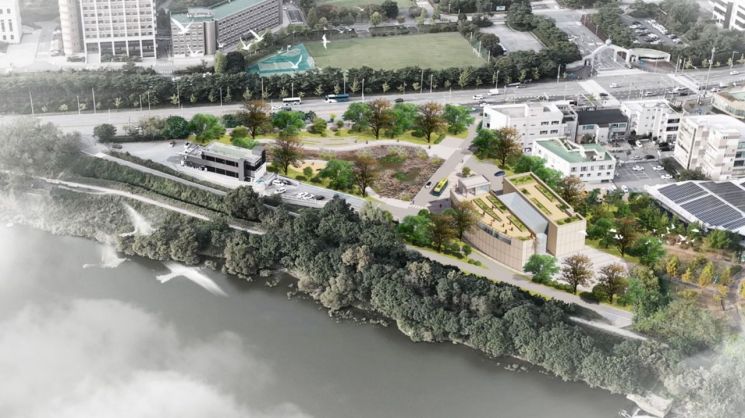
The ‘Jangnok Wetland Carbon Sink Creation Project’ will invest a total of 19.5 billion KRW (70% national funding) in an area of 11,051㎡ around Seobong-dong, Gwangsan-gu, aiming for completion in 2026.
Gwangju City has completed preliminary procedures including the establishment of a basic plan, review of park creation plans and urban management plan changes, and public architecture planning review.
Jangnok Wetland is a treasure trove of biodiversity with outstanding natural scenery, home to a total of 829 species of various wild animals and plants, including endangered species such as otters, leopard cats, black-crowned night herons, and white-naped cranes. In 2021, it was designated by the Ministry of Environment as the first national wetland within an urban area in Korea.
First, the wetland damaged by unauthorized cultivation around the project site will be restored into an eco-friendly ecological space, and ecological experience education facilities and citizen leisure spaces will be provided.
The core facility, the Wetland Ecology Center, will be equipped with wetland exploration guidance facilities, planned exhibition facilities, experiential education facilities, and observation facilities, offering visitors various experiences and attractions.
In particular, the project will be promoted by gathering diverse opinions from experts and related organizations regarding spatial planning and other aspects.
Gwangju City continuously encourages citizen interest and participation in the wetland by providing various support such as the annual ‘Biodiversity Exploration Camp,’ where ecology experts and students can directly experience ecology around Jangnok Wetland, and the ‘Ecosystem Disturbance Plant Removal’ project to protect native biological resources by removing invasive species.
Recognizing the role and importance of wetlands, efforts are being made for systematic conservation and management of wetlands, such as the registration of Mudeungsan Pyeongdume Wetland as a Ramsar Wetland by the Ramsar Secretariat in Switzerland on May 13, acknowledging its ecological excellence.
Kim Osuk, Director of the Environmental Conservation Division, said, “We will create a hub space that enhances the value of wetland conservation and provides ecosystem services to citizens by promoting biodiversity through the restoration of damaged areas in Jangnok Wetland and establishing ecological experience infrastructure.”
© The Asia Business Daily(www.asiae.co.kr). All rights reserved.
![Clutching a Stolen Dior Bag, Saying "I Hate Being Poor but Real"... The Grotesque Con of a "Human Knockoff" [Slate]](https://cwcontent.asiae.co.kr/asiaresize/183/2026021902243444107_1771435474.jpg)















