International Conference on Responding to North Korean Forced Disappearance Crimes Held
"Close North Korea-Russia Ties Will Weaken US Extended Deterrence"
"New Mechanism Needed to Investigate Crimes and Accountability"
There have been calls at the United Nations to consider measures that restrict North Korea's international activities and qualifications. In particular, attention has been drawn to proposals for a 'new mechanism' that can publicly investigate the links between North Korea's illegal weapons development and human rights violation crimes.
On the 26th, Lee Jung-hoon, Chairman of the Ministry of Unification's Future Planning Committee for Unification, pointed out at an international conference held at Yonsei University in Seodaemun-gu, Seoul, themed "Response to North Korea's Enforced Disappearance Crimes," that "recent international news has been filled with Russian President Vladimir Putin's visit to North Korea and the signing of new agreements," adding, "The problem is that the development of Russia-North Korea relations to commit more atrocities could embolden Kim Jong-un further." Chairman Lee previously served as the inaugural Ambassador for International Cooperation on North Korean Human Rights and currently holds positions such as Dean of the Graduate School of International Studies at Yonsei University, Chair of the Ministry of Unification's Committee for the Promotion of North Korean Human Rights, and Policy Advisory Member of the National Security Office.
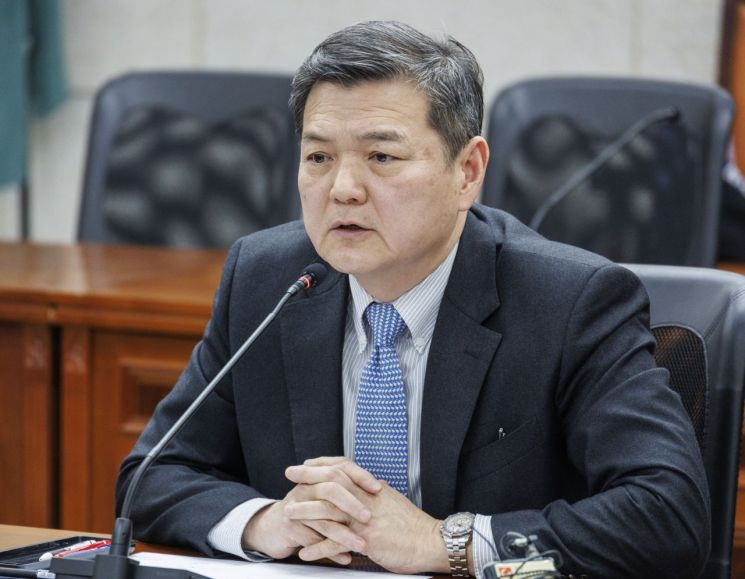 Lee Jung-hoon, Chairman of the Future Unification Planning Committee at the Ministry of Unification
 [Photo by Yonhap News]
Chairman Lee expressed concern that "Russia's technological support could bring North Korea's intercontinental ballistic missile (ICBM) capabilities to completion, which would weaken the United States' extended deterrence capabilities," adding, "All of this will also have a negative impact on North Korea's human rights situation."
He revisited the past case of South Africa, suggesting that "the United Nations General Assembly should seriously consider moves to restrict North Korea's qualifications." South Africa faced restrictions on all UN activities for 20 years from 1974 until Nelson Mandela was elected president in 1994 due to its apartheid policies. Chairman Lee questioned, "Does the absence of such measures against North Korea mean that North Korea's Juche ideology is considered less abhorrent than South Africa's apartheid?" He repeatedly emphasized that "the international community must contemplate measures against North Korea."
Recalling Russia's veto in March against the extension of the expert panel's mandate under the UN Security Council's North Korea Sanctions Committee, he stressed, "While South Korea and several allied countries monitor the implementation of Security Council sanctions at the UN General Assembly, where Russia cannot exercise a veto, efforts must be made to establish a 'new mechanism' with the authority to publicly report on the links between North Korea's human rights violations and weapons development." This 'new mechanism' would initiate preparations to determine the 'legal responsibility' of Kim Jong-un and North Korean officials.
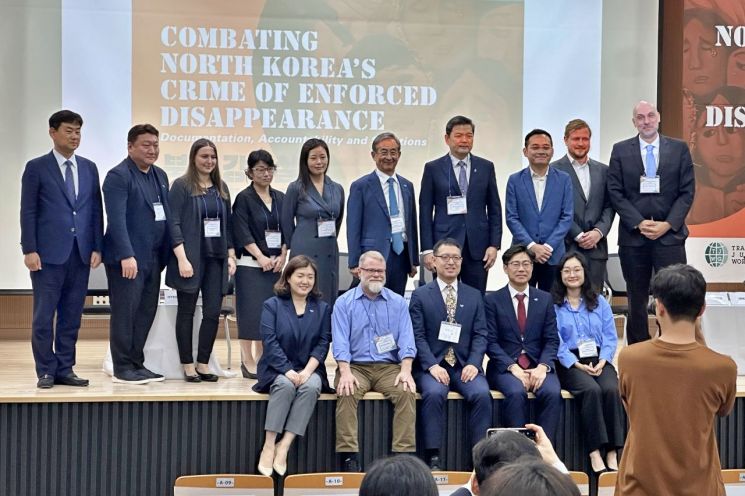 On the 26th, an international conference titled "Response to North Korean Forced Disappearance Crimes" was held at Yonsei University in Seodaemun-gu, Seoul.
Chairman Lee emphasized the principles and efforts needed to investigate North Korea's crimes, stating, "Even in seemingly insurmountable situations, faith and courage must not be broken." He criticized the international community by saying, "Efforts to increase visibility of North Korea's enforced disappearance crimes are crucial in linking human rights and security issues," and added, "Considering how much international attention is focused on victims in Ukraine or Myanmar, the stark contrast that the hardships of North Korean residents and North Korean refugees in China are not addressed compared to North Korea's nuclear and missile provocations is quite surprising."
He also expressed concern about the politicization of human rights issues, criticizing that "in the issue of forced repatriation of North Korean defectors, China is not directly named but referred to as a 'neighboring country' or 'third country'." He urged, "To achieve results, the government must be able to raise its voice even against major powers like China," and added, "Without further ado, it is time for South Korea and the international community to actively pursue various measures to hold North Korea accountable."
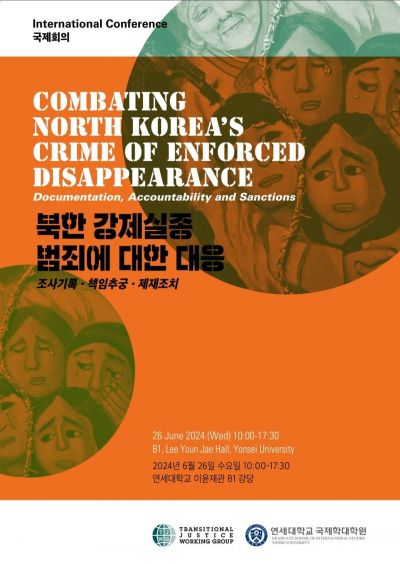
Meanwhile, the international conference was hosted by the Transitional Justice Working Group (TJWG) and the Graduate School of International Studies at Yonsei University. The Transitional Justice Working Group presented 'Footprints 2.0,' which contains investigative results and a database tracking North Korea's enforced disappearance crimes, and plans to discuss ways to hold North Korea accountable and impose sanctions through expert discussions. Attendees included Kwon Oh-gon, former Chair of the Assembly of States Parties to the International Criminal Court (ICC), Min Yong-jun, Legal Officer of the United Nations International Residual Mechanism for Criminal Tribunals (IRMCT), Patrick Ball, Research Director of the Human Rights Data Analysis Group (HRDAG), and officials from the Ministry of Foreign Affairs and the Ministry of Justice.
© The Asia Business Daily(www.asiae.co.kr). All rights reserved.
![Clutching a Stolen Dior Bag, Saying "I Hate Being Poor but Real"... The Grotesque Con of a "Human Knockoff" [Slate]](https://cwcontent.asiae.co.kr/asiaresize/183/2026021902243444107_1771435474.jpg)

















