Expected Effect of Expanding Local Finance by Approximately 16 Trillion Won
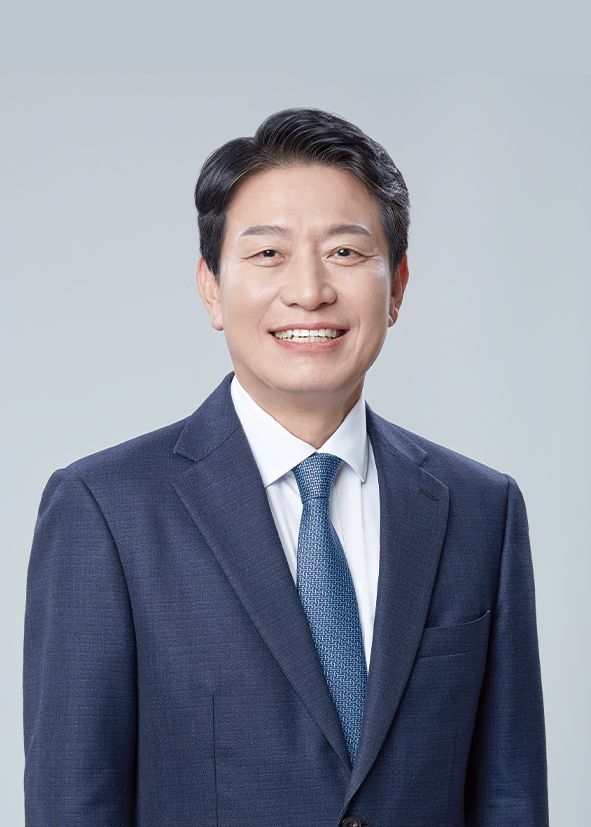
Jo In-cheol, a member of the National Assembly (Democratic Party of Korea·Gwangju Seo-gu Gap), has taken the lead in proposing the "Local Allocation Tax Act Amendment Bill."
The bill aims to increase the local allocation tax rate by 5 percentage points to 24.24% in order to enhance the soundness of local finances and realize local autonomy guaranteed by the Constitution.
The current Local Allocation Tax Act aims to provide funds necessary for the administrative operation of local governments to promote sound development of local administration.
It stipulates that an amount equivalent to 19.24% of the total domestic tax revenue is the source of the local allocation tax. This statutory allocation tax rate has been maintained at 19.24% since it was raised in 2006, without any increase for 18 years.
However, in a situation where the financial independence of local governments has not improved, the financial burden on local governments is increasing due to the rise in social welfare expenditures.
In the case of Gwangju Metropolitan City, the budget for the social welfare sector has increased every year: 1.6885 trillion KRW in 2018, 2.1808 trillion KRW in 2020, 2.6229 trillion KRW in 2022, and 3.0367 trillion KRW in 2024.
Accordingly, the proportion of the social welfare budget within the total city budget also increased from 37.3% in 2018 to 44% in 2024. As the share of the social welfare budget increases, expenditures in other sectors inevitably decrease.
If this bill is passed, based on the 2024 budget amount, the size of the local allocation tax (excluding real estate allocation tax and fire safety allocation tax) under the current allocation tax rate (19.24%) will be 61.6948 trillion KRW (ordinary allocation tax + special allocation tax). With a 5 percentage point increase (to 24.24%), the local allocation tax (excluding real estate allocation tax and fire safety allocation tax) will increase to 77.7277 trillion KRW (ordinary allocation tax + special allocation tax), an increase of about 16 trillion KRW.
Assemblyman Jo In-cheol said, "I pledged to raise the local allocation tax rate in the 22nd general election to realize regional balanced development, which is a call of the times," and added, "I am very pleased to keep the promise made to the citizens of Gwangju and the residents of Seo-gu to propose a bill for regional balanced development."
He continued, "Through this bill proposal, I hope to realize the local allocation tax rate, which has remained unchanged for 18 years, to solve the financial difficulties of local governments and lay the foundation for advancing local autonomy."
© The Asia Business Daily(www.asiae.co.kr). All rights reserved.

















