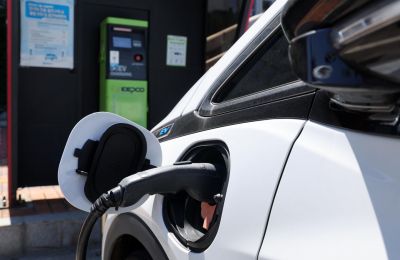
On July 10, the 'Future Automobile Parts Industry Act,' which provides the legal basis for government support in future car technology development, commercialization, and standardization, will be enforced. The government announced plans to designate and nurture 100 specialized future car parts companies by 2027.
The Ministry of Trade, Industry and Energy announced on the 25th that the enforcement decree of the Future Automobile Parts Industry Act was passed at the Cabinet meeting.
Enacted in January, the Future Automobile Parts Industry Act aims to advance South Korea's future car parts industry ecosystem in response to structural changes in the automotive industry such as carbon neutrality, electrification, and autonomous driving. Based on this law, the government will be able to provide various supports, including funding, to future car parts companies.
The enforcement decree includes specific details necessary for implementing the law, including the designation procedure for specialized future car parts companies eligible for support. After the law takes effect, the Ministry plans to secure funding to support specialized future car parts companies, designate and nurture 100 such companies by 2027, and assist 1,000 parts companies in transitioning into future car parts companies.
As the automotive industry rapidly shifts its focus to electric vehicles and connected cars linked to the internet, many parts inside vehicles are being designed and manufactured in completely different ways compared to traditional internal combustion engine vehicles.
For example, the engine, considered the heart of a car, is being replaced by electric motors. To support the production transition of finished car manufacturers, partner companies forming long supply chains must also successfully shift their industries.
The Ministry of Trade, Industry and Energy will also implement follow-up measures to apply various special cases for companies transitioning to the future car industry, such as cash support for foreign investment, subsidies to promote regional investment, and easing requirements for U-turn subsidies. Park Dong-il, Director of Manufacturing Industry Policy at the Ministry, stated, "The Future Automobile Parts Industry Act is an essential law for our automotive industry to flexibly and timely transition to the future car industry. It is highly significant that the software support infrastructure, essential in the software-defined vehicle (SDV) era, has been strengthened."
© The Asia Business Daily(www.asiae.co.kr). All rights reserved.
![Clutching a Stolen Dior Bag, Saying "I Hate Being Poor but Real"... The Grotesque Con of a "Human Knockoff" [Slate]](https://cwcontent.asiae.co.kr/asiaresize/183/2026021902243444107_1771435474.jpg)















