About 3 Weeks Until Phase 1 Virtual Asset Act Enforcement
Ruling and Opposition Parties' Phase 2 Legislative Pledge for 'Issuance Regulation' in General Election
The Act on the Protection of Virtual Asset Users, which regulates the virtual asset market (Virtual Asset Act), is about to be implemented. Although it has been criticized as a half-baked bill, the National Assembly has not yet prepared the promised second-phase legislation.
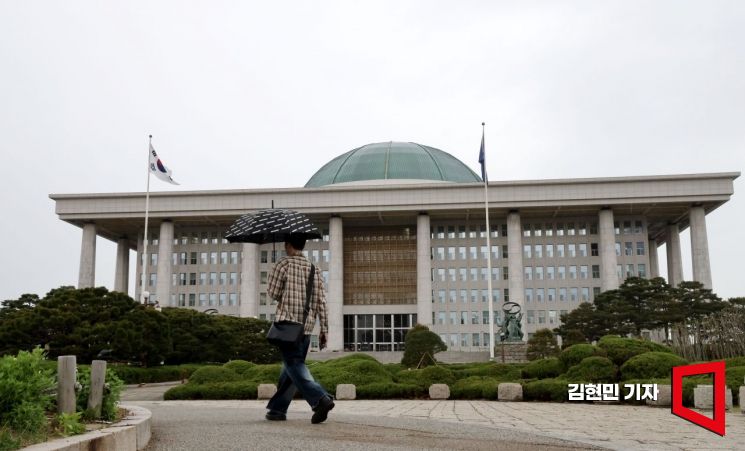 On the 15th, dark clouds heavily covered the National Assembly building. With the 22nd general election concluded on the 10th, attention is focused on how the 21st National Assembly, with just over a month left in its term, will resolve pressing issues such as pension reform and the abolition of the financial investment tax. Photo by Hyunmin Kim kimhyun81@
According to the National Assembly Legislative Information System on the 25th, no amendment bills to the Virtual Asset Act have been proposed since the opening of the 22nd National Assembly. Although lawmakers have proposed 872 bills as of the previous day, none have focused on the Virtual Asset Act. Democratic Party lawmaker Lee Jung-moon proposed an amendment to the Act on Reporting and Using Specified Financial Transaction Information to block virtual asset service providers who have committed crimes such as fraud, breach of trust, and embezzlement under the Criminal Act and the Act on the Aggravated Punishment of Specific Economic Crimes from entering the market. Democratic Party lawmaker Kang Jun-hyun proposed an amendment to the Depositor Protection Act to allow the Korea Deposit Insurance Corporation to trace hidden assets flowing into virtual asset exchanges. However, these are not laws that directly regulate the virtual asset market.
The Virtual Asset Act, set to take effect on the 19th of next month, focuses on protecting users of the virtual asset market. Virtual asset service providers must separate users' deposits from their own assets and deposit or entrust them to reputable institutions such as banks. They must also prepare and keep a ledger detailing the types and quantities of virtual assets entrusted by users. Additionally, market manipulation and self-issued virtual asset trading by virtual asset service providers are prohibited. The Virtual Asset Act has been welcomed by the virtual asset industry as it establishes an industry-specific law by explicitly defining the virtual asset and virtual asset market.
However, from the process of proposing the Virtual Asset Act in the National Assembly, there have been continuous calls for second-phase legislation. Critics argue that the law focuses only on user protection and lacks regulations on virtual asset exchanges and virtual asset issuance, making it a half-measure. Users have consistently demanded transparent disclosure regarding listing reviews, public announcements, and trading maintenance reviews of virtual asset exchanges. Furthermore, virtual assets not traded on the top five domestic virtual asset exchanges (Upbit, Bithumb, Coinone, Korbit, Gopax) have been involved in virtual asset-related fraud cases, highlighting the need for regulation on virtual asset issuance. Regulations on markets linked to virtual assets, such as decentralized finance (DeFi) and non-fungible tokens (NFTs), have also been urged by users and the industry.
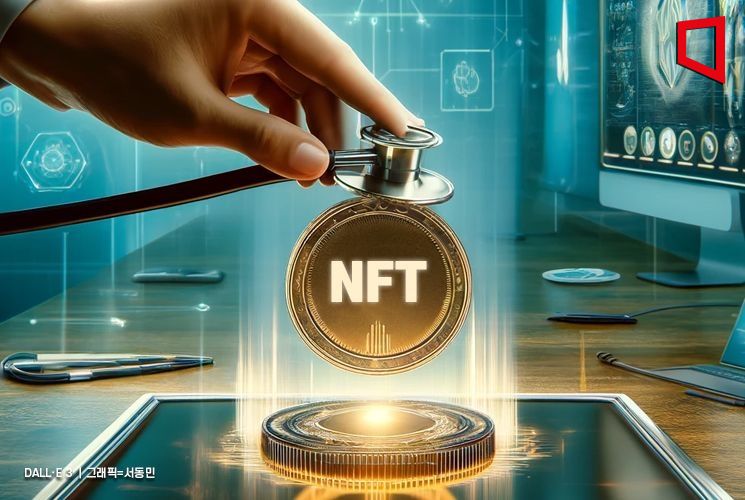
Both ruling and opposition parties emphasized during the 22nd general election that they would improve systems related to virtual assets. The People Power Party and the Democratic Party pledged second-phase legislation of the Virtual Asset Act, including regulations on virtual asset issuance, distribution, and fundraising businesses. Moreover, the People Power Party promised to consider postponing taxation on virtual asset investment income and to introduce blind trusts for lawmakers and high-ranking public officials' virtual assets. The Democratic Party pledged to ban lawmakers from trading virtual assets during sessions and to incorporate virtual asset-linked products into the formal financial system.
During the 21st National Assembly, discussions were active with a total of 11 Virtual Asset Act bills proposed. However, momentum was lost after lawmakers responsible for major virtual asset-related tasks were defeated in the 22nd general election. Former People Power Party lawmaker Yoon Chang-hyun proposed the "Basic Act on the Virtual Asset Industry" and served as the secretary of the "Coingate Fact-Finding Task Force (TF)" during the 21st National Assembly. Former Democratic Party lawmaker Kim Byung-wook also proposed the Virtual Asset Act and led the "Special Virtual Asset Countermeasures TF," serving as a central figure within the party on virtual asset issues.
It is expected that additional legislation on the Virtual Asset Act will be possible from the second half of the 22nd National Assembly. A Democratic Party lawmaker said, "The National Assembly's Political Affairs Committee, which handles virtual asset-related systems, was formed only recently, and there are many issues under the committee's jurisdiction, such as the Anti-Corruption and Civil Rights Commission and household debt. Regarding the second-phase legislation, we need to start from scratch to coordinate opinions and develop it."
© The Asia Business Daily(www.asiae.co.kr). All rights reserved.
![Clutching a Stolen Dior Bag, Saying "I Hate Being Poor but Real"... The Grotesque Con of a "Human Knockoff" [Slate]](https://cwcontent.asiae.co.kr/asiaresize/183/2026021902243444107_1771435474.jpg)
















