EU Begins Negotiations on Ukraine's Membership
The European Union (EU) will begin providing full support to Ukraine using profits generated from frozen Russian assets starting next month.
Josep Borrell, the EU High Representative for Foreign Affairs and Security Policy, announced at a press conference following a foreign ministers' meeting held in Luxembourg on the 24th (local time) that a legal framework for the first disbursement of 1.4 billion euros (approximately 2.08 trillion KRW) from the profits of frozen Russian assets has been finalized.
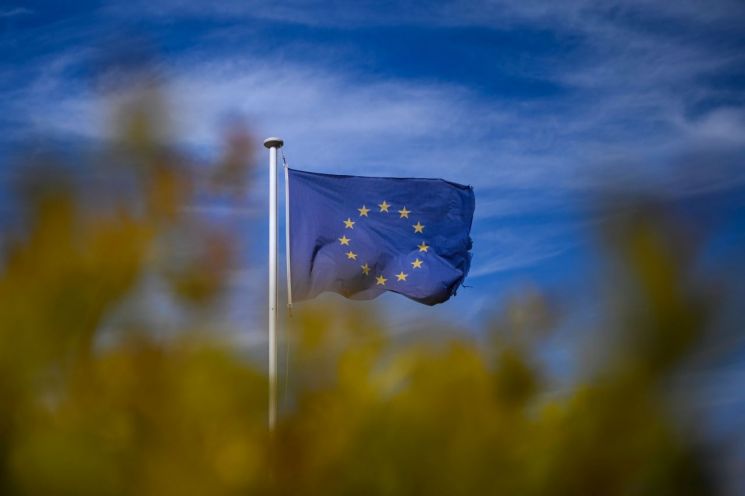
Accordingly, starting next month, profits from frozen Russian assets will be used to support Ukraine's military. According to foreign media, Germany and the Czech Republic have been selected as the member states to utilize the first disbursement. Twenty-five percent of the first disbursement will be spent on purchasing products from Ukrainian defense companies.
This is a follow-up measure to the agreement made last month on the 8th, where the EU decided to use the annual profits of 2.5 billion euros (3.73 trillion KRW) generated from managing Russian assets frozen due to sanctions after the invasion of Ukraine for military support to Ukraine. Additionally, at the G7 summit on the 13th, the EU and the G7 agreed to lend Ukraine 50 billion dollars (approximately 69.4 trillion KRW) secured by profits from frozen Russian assets. The EU and G7 have frozen Russian assets totaling 2.8 trillion dollars (approximately 388.64 trillion KRW), with more than two-thirds of these assets located within the EU.
High Representative Borrell explained that the remaining funds, excluding the first disbursement, are expected to be approved around the end of the year.
There had been speculation that the use of profits from frozen Russian assets might be delayed due to Hungary’s opposition to supporting Ukraine, given its pro-Russian stance. However, the EU foreign ministers circumvented Hungary’s veto by noting that Hungary abstained from the previous agreement on the use of profits and therefore does not have the right to participate in decisions regarding the use of frozen assets. In response, Hungary publicly expressed dissatisfaction on the day.
Furthermore, High Representative Borrell announced that negotiations for the EU accession of Ukraine and Moldova will begin on the 25th. Both countries applied for membership in February 2022 after Russia invaded Ukraine.
The EU granted them candidate status in June last year and recommended starting accession negotiations in December last year, contingent on the implementation of necessary preliminary reforms.
However, it is expected to take a considerable amount of time before they actually join the EU. For example, Croatia, which was the last country to join the EU in 2013, took eight years to receive final approval.
Nevertheless, the progress in EU accession negotiations holds significance for Ukraine, which has been at war with Russia for two years. The EU can also express its support for Ukraine and Moldova by starting the negotiations.
Along with the start of accession negotiations with Ukraine, the EU is preparing to conclude an EU-Ukraine security agreement. Foreign media such as Politico reported that Ukrainian President Volodymyr Zelensky is expected to visit Brussels on the first day of the EU summit held in Brussels, Belgium, on the 27th?28th. There are also expectations that the security agreement will be signed during the summit.
© The Asia Business Daily(www.asiae.co.kr). All rights reserved.
![Clutching a Stolen Dior Bag, Saying "I Hate Being Poor but Real"... The Grotesque Con of a "Human Knockoff" [Slate]](https://cwcontent.asiae.co.kr/asiaresize/183/2026021902243444107_1771435474.jpg)















