The First Case Since the Introduction of the Digital Markets Act (DMA)
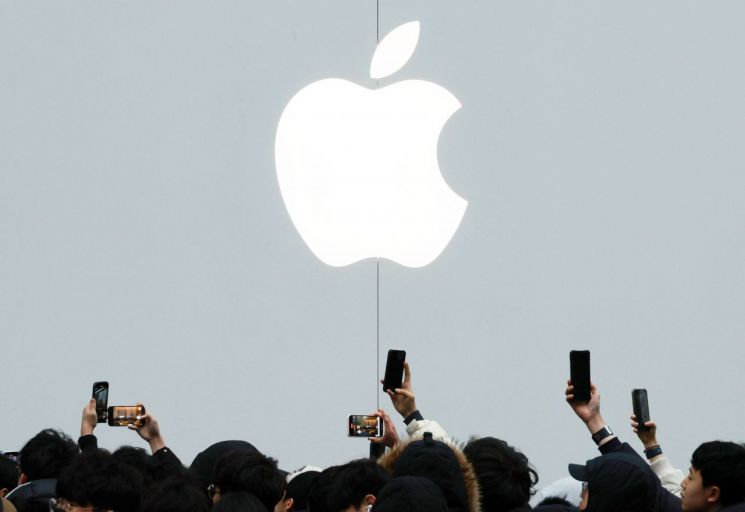
The European Union (EU) has provisionally concluded that Apple's App Store operation method violates the Digital Markets Act (DMA).
The EU Commission announced that it has notified Apple of the preliminary investigation results stating that Apple's App Store regulations violate the DMA.
This is the first time since the full enforcement of the DMA on March 7, aimed at preventing 'Big Tech abuse,' that a conclusion has been reached that effectively constitutes a legal violation.
The Commission pointed out, "According to the DMA, developers distributing apps through the Apple App Store must be able to inform customers of cheaper alternative purchasing methods (instead of the App Store) without additional costs and encourage purchases through these alternatives."
It also explained, "Apple currently operates three types of business rules related to app developers, but none of them allow app developers to freely move customers to alternative methods."
Apple can submit written rebuttals and other positions to the Commission. The Commission plans to comprehensively consider these and finalize its conclusion by March 25 next year.
If Apple's DMA violation is confirmed, a fine of up to 10% of its global revenue may be imposed. If it is judged to be a repeated violation, the fine can be increased up to 20%.
On the same day, the Commission also began investigating whether Apple's so-called 'core technology fee,' introduced after the DMA enforcement, violates the law.
Apple decided to allow third-party app stores and app installations following the DMA enforcement but imposed a 0.5 euro fee per installation under the name of 'core technology fee,' drawing criticism as a 'loophole.'
Meanwhile, the DMA is a law that designates platform operators of a certain scale as 'gatekeepers' and imposes special regulations to prevent abuse of market dominance by large platform operators. Seven companies, including Alphabet (Google's parent company), ByteDance (TikTok's parent company), Amazon, Apple, Meta, Microsoft, and Booking.com, have been designated as gatekeepers.
© The Asia Business Daily(www.asiae.co.kr). All rights reserved.
![Clutching a Stolen Dior Bag, Saying "I Hate Being Poor but Real"... The Grotesque Con of a "Human Knockoff" [Slate]](https://cwcontent.asiae.co.kr/asiaresize/183/2026021902243444107_1771435474.jpg)
















