Japanese Stock Market Peaked Last March
Chinese Stock Market Rebounded Due to Stimulus Policies
Recent Correction... Focus on Next Month's Upward Momentum
Japan Faces Possible Interest Rate Hike... China Holds Third Plenary Session
The Japanese and Chinese stock markets have recently been experiencing a sideways trend. The market expects next month to be a momentum booster for both markets. In Japan, there are expectations of another interest rate hike, while in China, the 3rd Plenary Session, which will outline the five-year direction of the domestic economy, is anticipated.
Japan's representative stock index, the Nikkei, reached an all-time high on March 22, supported by the continued weakness of the yen and corporate governance reforms, but has since fallen about 5.6% as of the close on the 21st.
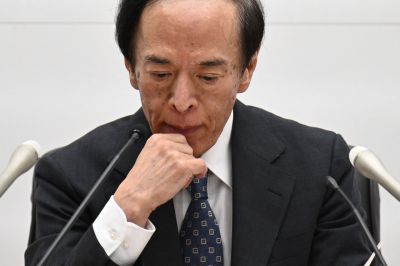
According to the Tokyo Stock Exchange, foreign investors have sold Japanese stocks for four consecutive weeks through the 14th. This is the longest selling streak since September last year.
A major factor behind the adjustment phase in the Japanese stock market is that despite Japan raising its benchmark interest rate for the first time in 17 years in March, the yen has continued to weaken.
When the interest rate gap between the U.S. and Japan narrows, the yen typically appreciates against the dollar. However, Japan continues to maintain policies supplying liquidity to the market, such as purchasing long-term government bonds, and the timing of a rate cut in the U.S., where the economy remains robust, has been pushed back, creating a variable. The yen-dollar exchange rate, which was around 150 yen just before Japan raised rates, surpassed the 160 yen level for the first time in 34 years at the end of April and even exceeded 159 yen briefly on the 21st (yen weakness).
Bloomberg noted, "Investors previously interpreted a weak yen as a positive factor before the monetary policy shift, but recently, yen weakness is seen as a negative because it can fuel inflation and harm the Japanese economy depending on its degree." Ryota Sakagami, an analyst at Citigroup, said, "The Japanese stock market faces significant correction risks, and it will take time before positive factors emerge."
However, BlackRock and Morgan Stanley maintain a positive outlook on the long-term prospects of the Japanese stock market, citing structural changes such as corporate reforms, domestic investment, and wage increases.
Some in the market expect the Bank of Japan (BOJ) to raise interest rates again at its monetary policy meeting next month, which could lead to yen appreciation and be a positive factor for the stock market.
Meanwhile, the Chinese stock market has recently been struggling again. The MSCI China Index rose about 27% from its low in January to its peak on the 13th of last month, driven by large-scale government stimulus measures, but has since fallen about 8%. The CSI300, composed of large Chinese stocks, has been declining for five consecutive weeks.
This is due to renewed concerns about the real estate downturn risk and slower-than-expected economic recovery. Last month, China's new home price index fell 3.9% year-on-year, marking 11 consecutive months of decline, with the drop widening from the previous month's -3.1%. Additionally, China's industrial production growth rate last month rose 5.6% year-on-year, below the market expectation of 6.0%.
According to the latest Bank of America (BoA) Asia fund manager survey, fund managers reduced their China equity exposure by 6% last month.
However, Wendy Liu, an equity strategist at JP Morgan, said, "With the 3rd Plenary Session, where China’s economic policies will be unveiled, scheduled for next month, this period could be an opportunity for the Chinese stock market to rebound." The 3rd Plenary Session, hosted by the Communist Party National Congress, is a meeting that outlines the direction of China's economy for the next five years. Originally scheduled for October last year, it has been repeatedly postponed.
© The Asia Business Daily(www.asiae.co.kr). All rights reserved.
![Clutching a Stolen Dior Bag, Saying "I Hate Being Poor but Real"... The Grotesque Con of a "Human Knockoff" [Slate]](https://cwcontent.asiae.co.kr/asiaresize/183/2026021902243444107_1771435474.jpg)















