Chinese Academy of Sciences Microbiology Research Team Publishes in International Journal
Rapid Mutation Occurs During Bacterial Culturing at High Temperatures
As the Earth gets hotter due to global warming, Chinese research has revealed that 'mold (fungi)' is undergoing mutations and evolving dangerously.
According to foreign media on the 22nd, a microbiology research team from the Chinese Academy of Sciences analyzed fungi causing diseases in China and found that when cultured at high temperatures above 30℃, mutations occurred at a much faster rate. These findings were recently published in the international academic journal Nature Microbiology. The Chinese Academy of Sciences is a highly reputable institution regarded as the top academic organization in China's basic science field.
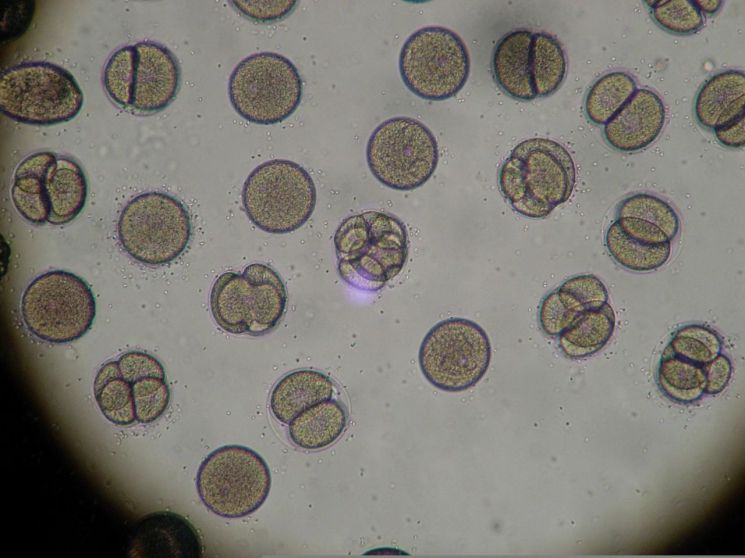
Fungi cannot produce their own nutrients and live parasitically on other organisms or organic matter. Some of them cause infectious diseases. Until now, molds have mainly been known to cause diseases in plants, and their impact on mammals, including humans, has been considered less significant compared to bacteria or viruses. This is because molds cannot withstand the high body temperature of humans, and the human immune system has evolved to effectively block molds.
However, recently, the international microbiology community has been alarmed by reports of new fungal infection cases previously unknown. The journal Science explained, "Over the past few decades, the number of people living with weakened immune systems due to HIV (human immunodeficiency virus, the cause of AIDS) or immunosuppressants administered for cancer treatment has increased," adding, "As a result, fungal infection cases have also risen." Asiya Ghosh, a microbiologist at Duke University in the U.S., told Science, "Some of the fungal infections recently appearing in humans already showed resistance to drugs."
In the recent study by the Chinese Academy of Sciences research team, fungi that do not die even in warm environments corresponding to normal human body temperature (35.6?37.2℃) were discovered. By collecting patient data from 96 hospitals across China between 2009 and 2019 and analyzing thousands of fungal strains, a previously unknown species (Rhodosporidiobolus fluvialis) was detected. Additionally, this fungus was found in two patients who died from severe underlying diseases in 2013 and 2016. The patient who died in 2013 was a 61-year-old man from Nanjing, and the patient who died in 2016 was an 85-year-old woman from Tianjin. The fungi isolated from their blood showed resistance to both fluconazole and caspofungin, which are standard antifungal agents.
When this fungus was injected into immunocompromised experimental mice and cultured at 37℃, mutations occurred 21 times faster than when cultured at 25℃. When fungi cultured at 37℃ were exposed to the antifungal drug amphotericin B, drug resistance developed much faster compared to the control group. This suggests that fungi with strong resistance, untreatable by existing antibiotics, could emerge in the future.
David Denning, an infectious disease researcher at the University of Manchester in the UK, called it "a surprising and completely unexpected discovery" and "a bad omen for the future." Arturo Casadevall, a microbiologist at Johns Hopkins University in the U.S., expressed concern, saying, "If fungi evolve in response to mammalian body temperatures, they could also change according to Earth's temperature," adding, "Molds adapted to high temperatures will likely become more aggressive to hosts and more resistant to drugs."
© The Asia Business Daily(www.asiae.co.kr). All rights reserved.
![Clutching a Stolen Dior Bag, Saying "I Hate Being Poor but Real"... The Grotesque Con of a "Human Knockoff" [Slate]](https://cwcontent.asiae.co.kr/asiaresize/183/2026021902243444107_1771435474.jpg)















