The consumer price index (CPI) inflation rate in the UK has fallen to the 2% price stability target for the first time in about three years. However, with the core CPI inflation rate still hovering in the mid-3% range and a general election scheduled for next month, the possibility of interest rate cuts in the second half of the year is gaining momentum.
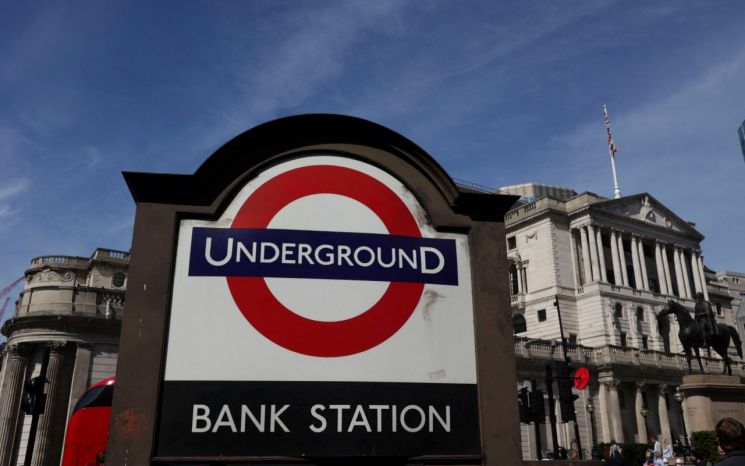
According to the UK Office for National Statistics on the 19th (local time), the UK's May CPI inflation rate stood at 2.0% year-on-year. This is the lowest level since July 2021 and aligns with market expectations. The month-on-month CPI inflation rate was also 0.3%, below the forecast of 0.4%.
Meanwhile, the core CPI, which excludes volatile food, beverages, and energy, rose 3.5% year-on-year. Although this is a significant easing from the previous month’s 3.9%, it still indicates ongoing inflationary pressures.
The fact that the headline CPI inflation rate, which had surged to the 11% range, has now dropped to 2% is seen as meaningful in terms of reduced price pressures. However, the dominant view is that the Bank of England (BOE) will not cut the base interest rate, currently at 5.25%, at the monetary policy committee meeting scheduled for next week.
ForexLive commented, "Despite the headline CPI reaching the key 2% level, core and services inflation remain stubborn," adding that "this will not change the outlook for the BOE." The May services inflation was confirmed at a substantial 5.7%.
Moreover, making an interest rate cut decision ahead of the general election could pose a political burden for the central bank. Authorities, including BOE Governor Andrew Bailey, have reportedly been concerned that such a move could undermine the central bank’s political neutrality. Bloomberg News stated, "These CPI figures are unlikely to help Prime Minister Rishi Sunak’s Conservative Party, which is expected to lose in next month’s election," and added, "It will be difficult to persuade the BOE to cut rates immediately."
Currently, the market widely expects the BOE to keep rates on hold at the meeting on the 20th. It is then anticipated that rate cuts could begin as early as August. Economists surveyed by Bloomberg previously predicted that the first cut would start in August, followed by two cuts within the year. In a Reuters survey, all but two of 65 economists also favored an August rate cut.
Some even suggest that Taylor Swift, who coined neologisms like 'Swiftnomics' and 'Swiftflation,' and is scheduled to perform in London this August, could become a variable in BOE’s monetary policy. 'Swiftflation,' a portmanteau of 'Swift' and 'inflation,' refers to the significant economic impact and inflation observed wherever Swift holds tour concerts, as tourists and others flock to the events.
© The Asia Business Daily(www.asiae.co.kr). All rights reserved.
![Clutching a Stolen Dior Bag, Saying "I Hate Being Poor but Real"... The Grotesque Con of a "Human Knockoff" [Slate]](https://cwcontent.asiae.co.kr/asiaresize/183/2026021902243444107_1771435474.jpg)















