When Temperature Rises by 1 Degree, Agricultural Product Price Increase Rate Rises by 0.4~0.5%P
When Average Temperature Rises to 13.6~13.8 Degrees, Agricultural Product Prices Increase by 0.6~1.1%, Consumer Prices by 0.3~0.6%
"Need to Strengthen Response Capabilities Such as Crop Variety Development"
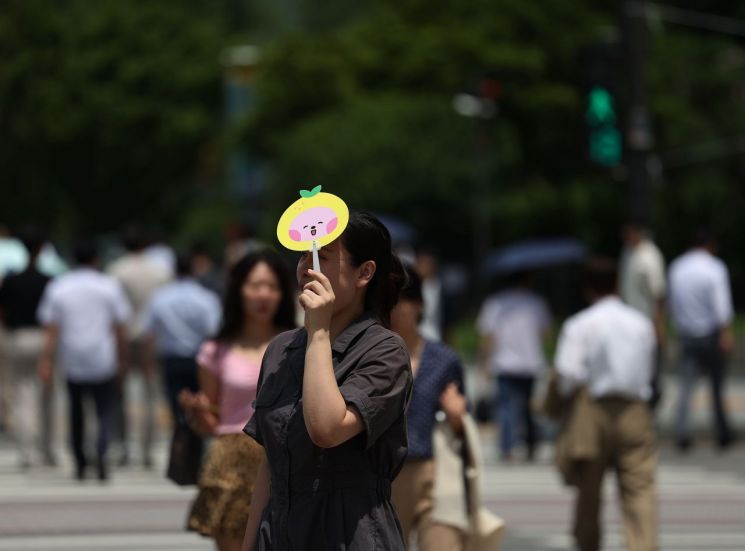
A study has found that when the temperature rises by 1 degree due to heatwaves and other factors, the rate of increase in agricultural product prices rises by 0.4 to 0.5 percentage points. Additionally, if the average temperature rises to 13.6 to 13.8 degrees Celsius by 2040, domestic agricultural product prices are expected to increase by 0.6 to 1.1%, and overall consumer prices by 0.3 to 0.6%.
According to the report "The Impact of Climate Change on Domestic Inflation" released by the Bank of Korea on the 18th, the rise in domestic temperatures has been found to increase inflation primarily through agricultural product prices.
Recently, global climate change has caused international raw material prices to rise, increasing upward inflationary pressure mainly on domestic food prices such as coffee. When adverse weather conditions like drought occur in Southeast Asia and Southern Europe, production of sugar, coffee, olive oil, and other products decreases, causing prices to surge. This, in turn, affects the prices of domestically processed foods such as cooking oil and coffee, which import raw materials, with a time lag.
Moreover, domestic climate change has been identified as a cause of the recent sharp rise in fruit prices by reducing the production volume of fruits such as apples. Since the 2010s, the domestic average temperature has shown an upward trend compared to the past, and abnormal high-temperature phenomena have been frequently observed. In 2022, the Rural Development Administration estimated that if greenhouse gas emissions continue at the current level, the cultivable area for apples in Korea will decrease by 60% in the 2030s compared to the past 30 years.
Based on overseas prior research and analysis of domestic climate data, the report found that when a temporary temperature rise shock (1 degree) such as a heatwave occurs, the rate of increase in agricultural product prices rises by 0.4 to 0.5 percentage points, and this effect lasts for about six months. Similar observations were made when abnormal low-temperature phenomena such as winter cold waves occurred.
When analyzing the impact assuming that the average temperature for each month rises by 1 degree compared to the long-term average (1973?2023) for one year, agricultural product prices are estimated to be 2% higher and overall consumer prices 0.7% higher after one year.
Global warming has also been found to affect inflation in the long term. Based on empirical analysis and long-term impact calculations, assuming the temperature rises to 13.6 to 13.8 degrees Celsius by 2040, agricultural product prices are expected to increase by approximately 0.6 to 1.1%, and overall consumer prices by 0.3 to 0.6% by 2040. The average temperature from 2019 to 2023 was 13.2 degrees.
Jo Byung-su, Deputy Head of the Price Research Team at the Bank of Korea’s Research Department, emphasized, "With the recent frequent abnormal climate events making climateflation a reality, the government needs to seek countermeasures from a mid- to long-term perspective. It is necessary to actively participate in global joint responses to climate risks and strengthen climate change resilience by developing crop varieties suitable for domestic climate conditions."
He added, "The central bank should strengthen inflation expectation management among economic agents to prevent fluctuations in agricultural product prices caused by climate change from spreading to other items and escalating into overall price instability."
© The Asia Business Daily(www.asiae.co.kr). All rights reserved.
![Clutching a Stolen Dior Bag, Saying "I Hate Being Poor but Real"... The Grotesque Con of a "Human Knockoff" [Slate]](https://cwcontent.asiae.co.kr/asiaresize/183/2026021902243444107_1771435474.jpg)
















