StageX '4th Mobile Carrier' License Cancellation Process
Government "Plans Auction for 28GHz Band After System Improvement"
Experts "Profitability ↓... Questioning Differentiation Strategy"
The government, which canceled the designation of the 4th mobile carrier, has expressed its intention to make a ninth attempt. While this shows a willingness to find a carrier that will play the role of a catalyst in the telecommunications industry, experts point out that selecting a carrier based solely on the 5G 28 GHz frequency band is uncertain.
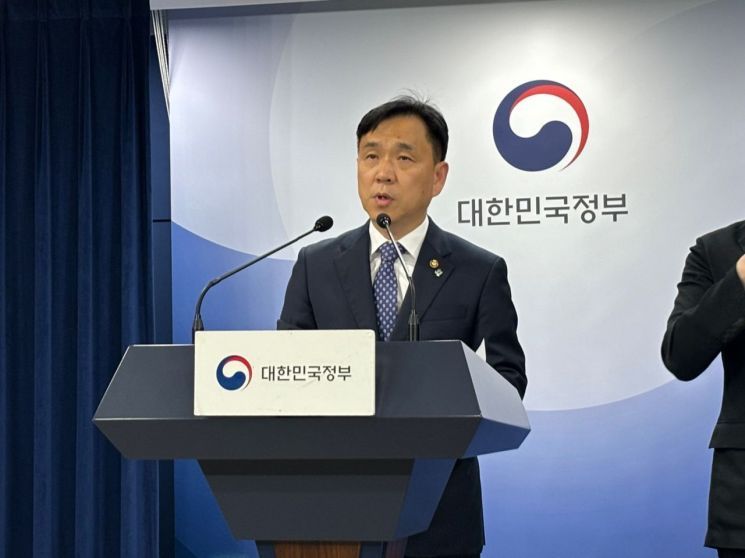
According to the Ministry of Science and ICT and related industries on the 17th, the Ministry plans to recruit a new carrier through an auction again after canceling the selection of StageX, which was a candidate for the 4th mobile carrier. Kang Dohyun, the 2nd Vice Minister of the Ministry of Science and ICT, recently stated in a briefing, "We will additionally review legal systems that need improvement regarding the 28 GHz frequency band."
However, experts maintain that it is impossible to succeed as the 4th mobile carrier by sticking only to the allocation of the 28 GHz band. This frequency band has weak diffraction and low permeability, making it suitable for providing services in specific locations rather than wide areas. Although the three major carriers were also allocated this band, they found it difficult to create a revenue model and had their allocations revoked, so concerns about business viability have been continuously raised this time as well.
An industry insider who requested anonymity said, "This band is for niche markets and has limitations for providing services to the general public," adding, "The survival of a new carrier will be possible only if it provides public services and has elements that it alone excels at, which can be called differentiation."
Professor An Jeongsang, an adjunct professor at Chung-Ang University Graduate School of Communication, also mentioned the failure factors of the 4th mobile carrier, including △lack of a revenue model for the 28 GHz band and △uncertainty of device releases. He said, "This band is unsuitable for business-to-consumer (B2C) services," and added, "As seen in the Ieum 5G project, even in specialized network projects, limitations in terms of utility and cost have been proven, and most use the 4.7 GHz band, so business-to-business (B2B) projects are also not easy."
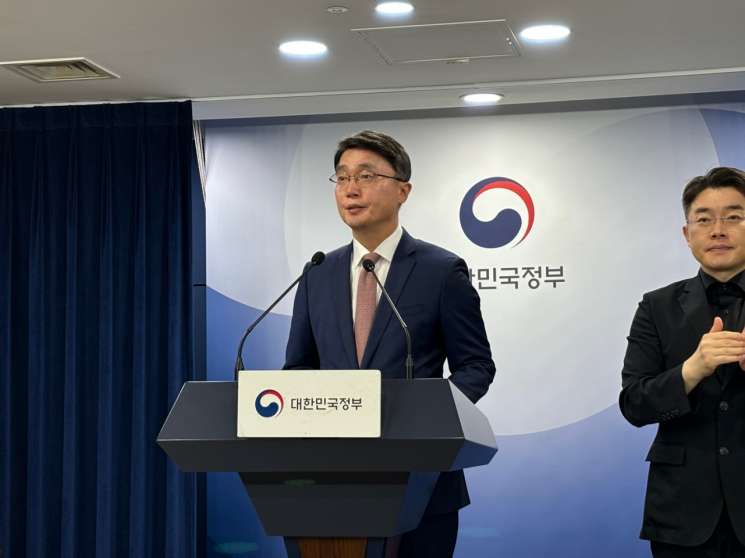
However, the government still maintains the position that the 28 GHz frequency band can be a differentiated service for the 4th mobile carrier despite concerns about its business viability. Ryu Jemyung, Director of the Network Policy Office, said, "We hope the new carrier will play a role between the three major carriers and the MVNOs," adding, "We believe the differentiated part is the 28 GHz band service that the three major carriers cannot provide." When asked if the 28 GHz policy would be changed, he replied, "It is something that requires more time and consideration." He did not comment separately on the proposal to allocate the nearby 3.7?4.0 GHz band, which is currently used by the three major carriers.
The final decision on whether to cancel the frequency allocation will be made around early next month through a hearing under the Administrative Procedures Act. StageX stated, "We will clarify the facts through the hearing process and proceed with the necessary legal and administrative procedures."
Meanwhile, the Democratic Party of Korea plans to receive a report from the Ministry of Science and ICT soon regarding the cancellation of the 4th mobile carrier selection and will examine the issue at the party level. The plan is to focus on whether the reasons for cancellation were appropriate and whether there were any loopholes in the frequency allocation system.
© The Asia Business Daily(www.asiae.co.kr). All rights reserved.
![Clutching a Stolen Dior Bag, Saying "I Hate Being Poor but Real"... The Grotesque Con of a "Human Knockoff" [Slate]](https://cwcontent.asiae.co.kr/asiaresize/183/2026021902243444107_1771435474.jpg)
















