UK, Australia, Norway, Switzerland, etc.
Interest rates expected to remain unchanged in this week's monetary policy meetings
Bloomberg: "Rate cuts were likely, but now rate holds are favored"
Expectations for a global pivot by central banks around the world in June are retreating. This is due to a continued lack of confidence in the slowdown of inflation.
According to Bloomberg on the 16th (local time), the UK, Australia, Norway, and Switzerland are scheduled to hold monetary policy meetings this week to decide their benchmark interest rates. The report stated, "Just a few weeks ago, central banks seemed likely to cut rates, but now a rate freeze is considered more probable,” it reported.
This Week, UK, Australia, Norway, Switzerland Expected to Keep Rates Steady
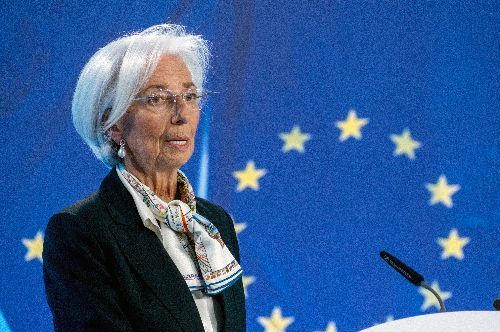
This month, the European Central Bank (ECB), the central bank of the European Union (EU), cut its benchmark interest rate for the first time in over two years, but within European countries, so-called 'new hawkish' (preference for monetary tightening) sentiment appears to be spreading. Bloomberg reported that economists expect the UK, which will decide its rate on the 20th, to begin cutting rates not this month but in August. The UK's April Consumer Price Index (CPI) rose 2.3%, the lowest since July 2021 (2.0%), but it exceeded market expectations (2.1%). Additionally, with the July general election approaching, the aim is to reduce uncertainty.
Norway and Switzerland, which will also decide rates on the same day, are widely expected to keep their benchmark interest rates steady. Switzerland, which proactively cut rates in March, subsequently saw a decline in the Swiss franc's value and a slight resurgence of inflation.
Hungary, which had cut rates eight consecutive times, is reportedly hesitating to cut rates this time. The value of the Hungarian forint against the dollar is at its lowest since September 2022, and another rate cut could further weaken the domestic currency. Hungary, which experienced double-digit average consumer price inflation last year, maintains a benchmark interest rate of 7.25%, the highest level among EU member states.
In Australia, a Bloomberg economist survey forecasts that the rate will be held steady at 4.35% for the fifth consecutive time. In South America, Brazil and Paraguay are expected to keep rates unchanged. Chile is reported to be slowing the pace of rate cuts. Peru, which had cut rates twice consecutively, surprisingly held rates steady on the 14th.
In Asia, Thailand held rates steady on the 12th, and Taiwan raised banks' reserve requirements as a form of policy tightening. The reserve requirement ratio is the proportion of funds that commercial banks must deposit with the central bank; increasing it reduces the money supply and causes interest rates to rise.
Retreating June Pivot
June of this year had been regarded as the month of a global pivot. As economic indicators began to improve, especially in the US, there was growing speculation that if central banks worldwide cut rates during this period, a soft landing could be achieved. However, rising prices of energy, raw materials, and agricultural products have raised concerns about a resurgence of inflation, leading central banks worldwide to adopt a more cautious stance. The US Federal Reserve (Fed), which earlier in the year had signaled three rate cuts within the year, revised its dot plot at last week's Federal Open Market Committee (FOMC) meeting to indicate only one cut, reflecting this background.
Emerging Market Bonds Face Inevitable Pressure
As the 'hawkish flag' spreads among global central banks, emerging market bonds, which have enjoyed a rally this year, are expected to come under pressure. If expectations grow that high interest rates will be maintained for a prolonged period, emerging market bond prices tend to fall further. Leonard Kwan, a fund manager at T. Rowe Price, said, “(For emerging market bonds) yields have been quite attractive over the past 12 to 18 months, but this may not be the case by the end of this year or the first half of next year.”
© The Asia Business Daily(www.asiae.co.kr). All rights reserved.
![Clutching a Stolen Dior Bag, Saying "I Hate Being Poor but Real"... The Grotesque Con of a "Human Knockoff" [Slate]](https://cwcontent.asiae.co.kr/asiaresize/183/2026021902243444107_1771435474.jpg)















