Confirmation of Grade Retention by Academic Year, Not Semester
Consultation Center for Medical Students' Return Established Within Universities
Clinical Education and Training Centers Set Up at All National University Hospitals
The government announced that it will establish an 'Emergency Academic Operation Guideline' to minimize damages such as failing grades in order to encourage medical students, who have been refusing classes for about four months in protest of the policy to increase the number of medical school admissions, to return to their studies. The guideline is expected to include measures such as determining failing status on an academic year basis rather than by semester.
On the 14th, Lee Ju-ho, Deputy Prime Minister for Social Affairs and Minister of Education, held an 'Emergency Briefing on the Normalization of Medical Education' at the Government Seoul Office and stated, "If students return to classes even now, we will provide all possible support together with universities so that they can complete the curriculum smoothly without excessive academic burden or anxiety about failing."
The government explained that it accepted the proposal made by the Medical School Deans' Council on the 12th, which requested institutional support measures for flexible class operations. Deputy Prime Minister Lee said, "Without being bound by the existing academic operation framework, we will consult with universities to promptly establish the 'Emergency Academic Operation Guideline' so that students can smoothly complete their curriculum and guide it to the university field."
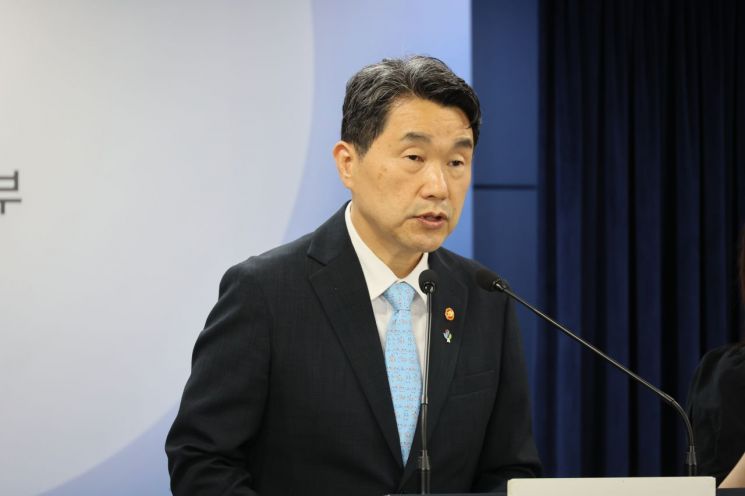
He also mentioned some specific measures. Deputy Prime Minister Lee said, "For example, we will prepare and present measures such as offering additional courses in the second semester for subjects that students could not complete in the first semester, or flexibly converting the curriculum operation so that students can complete the course if they make up for missed classes by the end of the academic year without confirming failing status at the end of the semester."
The content inferred to be related to the 'three-semester system' mentioned by the Medical School Deans' Council was also included. Deputy Prime Minister Lee said, "We will also consider more proactive measures such as securing class periods through additional semesters and partially reorganizing the lower-level curriculum." Earlier, Hong Won-hwa, Dean of Kyungpook National University and chairman of the Medical School Deans' Council, explained the proposal submitted to the government as "changing laws or standards to create a seasonal semester or making the new academic year a three-semester system next year, so that there will be no problems caused by classes when students return."
There is also a plan to establish a counseling center for medical students who wish to return to classes. Deputy Prime Minister Lee said, "For students who have difficulties in the process of returning to classes, we will support individual counseling through the 'Medical Student Return Counseling Center' within universities," and added, "We will strictly take measures according to laws and principles against collective actions or threats that prevent individual students from returning to classes."
However, Deputy Prime Minister Lee maintained the policy of 'not allowing' approval of collective leave of absence. He emphasized, "There should be no university approval for collective leave of absence applications submitted by students in opposition to government policies," and added, "If collective leave of absence approval is granted, we will respond strictly through thorough inspections of the respective universities."
The advancement of medical education was also specified. Deputy Prime Minister Lee said, "We promise to ensure the quality of medical education through revolutionary investments in universities and hospitals," and added, "By 2028, we will establish clinical education training centers capable of educating about 4,000 students annually at all national university hospitals." The medical community has pointed out that even with an increase in medical school admissions, the conditions for clinical education have not been properly established.
Deputy Prime Minister Lee continued, "We will promote bottom-up administrative and financial support so that all national and private medical schools can make efforts to innovate their curricula based on each school's strengths, regional conditions, and student demand."
Deputy Prime Minister Lee urged the medical community to actively participate in discussions on the normalization and advancement of medical education and medical reform. He said, "Medical reform can only achieve its goals when the government and the medical community work together," and added, "In promoting the normalization and advancement of medical education, we will communicate not only with university councils but also with various members of universities and hospitals, including medical students, residents, and medical school professors."
© The Asia Business Daily(www.asiae.co.kr). All rights reserved.
![Clutching a Stolen Dior Bag, Saying "I Hate Being Poor but Real"... The Grotesque Con of a "Human Knockoff" [Slate]](https://cwcontent.asiae.co.kr/asiaresize/183/2026021902243444107_1771435474.jpg)















