May PPI Down 0.2% MoM
Inflation Easing Signal Following CPI Slowdown
Last Week's New Unemployment Claims Also Exceed Expectations
Last month, the U.S. Producer Price Index (PPI), a wholesale price indicator, showed a surprising decline. Following the slowdown in the Consumer Price Index (CPI) inflation rate, the drop in PPI signals a continued easing of inflation, raising expectations for an interest rate cut. The market is currently pricing in nearly a 70% chance that the U.S. Federal Reserve (Fed) will lower interest rates in September.
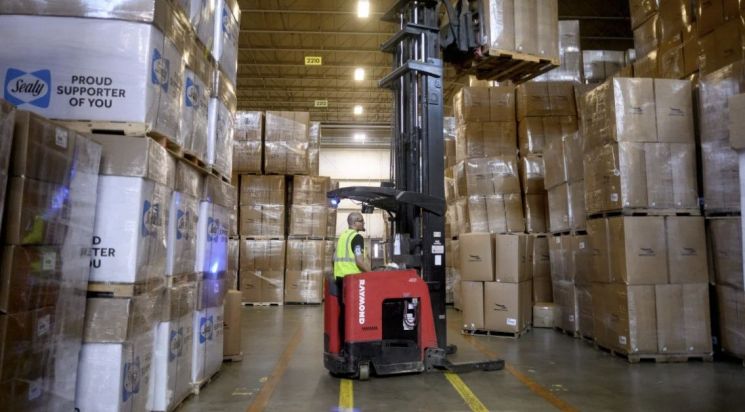
According to the U.S. Department of Labor on the 13th (local time), the May PPI fell by 0.2% compared to the previous month. This marks the largest decline in seven months since last October, significantly missing both the expert forecast (0.1% increase) and the previous month’s figure (0.5% increase).
On a year-over-year basis, the PPI rose by 2.2%, also falling short of market expectations (2.5%) and the previous month’s figure (2.3%).
The decline in gasoline prices led the drop in PPI. Nearly 60% of the May PPI decrease was attributed to falling gasoline prices. Prices for diesel fuel, commercial electricity, and aircraft fuel also declined. Overall commodity prices fell by 0.8%, marking the largest drop since last October. Service prices, which had driven the PPI rebound earlier this year, remained unchanged.
The core PPI, which excludes volatile food and energy prices to show the underlying inflation trend, also declined. The May core PPI was flat month-over-month and rose 2.3% year-over-year, both below expert forecasts (0.3% and 2.4%, respectively) and the previous month’s figures (0.5% and 2.5%, respectively).
Since the wholesale price index PPI influences the retail price index CPI with a time lag, this suggests that the previously high inflation is calming down.
The day before, the CPI was also confirmed to have slowed. The May CPI rose 3.3% year-over-year, below both the forecast (3.4%) and the previous month’s figure (3.4%). The core CPI, closely watched by the Fed, increased 3.4% year-over-year, marking the lowest inflation rate in about three years since April 2021 for the second consecutive month. It also missed market expectations (3.5%) and the previous month’s figure (3.6%).
Indicators of a cooling labor market, which had previously fueled inflation, were also confirmed. According to the U.S. Department of Labor, new unemployment claims for the week of June 2?8 reached 242,000. This exceeded both market expectations (225,000) and the previous week’s figure (229,000), signaling a gradual cooling of the labor market.
Accordingly, market expectations for an interest rate cut are growing. According to the Chicago Mercantile Exchange (CME) FedWatch tool, the federal funds futures market is currently pricing in about a 68% chance that the Fed will cut rates by at least 0.25 percentage points at the September FOMC meeting. The probability of a 0.25 percentage point or greater cut in November exceeds 79%.
Along with rising expectations for rate cuts, Treasury yields are also declining. The U.S. 2-year Treasury yield, sensitive to monetary policy, fell 4 basis points (1 bp = 0.01 percentage points) from the previous trading day to around 4.7%. The U.S. 10-year Treasury yield, a global bond yield benchmark, traded down 1 basis point to about 4.28%.
© The Asia Business Daily(www.asiae.co.kr). All rights reserved.
![Clutching a Stolen Dior Bag, Saying "I Hate Being Poor but Real"... The Grotesque Con of a "Human Knockoff" [Slate]](https://cwcontent.asiae.co.kr/asiaresize/183/2026021902243444107_1771435474.jpg)















