Medical Association and Major Hospital Professors, Private Practitioners to Hold Mass Strike on 18th
54% of Seoul National University Medical School Clinical Professors Participate
Medical Association: "Will Wait for Government's Position Until 18th and Respond Accordingly"
The Korean Medical Association (KMA), along with professors from major medical schools and hospitals, as well as private practitioners, will begin a collective strike starting on the 17th with Seoul National University College of Medicine. Leading the 'Big 5' medical school professors, the National Council of Medical School Professors (Jeonui Gyohyeop), which represents 40 medical schools nationwide, and the Emergency Response Committee of 19 medical schools (Jeonui Bi) also announced their participation in the collective strike on the 18th.
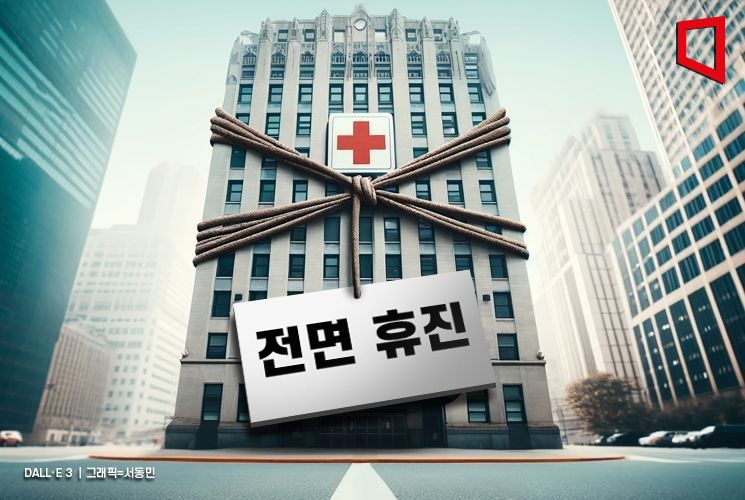
According to the medical community on the 16th, professors at Seoul National University College of Medicine will begin an indefinite strike starting on the 17th. The Emergency Response Committee of Seoul National University College of Medicine stated that out of 967 professors practicing in 20 clinical departments, 529 (54%) will participate in the strike. Normal clinical services at Seoul National University Hospital, Bundang Seoul National University Hospital, and Boramae Hospital will come to a halt.
The Emergency Response Committee of Yonsei University College of Medicine, which oversees Severance Hospital, Gangnam Severance Hospital, and Yongin Severance Hospital, will participate in the KMA's collective strike for one day on the 18th and then begin an indefinite strike starting on the 27th. The indefinite strike will continue until the government fully cancels administrative sanctions against residents and meets other demands. The Catholic University College of Medicine's emergency committee declared that eight hospitals under the Catholic Central Medical Center will strike on the 18th and plans to discuss additional indefinite strikes within the week. Professors from Sungkyunkwan University College of Medicine (Samsung Seoul Hospital) and Ulsan University College of Medicine (Seoul Asan Hospital) also intend to join the strike.
Jeonui Gyohyeop has also decided to join the strike following the KMA's decision. Kim Chang-su, president of Jeonui Gyohyeop, said, "We have decided to fight alongside the KMA against the government," adding, "Since each hospital has different circumstances, the specific methods of the strike are being discussed by each hospital's faculty council." Jeonui Bi, which includes 19 medical schools, also plans to participate in the strike on the 18th. Emergency committees of Korea University College of Medicine and Chungbuk National University College of Medicine, among other major medical schools, have also resolved to join the KMA's collective strike.
Earlier, on the 9th, the KMA held a nationwide doctors' representatives meeting at the KMA headquarters in Yongsan-gu, Seoul, announcing a full strike on the 18th along with a mass rally. From the 4th to the 7th, the KMA conducted a survey among all members regarding participation in collective action. Out of 111,861 eligible voters, 70,800 participated, showing a 63.3% turnout. When asked if they would participate in collective action including the strike, 73.5% voted in favor.
However, even during the full strike, treatment for existing inpatients and critically ill or emergency patients will not be suspended. The scope of the strike excludes emergency rooms, intensive care units, dialysis rooms, and delivery rooms, covering all outpatient services and non-emergency surgeries and procedures.
The medical community is also considering ways to minimize patient inconvenience by increasing outpatient services after the strike ends to accommodate the backlog of patients. Oh Seung-won, a professor at Seoul National University Hospital Gangnam Center and spokesperson for the Seoul National University College of Medicine Emergency Response Committee, said, "We do not want patients to suffer excessively due to the full strike, so we are considering various supplementary measures," adding, "Patients with appointments after the 17th will be able to receive care as soon as possible by increasing outpatient visits after the strike ends."
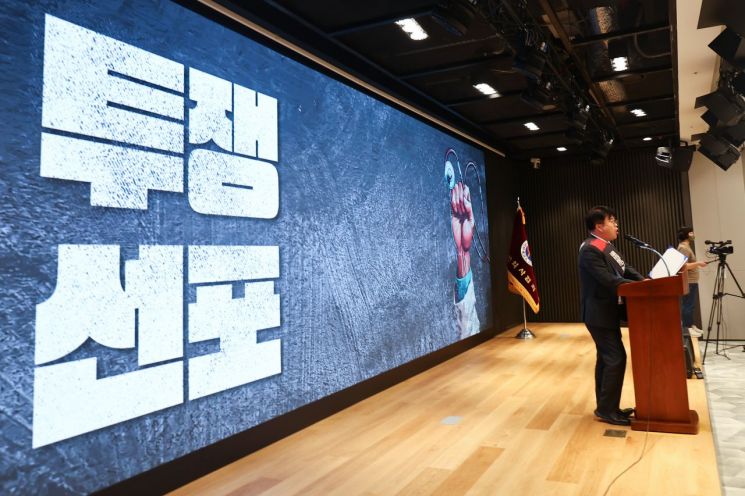 Im Hyun-taek, president of the Korean Medical Association, is declaring a struggle at the National Doctors' Representatives Conference held on the afternoon of the 9th at the KMA Hall in Yongsan-gu, Seoul. [Image source=Yonhap News]
While the KMA and major university hospitals are joining the collective strike, the impact on primary care is expected to be minimal. Unlike medical school professors, private practitioners, whose livelihoods depend on their work, are expected to have a low participation rate in the strike. Some in the private practice community have expressed concerns about potential legal disputes with the government if they participate in the strike.
Primary care institutions are medical facilities with fewer than 30 beds that mainly provide outpatient care. Commonly seen 'clinics' and 'public health centers' fall under this category. Most private practitioners operate primary care institutions. One private practitioner said, "Looking back at past strikes, it has been difficult for private practitioners to participate in strikes," adding, "I think active participation will not be high this time either." He further noted, "If we consider the reality of private practitioners, a struggle involving a 40-hour workweek, as per the OECD average, might be more realistic and effective."
In fact, during the total strike in 2020, the strike rate among private practitioners was not high. On the first day of the second strike on August 26, 2020, the nationwide average strike rate was 10.8%, 8.9% on the 27th, and 6.5% on the 28th. More than 9 out of 10 clinics remained open, so there was no primary care gap. Earlier that month, the first strike, which coincided with the vacation season on the 14th, had a strike rate of only 32.6%.
However, recent sentencing of a physician to prison by the Changwon District Court for prescribing McPheran medication has seriously agitated the private practice community, leading to predictions of higher participation in the KMA strike on the 18th.
According to the medical community, a strike rate of 10-30% is unlikely to seriously affect patient inconvenience. A medical official explained, "Even if the strike rate among private practitioners reaches nearly 30%, it would only cause some inconvenience such as longer waiting times, but not significant discomfort for patients," adding, "Unlike university hospital care, patients visiting private clinics tend to have mild conditions, and similar care can be received at any clinic."
Meanwhile, some frontline private practitioners have expressed concerns about potential administrative sanctions they might face after participating in the strike. A local medical association president said, "There are certainly some who want to participate in the strike for whatever reason," but added, "There is anxiety among members that participating in the strike could lead to license suspension or revocation."
He continued, "For private practitioners, their livelihood is at stake, but there has been no explanation from the KMA about what risks might exist or what legal support might be available if they strike," adding, "I think it is necessary for the KMA to provide guidelines on the risks and legal aspects related to striking."
 On the morning of February 13th, children and their parents are waiting for medical consultation at a pediatric and adolescent clinic in Seoul. [Image source=Yonhap News]
Meanwhile, according to the government's pre-strike closure notification order, 1,463 medical institutions reported they would close on the 18th, accounting for 4% of the total 36,371 institutions subject to the order. The medical community does not attach much significance to the low number of strike notifications. Chae Dong-young, spokesperson for the KMA, said, "The strike notification order itself is absurd," adding, "Individuals may be sick or have schedules on that day, so most are thought not to be reporting because the government is requiring notifications."
He added, "The important thing is that, regardless of strike notifications, many want to participate in the KMA's rally," and said, "The government issuing the strike notification order while saying private practitioners will not participate seems like a self-contradiction."
Meanwhile, some groups in the medical community have declared they will not participate in the collective strike. The Association of Obstetric Hospitals, the Korean Pediatric Hospital Association, and the Epilepsy Support Hospital Council have declared non-participation citing reasons such as "sympathizing with the KMA's struggle but unable to leave patients unattended." The Korean Society of Anesthesiology and Pain Medicine also stated that essential personnel for necessary surgeries will remain at hospitals to support care.
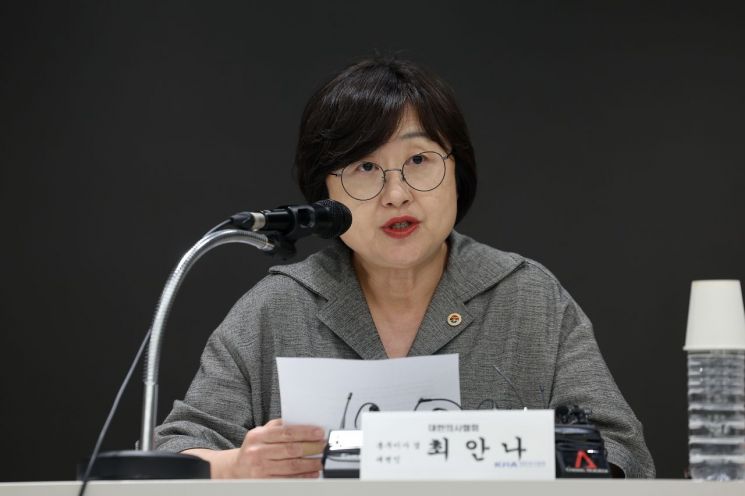
The medical community has stated that if the government shows a progressive change in stance, they will reconsider the strike. Anna Choi, spokesperson for the KMA, said at a briefing held on the 13th at the KMA headquarters in Yongsan-gu, Seoul, after a joint meeting with representatives from the Korean Academy of Medical Sciences, Jeonui Gyohyeop, Jeonui Bi, and the Seoul National University College of Medicine Emergency Response Committee, that this was their position.
Spokesperson Choi said, "If the government shows a progressive change in stance, we will reconsider the strike," adding, "There is not much time left. If the government does not show a change in position by the end of this weekend, we will not be able to prevent the nationwide strike planned for next week."
When asked by reporters what specific changes in stance they expect, she replied, "We need to discuss again what the medical community has demanded so far through the KMA as a single channel, and the specifics are under discussion." She added, "We will wait once more for the government's position until the 18th and respond accordingly. If the position does not change, we will form a broad medical community countermeasure committee including the joint meeting participants and city/provincial medical associations to respond."
© The Asia Business Daily(www.asiae.co.kr). All rights reserved.
![Clutching a Stolen Dior Bag, Saying "I Hate Being Poor but Real"... The Grotesque Con of a "Human Knockoff" [Slate]](https://cwcontent.asiae.co.kr/asiaresize/183/2026021902243444107_1771435474.jpg)


















