Landlord Can Use HUG Appraisal Value When Objecting to Officially Announced Price
'126% Rule' Remains for Villa Jeonse Deposit Insurance Enrollment
Ordinary Variable Costs Reflected When Calculating Increased Construction Costs for Private Rental REITs
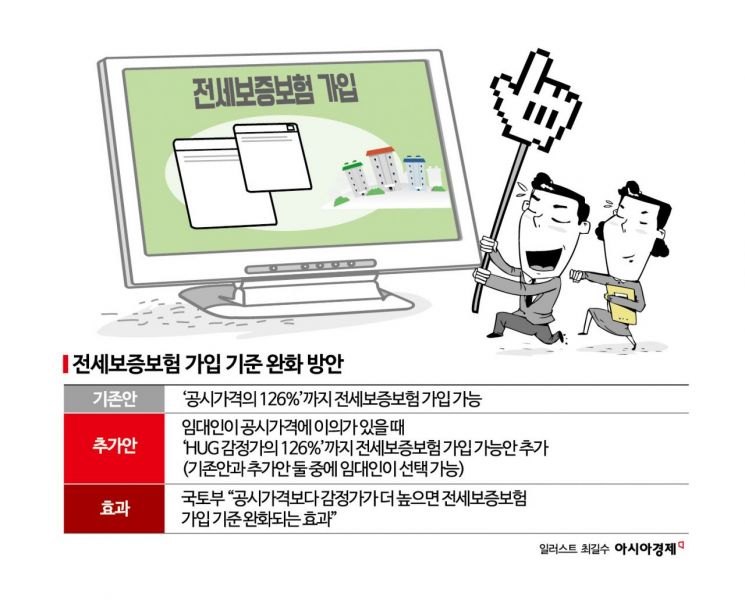
The path to easier subscription to the jeonse deposit return guarantee for non-apartment properties such as villas is opening up. The Ministry of Land, Infrastructure and Transport has decided to recognize the Housing and Urban Guarantee Corporation (HUG)'s appraised value, along with the publicly announced price, as the standard for calculating house prices when subscribing to the jeonse deposit return guarantee. This measure was introduced after the jeonse fraud incidents led to stricter guarantee insurance subscription criteria, putting the villa jeonse market at risk of collapse.
On the 13th, the Ministry announced the 'Post-Public Forum Regulatory Improvement Measures' task, which includes the reorganization of the jeonse deposit return guarantee subscription. The jeonse deposit return guarantee is a system where HUG pays the tenant the deposit if the landlord fails to return it, and later recovers the amount from the landlord.
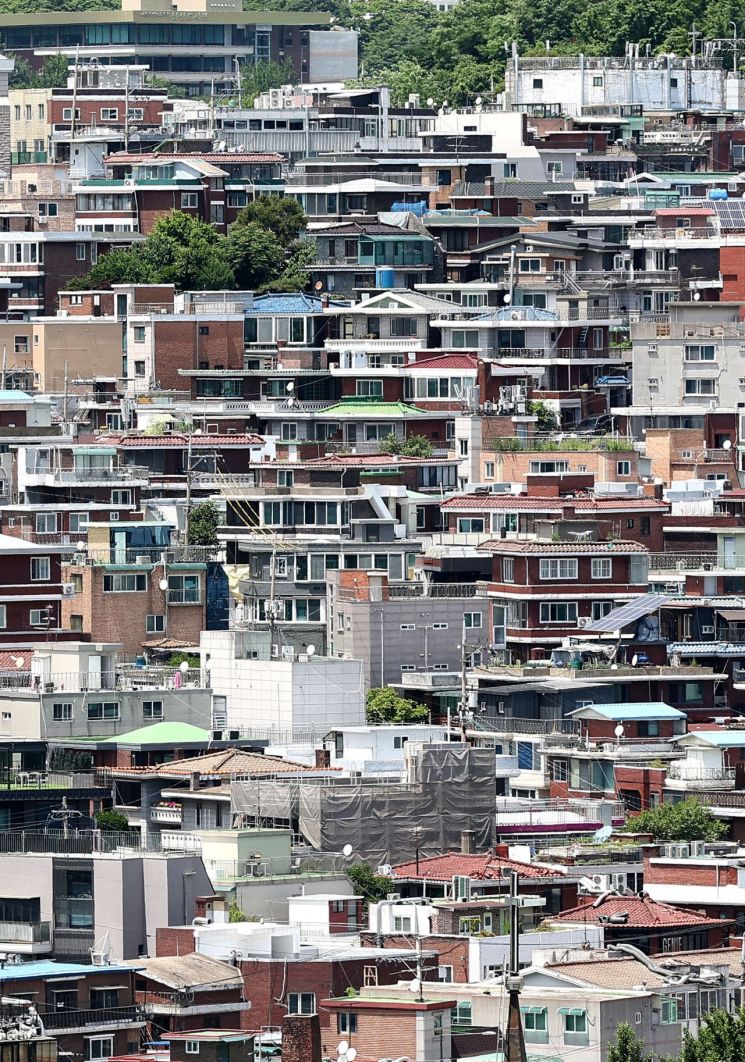
Following criticisms that the jeonse deposit return guarantee encouraged rampant jeonse fraud, the government tightened subscription criteria last year. The recognized ratio of the publicly announced price to the house price was lowered from 150% to 140%, and the jeonse rate was reduced from 100% to 90%. Currently, only when the jeonse deposit is 126% or less of the publicly announced price can one subscribe to the guarantee insurance.
For example, previously, a tenant could subscribe to the jeonse deposit return guarantee even if they signed a contract for a villa with a publicly announced price of 100 million KRW at a jeonse of 150 million KRW. However, with the tightened criteria, now the tenant can only insure up to a jeonse limit of 126 million KRW. As subscription requirements tightened and the publicly announced price threshold lowered, it became difficult to subscribe to the jeonse deposit return guarantee, leading to a phenomenon in the jeonse market of 'villa avoidance and apartment concentration.'
As a countermeasure, the government decided to maintain the '126% rule' but allow landlords to file objections if the publicly announced price is lower than the house price, in which case the appraised value calculated by HUG will be used. If the appraised value is higher than the publicly announced price, this effectively relaxes the subscription criteria for the jeonse deposit return guarantee. Ham Young-jin, head of the Real Estate Research Lab at Woori Bank, predicted, "The subscription threshold for the jeonse deposit return guarantee will be lowered mainly for newly built multi-family and row houses near subway stations rather than old villas," adding, "This will partially improve the trend of converting non-apartment properties to monthly rent and the concentration of jeonse in apartments."
"Increasing construction costs to expand private rental housing"
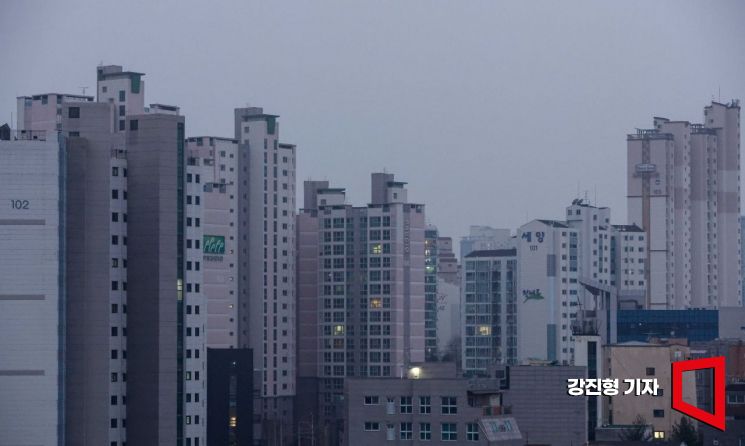
The Ministry of Land, Infrastructure and Transport also included a plan to adjust construction costs to increase private rental housing in the 'Post-Public Forum Regulatory Improvement Measures.' This is a measure to facilitate construction progress at private rental REITs sites supported by the public, as skyrocketing construction costs have delayed groundbreaking and completion. Kim Kyu-chul, director of the Housing and Land Office at the Ministry, pointed out, "There are 16,000 units that have not started construction even two years after being selected as preferred negotiation targets for private rental REIT projects," adding, "The construction cost issue is the biggest problem."
The core of the construction cost improvement for new private rental REIT projects is that the usual adjustment factor, which was previously deducted when calculating the increased construction cost, will no longer be subtracted. For private rental REIT projects proposed by the private sector or conducted through Korea Land and Housing Corporation (LH) land contests, the increase in construction costs was calculated by excluding the usual adjustment factor (3%) from the increase rate. For example, if construction costs rose by 30% over a 3-year construction period, only 21% (30% minus 9%, which is 3 years × 3%) was recognized as the increase.
Under the improvement plan, the usual adjustment factor will not be deducted for the period during which construction was delayed due to external issues such as land use restrictions or cultural heritage development, rather than the fault of the construction company. For instance, if construction was delayed for one year out of three due to external factors preventing land use, the deduction rate will be reduced to 6% (2 years × 3%). This means the recognized increase in construction costs will rise to 24%.
New projects will allocate contingency funds for construction cost adjustments. Existing projects will undergo construction cost adjustments through the Project Financing (PF) Adjustment Committee from July this year to June 2027, over a three-year period.
Simplifying New:Home procedures... shortened by 3 months
To revitalize urban housing projects, additional supply of 'New:Home,' public sale housing near subway stations, will be provided, and the redevelopment plan procedures will be simplified to enable faster construction.
When changes to public housing supply plans like New:Home are necessary, the redevelopment plan change procedures will be simplified. The key improvement is that the process can proceed without 'hearing opinions from local councils' and 'review by the Urban Planning Committee.' Director Kim stated, "The usual one-year period for redevelopment plan changes will be shortened to about nine months."
Additionally, during the consultation process for establishing reconstruction and redevelopment associations, if the managing authority holding national or public land within the redevelopment zone does not explicitly oppose, it will be considered as consenting to the consultation. This is a measure to resolve ambiguities in the project promotion process.
© The Asia Business Daily(www.asiae.co.kr). All rights reserved.
![Clutching a Stolen Dior Bag, Saying "I Hate Being Poor but Real"... The Grotesque Con of a "Human Knockoff" [Slate]](https://cwcontent.asiae.co.kr/asiaresize/183/2026021902243444107_1771435474.jpg)

















