Meeting to Check Agricultural Food Supply and Growth Conditions... Focused Inspection on Open-field Vegetables
Decrease in Summer Cabbage Cultivation Area Slows, Concerns Over Damage from Heatwaves and Heavy Rain
Weekly Inspections Planned for Fruit Trees, Dining, and Other Sectors
The government has decided to stockpile 10,000 tons of summer cabbage to stabilize prices amid inevitable production declines caused by heavy rain, heatwaves, and typhoons during the summer season.
On the 12th, the Ministry of Agriculture, Food and Rural Affairs held a 'Meeting to Check the Supply and Demand and Growth Status of Agricultural Products' at the Government Sejong Complex, chaired by Vice Minister Han Hoon, to discuss this plan.
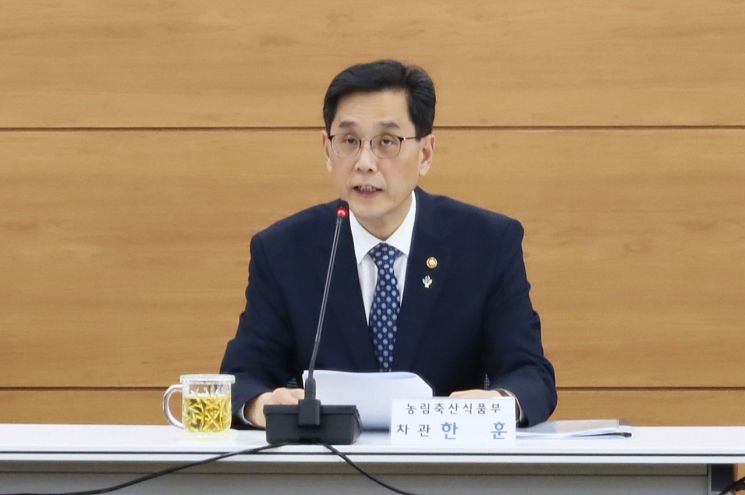
According to the Korea Rural Economic Institute, the intended cultivation area for summer cabbage this year is 4,956 hectares, a 5.5% decrease compared to the previous year. Vice Minister Han stated, "The annual production of summer cabbage is about 250,000 tons, and prices sometimes soar due to a shortage of 10,000 to 20,000 tons. Since summer cabbage production can decrease due to weather disasters such as heatwaves, we plan to stockpile 10,000 tons of spring cabbage, which currently has a surplus in supply and demand, secure 23,000 tons of government-available quantities through the Nonghyup shipment control facilities and contract cultivation, and prepare 2 million reserve seedlings to prepare for weather disasters."
For radishes, the shipment of stored winter radishes ended early from late June to mid-June, and the cultivation area of spring radishes has decreased with poor crop conditions, resulting in high prices. Although prices are expected to decline once open-field spring radishes are shipped in earnest from mid-June, the Ministry of Agriculture, Food and Rural Affairs forecasts that prices will remain somewhat higher than last year due to reduced supply. Accordingly, the ministry plans to stockpile 5,000 tons of spring radishes and expand supply by applying tariff quotas from July to October.
Additionally, for cabbages, which may experience poor crop conditions due to adverse summer weather, the ministry will apply tariff quotas until October, and for carrots, tariff quotas will be applied until the end of September to ease the burden on food and dining businesses and expand supply.
The Ministry of Agriculture, Food and Rural Affairs plans to monitor supply and demand situations weekly by selecting key items to stabilize agricultural product prices. Following the current open-field vegetables, they will check fruit and dining prices.
This year, apple and pear production is expected to recover to average levels. Vice Minister Han said, "There was almost no cold damage to apples and pears this year, so production is currently expected to be at average levels. However, since there is a risk of anthracnose during summer heavy rain and heatwaves, we will make every effort to manage growth, including the distribution of pesticides."
© The Asia Business Daily(www.asiae.co.kr). All rights reserved.
![Clutching a Stolen Dior Bag, Saying "I Hate Being Poor but Real"... The Grotesque Con of a "Human Knockoff" [Slate]](https://cwcontent.asiae.co.kr/asiaresize/183/2026021902243444107_1771435474.jpg)
















