Pulp Prices Up 52% in One Year
Amid Fierce Competition with Only Nominally Domestic Products
Indonesian Company Acquires Monalisa and Ssangyong C&B
Domestic Firms Preparing Dumping Complaints
Domestic toilet paper manufacturers are suffering from a double burden. Raw material prices are soaring, while competition with low-priced products that are "only nominally domestic" is intensifying.
According to the Ministry of Trade, Industry and Energy on the 12th, the average price of southern U.S. hardwood pulp (SBHK) in May was $860 per ton. This is about a 52% increase compared to $565 per ton in June last year. It is about 80% of the all-time high price. The burden of raw material costs on domestic companies is increasing.
The sharp rise in pulp prices is largely due to increased logistics costs. Demand from major countries such as the U.S. and China is rising, but logistics costs have recently surged due to conflicts in the Middle East and other factors. The Shanghai Containerized Freight Index (SCFI), which reflects global maritime shipping route freight rates, exceeded 3000 for the first time since the COVID-19 outbreak on the 31st of last month.
As the price of pulp, the main raw material for toilet paper, rises, domestic manufacturers are expressing difficulties. Although pulp prices are expected to continue rising this year, they are unable to raise product prices. This is due to intensified competition with cheap "only nominally domestic" products.
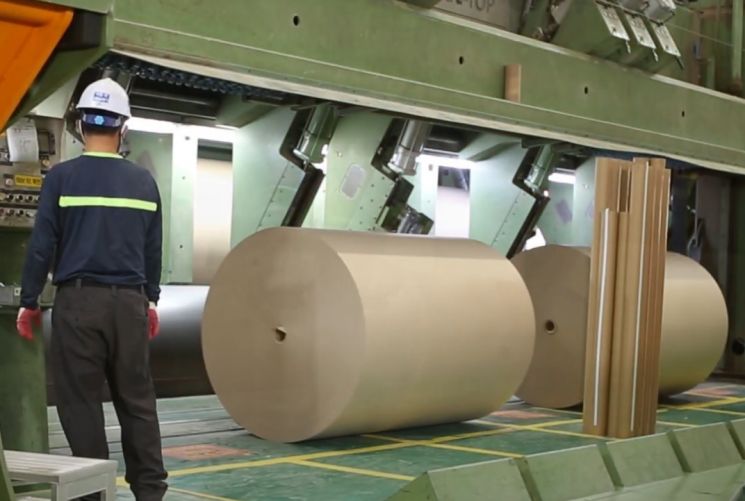
60% of the manufacturing cost of toilet paper is the main raw material, the base fabric. Toilet paper can be labeled as domestic if the processing is done domestically, regardless of whether the base fabric is produced domestically or imported. The problem is that imported base fabric is about 20% cheaper than domestic base fabric. Many "domestic" products sold as private brand (PB) items by distributors or on online platforms actually use imported base fabric.
An industry insider said, "Unlike domestic toilet paper base fabric produced under strict environmental regulations, foreign products skip this process," and pointed out, "It is problematic to label the country of origin as South Korea and sell products that use imported base fabric."
Moreover, recently, the Indonesian paper company Asia Pulp & Paper (APP) acquired toilet paper manufacturers Monalisa and Ssangyong C&B, putting domestic companies on alert. APP is a comprehensive Indonesian paper company ranked 10th globally in sales. About 600,000 tons of base fabric are consumed annually in Korea, and APP supplied about 110,000 tons last year. APP had only supplied base fabric domestically until now, but with this acquisition, it can produce products, and is expected to rapidly increase its influence in the domestic market.
An industry official lamented, "APP has been increasing its market influence by supplying base fabric at low prices in Korea for some time. By achieving vertical integration from base fabric processing to product manufacturing, it can supply cheaper products, putting domestic companies in a very difficult situation."
In response, domestic companies are preparing to file a dumping complaint against APP with the Trade Commission of the Ministry of Trade, Industry and Energy. They suspect APP is intentionally dumping to drive domestic companies out of business and are collecting related evidence. They are also considering filing a complaint with the Korea Customs Service for violating the Foreign Trade Act (country of origin labeling) due to APP exploiting loopholes in Korea’s country of origin labeling system to sell products as domestic.
© The Asia Business Daily(www.asiae.co.kr). All rights reserved.

















