The banking sector is supporting the digitalization of self-employed businesses by establishing dedicated platforms for individual entrepreneurs within their banking applications. This comes as self-employment faces comprehensive structural changes and digitalization due to complex issues such as the COVID-19 pandemic and low birth rates combined with an aging population.
According to Hana Financial Management Research Institute on the 11th, the rankings of Korean restaurants and telecommunication sales, which held the first and second places respectively in the number of businesses among domestic self-employed businesses before and after the COVID-19 period, have reversed. Korean restaurants, which previously ranked first, increased only by 8.16% (about 31,000 businesses) to approximately 411,000 as of the end of the first quarter, compared to 380,000 at the end of the first quarter in 2019, five years ago. Meanwhile, telecommunication sales, which ranked second, surged by 167.1% from 230,000 five years ago to 617,000, taking the top spot.
Telecommunication sales refer to businesses that advertise products (including services) through electronic media such as broadcasting, print media, internet, and PC communications, and sell products by receiving consumer subscriptions via telecommunications equipment, mail, or deposit accounts. This growth is attributed to the rapid expansion of the e-commerce market operating non-face-to-face and online during the COVID-19 period.
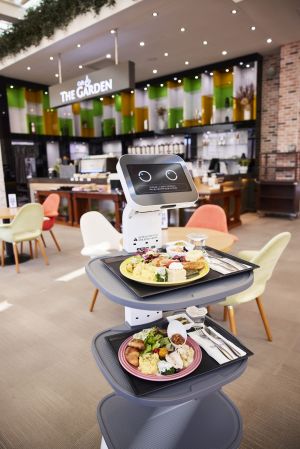
The digitalization of self-employment is not only evident in changes in business types. According to the research institute, the self-employment market recently has been expanding into platforms supporting offline store management such as reservation management and material purchasing, as well as artificial intelligence (AI) sectors like phone response and customer management. Furthermore, kiosks, serving robots, and cooking robots, which are being rapidly introduced to reduce labor costs and address difficulties in hiring, also represent aspects of digitalization in self-employed workplaces.
Along with digitalization, the overall structure of self-employment is also changing due to shifts in consumer lifestyles caused by the COVID-19 pandemic and demographic changes such as low birth rates and aging. For example, as the COVID-19 pandemic ends, home economy sectors like food delivery and interior design are shrinking, but industries such as screen golf centers and technical academies for hobbies and self-development are thriving. Additionally, as low birth rates and aging intensify, sectors like PC rooms, study rooms, and karaoke rooms are contracting, while the self-employment market related to care is growing due to increases in dual-income and single-person households.
As digitalization of self-employment emerges as a crucial topic, the banking sector is also strengthening support for individual entrepreneurs by recently building dedicated platforms in a spirit of mutual growth. Hana Bank has been providing functions such as ▲labor services (simple preparation and issuance of employment contracts and pay slips) ▲influencer promotion services ▲customized policy fund inquiry services ▲tailored consultation services for business owners ▲and easy transmission of transaction details through its 'Sajangnim ON' service launched early last year.
Shinhan Bank also established a dedicated platform called 'Soho Mate' in June last year. This platform includes ▲'Bookkeeping' capable of managing purchases, sales, and tax reporting ▲'Commercial Area Analysis' that provides an overview of commercial districts, potential customers, and the competitiveness of one’s store ▲'Trends' introducing promising business areas and industries based on commercial area data ▲and 'Customized Finance' offering recommended financial products and services considering customers’ region, industry, and age.
KB Kookmin Bank also revamped its 'Business Zone' provided in the KB Star Banking application into 'Sajangnim+' in April and is currently operating it. Sajangnim+ offers ▲a representative business account ▲a business financial product center ▲customized policy fund recommendations ▲business owner tips ▲and free consulting application services.
These services provide customized financial services for individual entrepreneurs while also offering labor, promotion, and consulting functions. The research institute stated, "Current support for self-employed mutual growth mainly focuses on mitigating risks of insolvency due to high interest rates and inflation by supporting purchases or reducing costs to maintain profits," adding, "In the long term, it is necessary to expand the provision of dedicated platforms to strengthen the digital competitiveness of self-employment along with supporting structural adjustments in vulnerable industries due to population decline caused by low birth rates."
© The Asia Business Daily(www.asiae.co.kr). All rights reserved.
![Clutching a Stolen Dior Bag, Saying "I Hate Being Poor but Real"... The Grotesque Con of a "Human Knockoff" [Slate]](https://cwcontent.asiae.co.kr/asiaresize/183/2026021902243444107_1771435474.jpg)
















