The Incheon Health and Environment Research Institute announced on the 9th that Vibrio vulnificus was detected for the first time this year in seawater samples collected from Incheon on the 4th.
Vibrio vulnificus overwinters in the mudflats at the bottom of the sea during the cold winter months, and when the seawater temperature rises above 18℃, it is detected in the surface water.
According to data from the Korea Disease Control and Prevention Agency's infectious disease portal, cases of Vibrio vulnificus infection occurred from June to October last year, with 8 cases reported in Incheon (69 cases nationwide).
The main routes of infection are consuming raw or undercooked seafood or shellfish contaminated with Vibrio vulnificus, or contact with contaminated seawater while having open wounds on the skin.
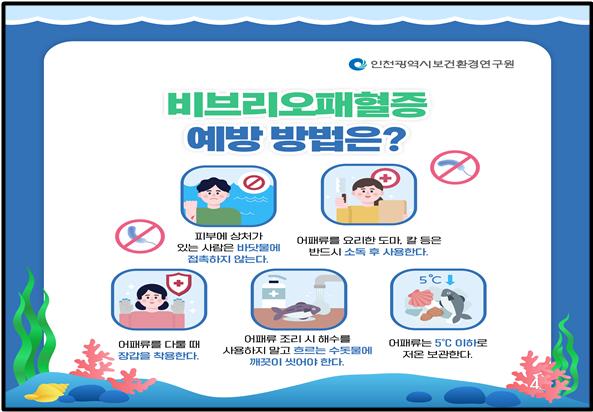 Prevention Methods for Vibrio Sepsis [Provided by Incheon City Health and Environment Research Institute]
Symptoms include acute fever, chills, low blood pressure, abdominal pain, vomiting, and diarrhea, with skin lesions such as rash, swelling, and hemorrhagic blisters appearing on the legs within 24 hours. Chronic liver disease patients, diabetics, alcoholics, and immunocompromised individuals are high-risk groups with a greater risk of Vibrio vulnificus infection and death.
To prevent Vibrio vulnificus infection, people with skin wounds should avoid contact with seawater. Also, seafood and shellfish should be thoroughly cooked, stored below 5℃, and cutting boards and knives used for seafood preparation must be properly disinfected.
Kwon Moon-ju, director of the Incheon Health and Environment Research Institute, stated, "According to the Korea Meteorological Administration's long-term forecast, there is over a 40% chance that the average temperature this summer will be higher than usual," and urged, "Strictly follow preventive measures, and especially high-risk groups with underlying conditions such as chronic liver disease, diabetes, and alcoholism should be extra cautious."
© The Asia Business Daily(www.asiae.co.kr). All rights reserved.

















