OPEC+ Extends Voluntary Additional Production Cuts
Simultaneously Announces Start of Production Increase After Cuts
Market Analysts: "No Sharp Oil Price Fluctuations, but Gradual Movements Expected"
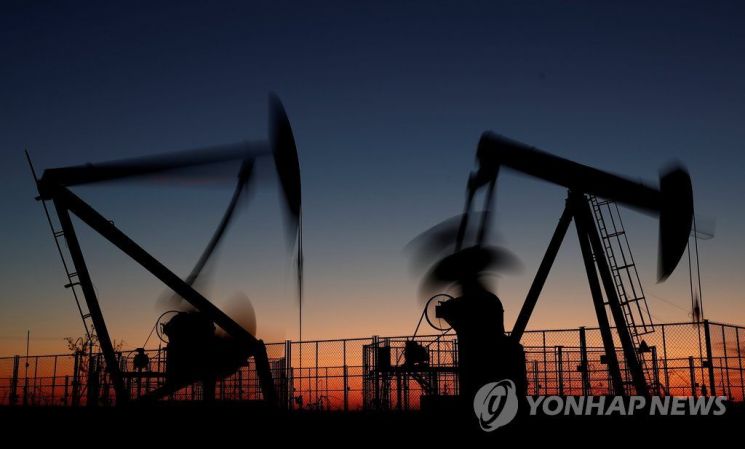
Outlooks on oil prices are divided. Some believe that oil prices will find support at the lower end and show an upward trend due to delayed supply normalization and the continued policy of the U.S. government to repurchase strategic reserves, while others interpret the recent OPEC+ meeting results as an increase in production and expect a gradual decline amid weakening crude oil demand.
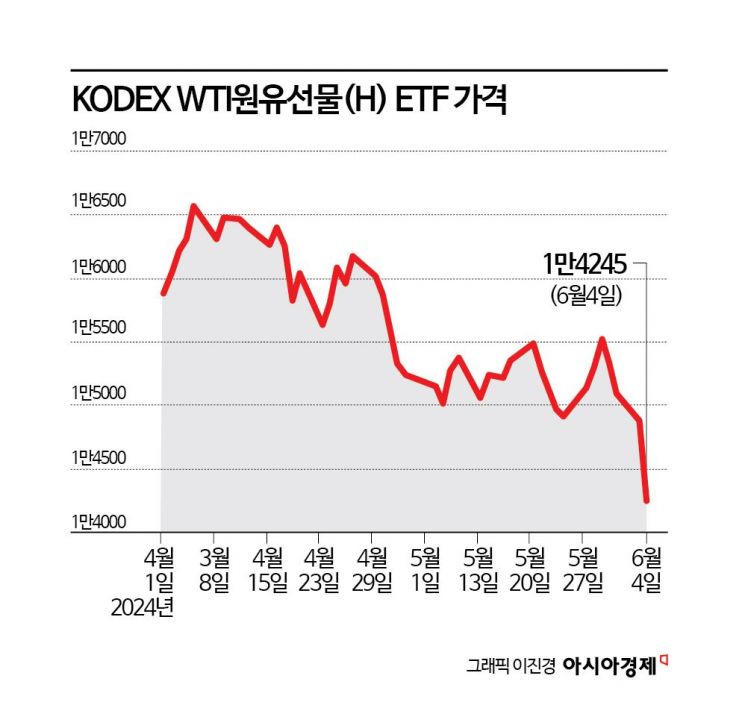
According to the Korea Exchange on the 5th, the KODEX WTI Crude Oil Futures ETF (H), which tracks the price of West Texas Intermediate (WTI) crude oil futures, has fallen 14.11% from its peak in April as of the closing price on the 4th, showing a sluggish performance. In fact, the WTI price plunged more than 3% in a single day on the 3rd, closing at $74.22.
Experts pointed to industrial demand, oil-producing countries' supply policies, and the U.S. government's actions as factors that could influence the movement of oil prices in the second half of the year, following the recent sharp decline due to concerns over increased supply. The securities industry expects that oil prices are unlikely to move drastically in the future, but opinions are divided on whether prices will rise moderately within a limited range or decline.
On the 2nd, OPEC+ held a regular meeting and decided to extend the official production cut of 2 million barrels per day until the end of 2025, while also extending the voluntary production cuts, which were scheduled to end this month, until September. Hwang Byung-jin, a researcher at NH Investment & Securities, said, "The meeting results only extend the existing production cut deadline, so there is no material for a sharp rise in oil prices. However, the extension of the voluntary cuts, which were supposed to end this month, delays the timing of supply normalization, thus supporting the lower bound of oil prices." He added, "A moderate rise in oil prices is expected until the third quarter, so short-term investment expansion in crude oil is valid. The downward pressure on oil prices is expected to emerge in the fourth quarter when supply normalization begins."
Additionally, Jeon Gyu-yeon, a researcher at Hana Securities, mentioned, "The recent higher-than-expected gasoline inventory is due more to the U.S. government's release of strategic reserves than to a decrease in demand." He said, "However, this release is a one-time event, and the U.S. is maintaining its policy of repurchasing strategic reserves. Since global crude oil supply conditions remain limited in the second half, international oil prices based on WTI could move up to $90 per barrel."
However, there is also an interpretation that oil prices will eventually decline due to supply pressure, even if OPEC+ extends voluntary production cuts. Han Seung-jae, a researcher at DB Financial Investment, said, "The OPEC+ meeting results indicate a shift to a policy of gradual production increases starting from October for one year. We need to prepare for a gradual weakening of oil prices." He added, "With demand slowing in the U.S. and China, current demand forecasts are expected to be revised downward as the second half progresses. Global oil supply could shift to surplus from the fourth quarter of this year through 2025."
Ultimately, this OPEC+ meeting is interpreted as providing factors that could influence both the rise and fall of oil prices. Kim Kwang-rae, a researcher at Samsung Futures, analyzed, "The existing official production cuts have been extended until the end of 2025, and the extension of the voluntary additional cuts until the third quarter, which the market was most focused on, is positive for oil price increases. However, the announcement that production will begin to increase after the extension of additional cuts, and the fact that the United Arab Emirates (UAE) received an additional production quota, will act as negative factors for oil prices."
© The Asia Business Daily(www.asiae.co.kr). All rights reserved.
![Clutching a Stolen Dior Bag, Saying "I Hate Being Poor but Real"... The Grotesque Con of a "Human Knockoff" [Slate]](https://cwcontent.asiae.co.kr/asiaresize/183/2026021902243444107_1771435474.jpg)
















