IBK Economic Research Institute Report on "Causes and Concerns of Changes in US-China Trade Structure"
"US Building Domestic-Centered Supply Chains...Critical Time to Strengthen Response Capabilities"
As China replaces intermediate goods it previously imported from Korea with domestically produced products, the competitive landscape is shifting, leading to a decreasing share of Korea within the Chinese market. At the same time, Korea continues to rely on Chinese-made materials, parts, and equipment in sectors such as semiconductors, displays, automobiles, and secondary batteries, according to an analysis.
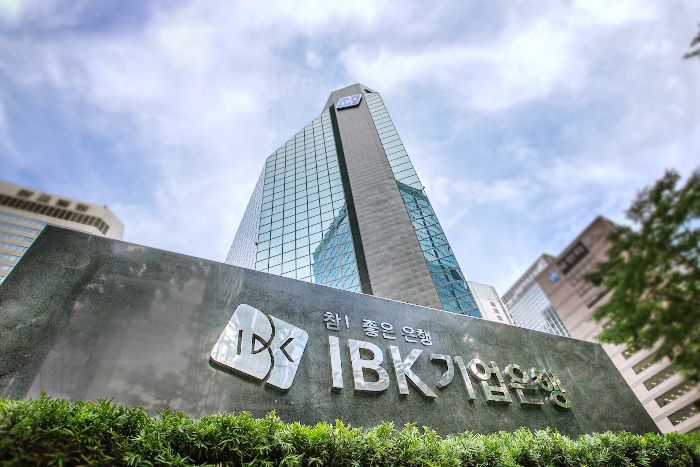
On the 3rd, IBK Economic Research Institute under IBK Industrial Bank of Korea revealed this in a report titled "Causes and Concerns of Changes in Trade Structures with the U.S. and China." The institute pointed out that the reason for Korea's declining share in the Chinese market is the transformation from a mutually cooperative division of labor in 'Korean intermediate goods exports - Chinese processing trade' into a competitive structure, as China substitutes intermediate goods previously imported from Korea with its own products.
In particular, the institute analyzed that with China's technological advancement, Korea has significantly come to depend on Chinese-made materials, parts, and equipment in the semiconductor, display, automobile, and secondary battery sectors.
Accordingly, the institute emphasized the urgent need to swiftly shift to new growth strategies such as ▲ diversifying export items to China ▲ diversifying supply chains that are dependent on China ▲ and securing future growth industries through technological super-gap.
Furthermore, the institute analyzed that while the U.S. has emerged as the country with the largest trade surplus overall, the increase in trade with the U.S. was influenced by direct effects from the Korea-U.S. Free Trade Agreement (FTA) signed in 2012, indirect effects such as the spillover benefits from U.S.-China conflicts and the Korean Wave (Hallyu), and income effects stemming from the robust U.S. economy.
However, it explained that as the U.S. is likely to raise trade barriers by building a U.S.-centric supply chain, and various risk factors persist across key industries such as automobiles, secondary batteries, and petrochemicals, it is a critical time to strengthen government policies and the response capabilities of small and medium-sized enterprises (SMEs).
Director Kim said, "Currently, domestic SMEs face a double burden as exports to China decline and exports to the U.S. are gradually replaced by local companies within the supply chains of large corporations operating in the U.S.," adding, "Given the high trade dependence on both China and the U.S., we hope this report will aid in establishing support policies for exporting SMEs."
© The Asia Business Daily(www.asiae.co.kr). All rights reserved.
![Clutching a Stolen Dior Bag, Saying "I Hate Being Poor but Real"... The Grotesque Con of a "Human Knockoff" [Slate]](https://cwcontent.asiae.co.kr/asiaresize/183/2026021902243444107_1771435474.jpg)















