Commercial Development Expected to Begin in 2035
Physical survey results revealed that there are oil and gas reserves amounting to 14 billion barrels in the offshore area of Yeongilman Bay, Pohang. This is more than 300 times the size of the previously discovered Donghae Gas Field (45 million barrels). The government plans to begin substantial exploration by the end of this year and expects commercial drilling to be possible as early as 2027. If drilling succeeds, South Korea will once again hold the status of an oil-producing country.
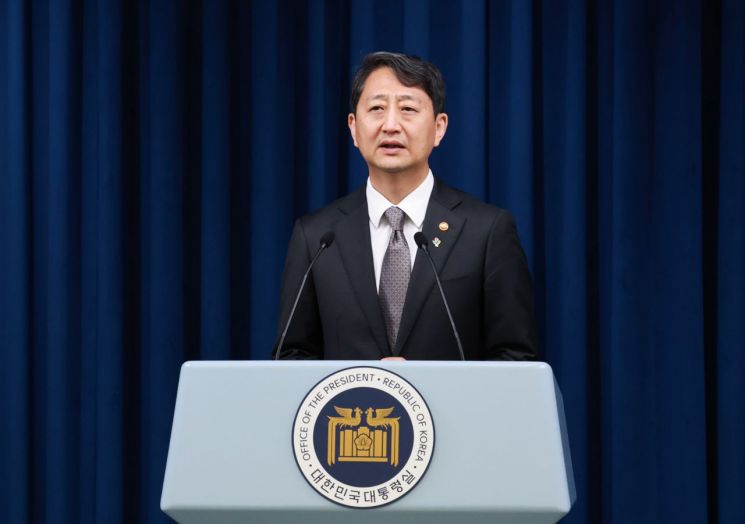
On the 3rd, Andeok Geun, Minister of Trade, Industry and Energy, stated, "We expect substantial exploration of the oil and gas field discovered offshore Yeongilman Bay, Pohang, to begin around December this year. After confirming the actual reserves in the first half of next year, if commercial drilling proceeds, it is anticipated to start around 2027-2028, with commercial results expected by approximately 2035."
The government has consistently attempted offshore oil and gas field exploration since 1966. After about 20 years of exploration, the Korea National Oil Corporation discovered a gas field 58 km southeast of Ulsan in 1998. Subsequently, from 2004, the Donghae 1 and 2 gas fields were developed, producing natural gas and crude oil (ultra-light oil) worth 2.6 trillion won. At that time, South Korea became the 95th oil-producing country in the world, but production at these gas fields ended by the end of 2021. Attention is now focused on whether this exploration drilling will open the way for South Korea to regain its status as an oil-producing country.
The Yoon Seok-yeol administration, in February last year, judged that there was a high possibility of more oil and gas fields existing around the Donghae Gas Field. They entrusted ActGeo, a U.S.-based world-class deep-sea technology evaluation specialist company, with an in-depth physical survey analysis. Recently, results indicated a very high likelihood of oil and gas reserves amounting to up to 14 billion barrels, which have also been verified by leading research institutions and experts. This scale is more than 300 times that of the Donghae Gas Field discovered in 1998, and the government estimates that the total amount could supply the entire country with natural gas for up to 29 years and oil for up to 4 years.
Minister Andeok Geun explained, "The Korea National Oil Corporation has drilled 48 wells along the west, south, and east coasts, including 27 attempts in the East Sea alone. Until now, only about three attempts were made in the continental shelf and pristine areas, but the results were not favorable. However, based on data collected over the past 12 years and the recent precise analysis, a significantly high level of reserves has been confirmed, and the Ministry of Industry directly reported the exploration plan to the President."
World-leading energy development companies have already shown interest in this oil and gas field. Minister Andeok Geun emphasized, "During the verification process, top-tier resource development companies involved in data analysis and validation have expressed their willingness to participate in development. These companies, possessing considerable experience and know-how, have shown investment intentions, indicating a high level of potential."
The cost of exploration will vary depending on the specific reserves. Minister Andeok Geun said, "At this point, it is difficult to determine how many sites need to be explored, and drilling is necessary to confirm how exploration should proceed. However, the total cost to develop the Donghae Gas Field, which yielded 45 million barrels, was about 1.2 trillion won. Considering the maximum potential reserves of 14 billion barrels, the current value is estimated to be five times the total market capitalization of Samsung Electronics."
However, due to the Korea National Oil Corporation's internal financial difficulties, it is highly likely that the government will provide support for exploration. From 2011 to 2021, the corporation recorded net losses for ten consecutive years and entered a state of complete capital erosion from the end of 2020. It returned to profitability in 2022 with a net income of 313 billion won, marking a turnaround after 12 years.
© The Asia Business Daily(www.asiae.co.kr). All rights reserved.
![Clutching a Stolen Dior Bag, Saying "I Hate Being Poor but Real"... The Grotesque Con of a "Human Knockoff" [Slate]](https://cwcontent.asiae.co.kr/asiaresize/183/2026021902243444107_1771435474.jpg)















