Bank of Korea Blog
Policy Stance Shift: If Too Rapid, Inflation Decline May Be Delayed
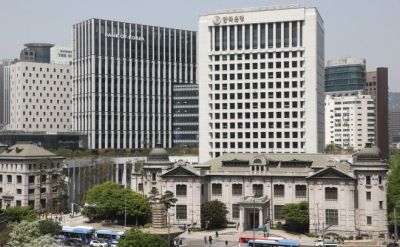
The Bank of Korea emphasized the need for a cautious policy stance shift that is 'slowly hurrying' to avoid being either too early or too late when it comes to future interest rate cuts.
On the 2nd, according to the Bank of Korea, Park Young-hwan, head of the Policy Coordination Team at the Monetary Policy Department, and Sung Hyun-gu, manager of the Policy Coordination Team, pointed out on the Bank of Korea blog that transitioning to interest rate cuts either too quickly or too late could increase market instability.
According to the Bank of Korea, the recent core inflation rate continues a gradual slowing trend, but the consumer price inflation rate and short-term inflation expectations remain stagnant at a high level within 3%. Uncertainties related to supply shocks, such as high agricultural product prices and rising international oil prices, have also increased. Therefore, an overly early policy stance shift could slow the pace of inflation rate deceleration and delay the timing of reaching the target inflation rate.
Additionally, due to the recent delay in the U.S. Federal Reserve's pivot, the U.S. dollar has strengthened, increasing exchange rate volatility in both emerging and advanced economies. The impact of domestic and foreign interest rate differentials on the won-dollar exchange rate is also growing, so the expansion of exchange rate volatility could slow the pace of inflation rate deceleration.
Household loans have continued to decline since the end of last year but turned to an increase in April. If the policy stance shifts too quickly, it could stimulate expectations of rising housing prices and expand the increase in household debt. In particular, since lower interest rates have a greater impact on household debt, an overly early interest rate cut could increase the risk of rising household debt.
If the policy stance shift is too late, the differentiation between exports and domestic demand could deepen. Domestic exports continue to grow strongly, but consumption and construction investment have been adjusted since the second quarter, showing relatively weak domestic demand. If monetary tightening continues for a long time, the recovery of domestic demand may weaken further, potentially deepening the differentiation between exports and domestic demand.
Financial market risks such as real estate project financing (PF) could also increase. The longer the monetary tightening stance lasts, the greater the risk of PF defaults and the higher the delinquency rates on non-bank loans. This could increase credit risks for non-bank financial institutions such as construction companies and savings banks.
Park and Sung said, "Emperor Augustus, who opened the golden age of Rome, made 'Festina Lente' (make haste slowly) the most important principle in policy decisions," adding, "If you rush (festina) too much, unexpected side effects may occur, and conversely, if you wait (lente) too long, you may miss the timing and weaken the intended effect." They suggested that balanced policy decisions are crucial.
© The Asia Business Daily(www.asiae.co.kr). All rights reserved.
![Clutching a Stolen Dior Bag, Saying "I Hate Being Poor but Real"... The Grotesque Con of a "Human Knockoff" [Slate]](https://cwcontent.asiae.co.kr/asiaresize/183/2026021902243444107_1771435474.jpg)















