Dokyungtak, Manager at Bank of Korea, Korea's Real Neutral Interest Rate -0.2~1.3%
Presentation on 'Estimation of Korea's Neutral Interest Rate' at BOK Conference
A study has found that South Korea's neutral interest rate has slightly increased due to various socio-economic factors following the COVID-19 pandemic.
On the morning of the 31st, Do Kyung-tak, Director of the Monetary Policy Department at the Bank of Korea (BOK), stated at the 'BOK International Conference' held at the BOK Conference Hall in Jung-gu, Seoul, "As of the first quarter, South Korea's long-term neutral interest rate is estimated to be between -0.2% and 1.3%." Do's estimate refers to the real neutral interest rate; adding the BOK's inflation target of 2% results in a nominal neutral interest rate estimated to be between 1.8% and 3.3%. This figure is somewhat higher at the upper end compared to the BOK's internal neutral interest rate estimates (2.5% to 2.6%) anticipated by the market.
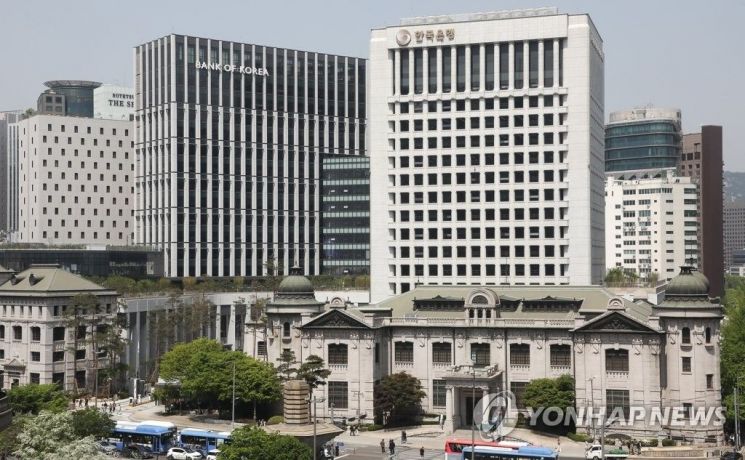
The neutral interest rate refers to the interest rate level at which economic growth can be achieved at the potential growth rate without overheating or recession. It plays a crucial role in the central bank's base rate decisions. This is the first time that the BOK has publicly presented its internal research results on the neutral interest rate at an official event.
During a special session on the same day, Do presented on the topic of 'Estimating South Korea's Neutral Interest Rate,' stating, "Referring to prior studies, we estimated South Korea's long-term neutral interest rate using two semi-structural models and two time-series models."
Lee Chang-yong, Governor of the BOK, also mentioned during a dialogue with the Swiss National Bank Governor on the first day of the BOK Conference that "the BOK has about four to five neutral interest rate estimation models, which are used to determine the neutral interest rate range and guide monetary policy stance."
Do noted, "There are significant differences depending on the estimation method, and there is considerable uncertainty about the exact level of the neutral interest rate," adding, "Overall, it declined over the long term but stopped declining and slightly increased after the pandemic."
Specifically, before the pandemic, the neutral interest rate estimates steadily declined from 1.4% to 3.1% in the first quarter of 2000 to -1.1% to 0.5% in the first quarter of 2020. However, after the pandemic, it slightly increased, with estimates around -0.2% to 1.3% as of the first quarter of this year.
Nonetheless, he emphasized, "Considering the high uncertainty of the estimates, whether this represents a shift to an upward trend needs to be reassessed after sufficient future data is accumulated."
According to Do's analysis, the neutral interest rate estimates of major countries showed patterns not significantly different from South Korea's. This indicates that fluctuations in the neutral interest rate are related to various socio-economic factors such as global productivity and potential growth changes, demographic shifts, demand and supply of safe assets, and spillovers of neutral interest rates.
He diagnosed that the most important issue for the future direction of the neutral interest rate is the potential growth rate. Do stated, "Various socio-economic factors such as demographic changes, climate change responses, and productivity changes related to artificial intelligence (AI) are being raised when discussing the long-term direction of the neutral interest rate," but added, "Considering the changing global economic environment, whether potential growth can be enhanced based on continuous productivity improvements will be a key issue for future trends."
Do argued, "Although some models reflecting South Korea's characteristic as a small open economy were used in this study, it is necessary to develop models that can systematically incorporate this in the future." He also added, "Research on the impact of structural factor changes such as population aging and productivity on the future trajectory of the neutral interest rate is important."
© The Asia Business Daily(www.asiae.co.kr). All rights reserved.
![Clutching a Stolen Dior Bag, Saying "I Hate Being Poor but Real"... The Grotesque Con of a "Human Knockoff" [Slate]](https://cwcontent.asiae.co.kr/asiaresize/183/2026021902243444107_1771435474.jpg)
















