Designated as the '2nd Dalbit Children's Hospital' Following Namgu Gwangju Christian Hospital
Saturday 9 AM - 9 PM · Holidays 9 AM - 6 PM
Gwangju Metropolitan City (Mayor Kang Gi-jung) is focusing on strengthening the safe medical system for children.
On the 29th, Gwangju City announced that it has designated Gwangju Central Hospital in Gwangsan-gu as the "2nd Dalbit Children's Hospital," following Gwangju Christian Hospital in Nam-gu.
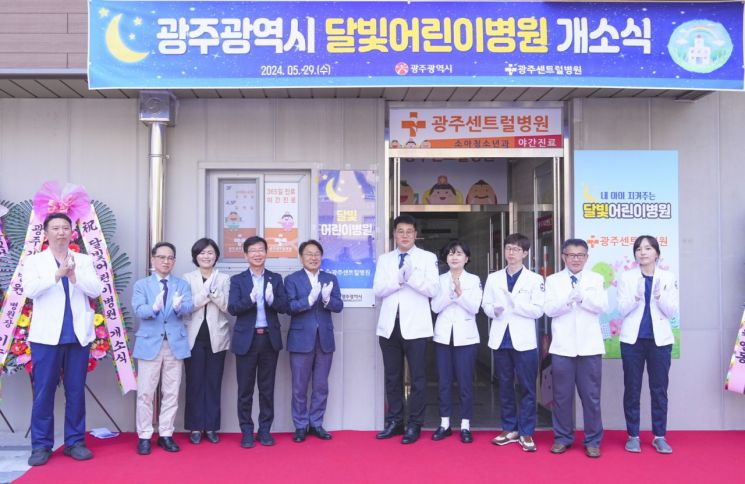
The opening ceremony was attended by Mayor Kang Gi-jung, Director Ko Gil-seok of Gwangju Central Hospital, Park Byung-gyu, head of Gwangsan-gu Office, City Council member Choi Ji-hyun, Choi Jeong-seop, president of the Gwangju Medical Association, and hospital officials.
Dalbit Children's Hospitals are medical institutions that provide specialized pediatric care for mild pediatric patients at a lower cost than emergency rooms, in a nearby and comfortable environment.
Gwangju Central Hospital began operating as Gwangju City's 2nd Dalbit Children's Hospital on the 28th and will provide specialized pediatric and adolescent care 365 days a year until 2026.
Operating hours are weekdays from 6 p.m. to 11 p.m., Saturdays from 9 a.m. to 9 p.m., and Sundays and public holidays from 9 a.m. to 6 p.m.
Despite challenges such as a shortage of pediatric medical staff and additional financial burdens, Gwangju Central Hospital has united with the goal of a "healthy Gwangju for children" and launched the operation of this Dalbit Children's Hospital.
With this, Gwangju City now operates two Dalbit Children's Hospitals: Gwangju Christian Hospital in Nam-gu and Gwangju Central Hospital in Gwangsan-gu.
Last September, Gwangju City designated Gwangju Christian Hospital as a public late-night children's hospital, providing pediatric outpatient care 24 hours a day, 365 days a year, receiving high praise from citizens as a policy that parents with children can tangibly feel.
Gwangju Central Hospital, designated as the 2nd Dalbit Children's Hospital, is located in Gwangsan-gu, which has the largest pediatric and adolescent population. With pediatric specialists providing care 365 days a year, it is expected to greatly help close the medical gap for mild pediatric patients during vulnerable hours and improve medical accessibility for children and parents.
Gwangju City also designated "Sinchang Large Pharmacy" as a partner pharmacy to enable citizens to conveniently use services from hospital consultation and prescription to dispensing.
Ko Gil-seok, director of Gwangju Central Hospital, said, "Our hospital decided to operate the Dalbit Children's Hospital with a sense of mission to care for children, the future protagonists, so they can grow up well," adding, "We will do our best without losing our original intention so that children can grow up healthily in Gwangju. I would like to thank all the Central family members who have supported us once again."
Mayor Kang Gi-jung of Gwangju said, "Despite various difficulties such as a shortage of pediatric medical staff, I sincerely thank the medical staff for making a great decision with a sense of mission," and added, "With the designation of Dalbit Children's Hospitals, mild pediatric patients can receive specialized pediatric care without visiting the emergency room late at night. We will do our best so that both children and parents can receive treatment with peace of mind."
Earlier, Mayor Kang announced plans to establish a public medical system for children. In situations such as medical crises caused by "open runs" and the risk of pediatric department closures, the city is sequentially expanding the designation of Dalbit Children's Hospitals and other measures to build a safe medical system model for children in collaboration with the local medical community.
After the opening ceremony, Gwangju City also held a "Public Health Medical Development Forum" at Gwangju Central Hospital.
The forum was held under the theme (slogan) "Anytime, anywhere, any disease! So that anyone can receive timely treatment," aiming to establish a "Gwangju-type regional comprehensive public medical system" capable of final treatment for severe, emergency, pediatric, and mental health cases within the region.
During the forum, in-depth discussions were held on ▲ fostering specialized hospitals for essential medical care and expanding responsible medical institutions to establish a public medical system in cooperation with private hospitals ▲ providing customized health management services centered on small living areas ▲ securing budgets for public health medical projects.
Participants in the forum included Mayor Kang Gi-jung, Professor Na Baek-ju of Eulji University, Park Hyang, former Public Health Policy Officer at the Ministry of Health and Welfare, Ko Gil-seok, director of Gwangju Central Hospital, Kim Jun-sung, director of Gwangju Good Morning Hospital, Choi Jeong-seop, president of the Gwangju Medical Association, Kim Won-young, director in charge of public medical care, Lim Hyung-seok, vice chairman of Gwangju Medical Welfare Social Cooperative, Kwon Soon-seok, director of Gwangju Public Health Medical Support Group, and Kim Hye-ran, head of Dong-gu Health Center.
© The Asia Business Daily(www.asiae.co.kr). All rights reserved.
![Clutching a Stolen Dior Bag, Saying "I Hate Being Poor but Real"... The Grotesque Con of a "Human Knockoff" [Slate]](https://cwcontent.asiae.co.kr/asiaresize/183/2026021902243444107_1771435474.jpg)















