Volkswagen to Launch Entry-Level ID.1 in 2027
Smaller Compact Car than Last Year's ID.2 Concept
Priced Around 20 Million KRW... Competing with Low-Cost Chinese EVs
Europe's High Demand for Small Cars Makes It a Battleground for Affordable EVs
Competition Includes Hyundai Casper EV, Kia EV3, BYD Seagull, and More
Volkswagen revealed the silhouette of an affordable electric vehicle priced in the 20 million KRW range on the 28th (local time). As competitors such as Kia, Tesla, and GM have been solidifying their low-cost electric vehicle strategies, Volkswagen reaffirmed its plan to launch the entry-level electric car ID.1. Amid a global slowdown in the electric vehicle market growth, the competition for 'half-price electric cars' as a solution to overcome the slump is intensifying.
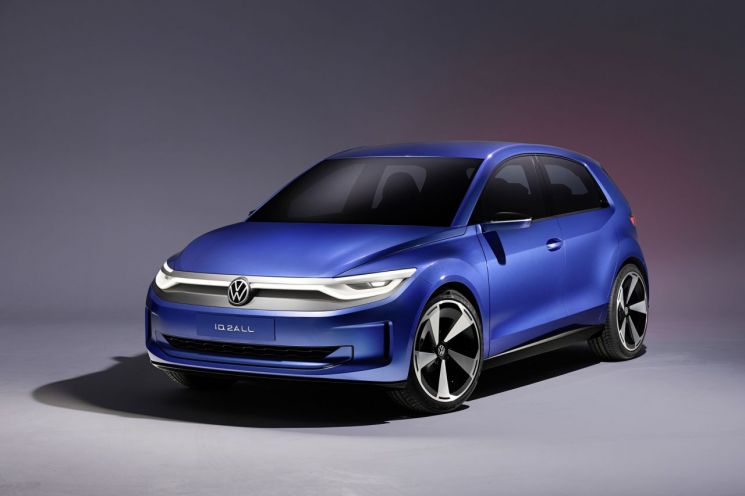
On this day, Volkswagen posted the silhouette of the entry-level electric sport utility vehicle (SUV) ID.1 on its official social media channels. It appears to inherit the design of the compact electric car 'e-Up' in a hatchback style, which is popular in Europe. Volkswagen introduced this model as "a model for Europe, in Europe," and announced plans to launch it in 2027.
 Silhouette of the entry-level electric vehicle ID.1 unveiled by Volkswagen on the 28th (local time)
 [Photo by Volkswagen Group]
Volkswagen mentioned the price of the ID.1 to be around 20,000 euros (29 million KRW). This is a declaration of war to enter the full-scale low-cost electric vehicle competition by launching an entry-level electric car in the 20 million KRW range. In March last year, Volkswagen unveiled the ID.2 concept car, a compact electric SUV one level above the entry-level. At the same time, they announced plans to launch it in 2025 with a price below 25,000 euros (37 million KRW).
At the time of the concept car unveiling, launching a compact electric car in the 30 million KRW range two years later was considered a groundbreaking attempt. However, this time, Volkswagen has presented an aggressive strategy to release an even smaller entry-level model in the 20 million KRW range. To reduce costs, Volkswagen will actively utilize supply chains within Europe and produce the vehicle at its plant in Spain. Thomas Sch?fer, Volkswagen CEO, said, "For electric vehicle adoption to expand, especially at the entry level, an attractive vehicle is necessary," adding, "We will set the standard for affordable electric cars not only in terms of price but also technology, design, quality, and customer experience."
Half-Price Electric Car Competition... Chinese Cars at One-Third the Price
Volkswagen's attempt comes as competitors have recently launched or announced plans for affordable electric vehicles. Additionally, there is a sense of urgency as the market share of low-cost Chinese electric vehicles in Volkswagen's home market, Europe, rose to 8% last year and is expected to exceed double digits this year. Chinese automaker BYD became the global leader in the electric vehicle market last year by lowering the price of compact electric cars to the 10 million KRW range.
The initial spark for the 'half-price electric car' competition was Tesla. In 2018, Tesla first mentioned plans to release a low-cost electric car 'Model 2' priced below $25,000 (34 million KRW). Currently, the cheapest model in Tesla's lineup, the 'Model 3,' is priced around 52 million KRW domestically. Tesla CEO Elon Musk announced in an April conference call that production of the Model 2 would begin in 2025 using existing factories.
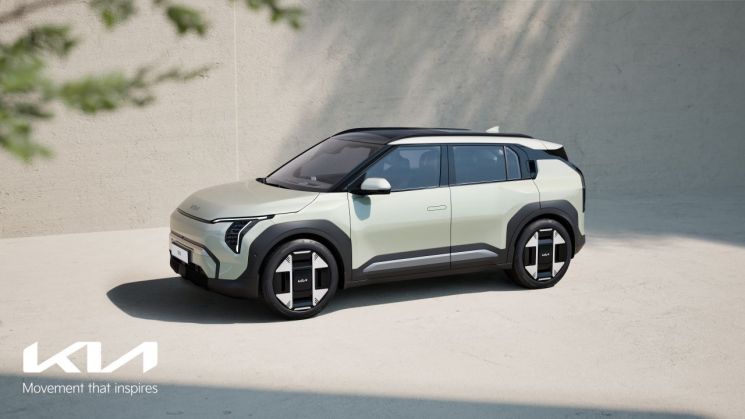
Kia emphasized product quality while launching its affordable electric vehicle. The compact electric SUV EV3, unveiled on the 23rd, starts at the mid-30 million KRW range domestically and around $35,000 overseas. Instead of using cheaper batteries to lower the price, Kia used relatively expensive batteries to guarantee a certain level of driving range. It is expected to reach about 500 km domestically and around 600 km overseas.
Europe: The Battleground for Entry-Level Low-Cost EVs
Volkswagen will first release the ID.1 in Europe. The European electric vehicle market is expected to be the primary battleground where Korean, German, American, and Chinese brands compete fiercely over low-cost electric vehicles. European consumers, who prioritize practicality, have a strong preference for compact and eco-friendly cars.
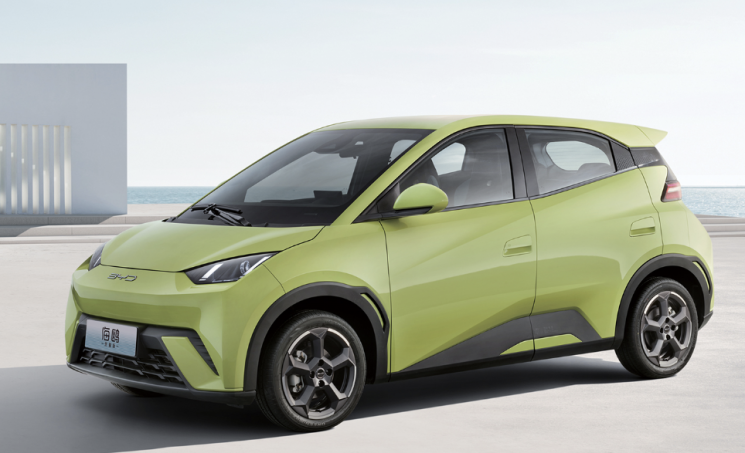
Hyundai plans to begin mass production of the electric version of its entry-level vehicle Casper in the second half of this year and will sequentially launch it in the European market. Additionally, Kia is preparing to launch the EV3 in Europe in the fourth quarter of this year. Chinese automaker BYD plans to release the hatchback-style compact electric car Seagull next year. The Seagull is priced at only $10,000 (13.6 million KRW) in China. Even after reflecting the recent European Union (EU) tariff increases on Chinese electric vehicles, it is expected to be sold in Europe for less than 20,000 euros (29 million KRW).
© The Asia Business Daily(www.asiae.co.kr). All rights reserved.
![Clutching a Stolen Dior Bag, Saying "I Hate Being Poor but Real"... The Grotesque Con of a "Human Knockoff" [Slate]](https://cwcontent.asiae.co.kr/asiaresize/183/2026021902243444107_1771435474.jpg)

















