40% Mortality Rate... 40 Times Higher Than Other Disasters
Unnoticeable but Fatal, Frequent Accidents in Summer
On the 21st, five workers lost consciousness and collapsed inside a fishing vessel docked in Boryeong, Chungnam. They had entered the storage room where fish were kept to clean it, but were suffocated by toxic gases generated from rotten seafood and lost consciousness. At the time, the seafood in the storage room, including fish and blue crabs, weighed about 4 kg in total, but the gas was so toxic that an adult male lost consciousness instantly.
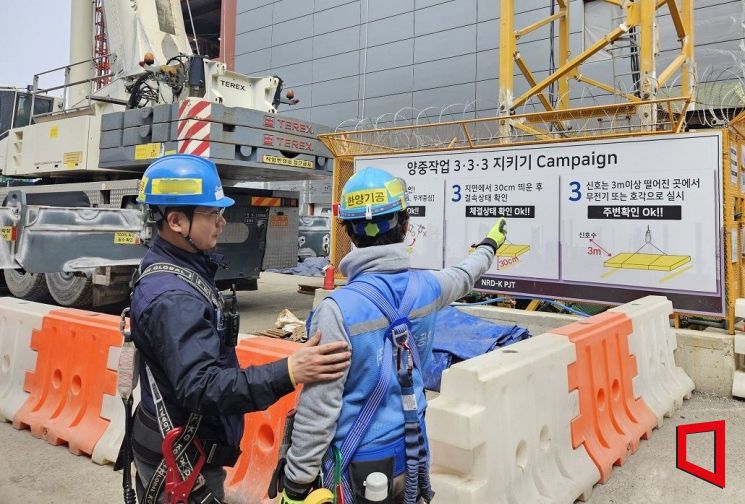
As the intense heat begins in earnest, suffocation accidents in confined spaces at industrial sites are occurring one after another. Experts warn that suffocation accidents are particularly dangerous because workers cannot visually recognize the risk, and a single breath can be fatal, urging special caution.
According to the Ministry of Employment and Labor, there were a total of 174 suffocation accidents in confined spaces at industrial sites from 2014 to last year. During the same period, 338 people suffered industrial accidents due to suffocation in confined spaces, of whom 136 died. This means that 4 out of 10 victims died, which is significantly higher than the fatality rate of other accidental injuries during the same period (0.98%).
The reason the fatality rate of suffocation accidents in confined spaces is particularly high is that workers cannot visually assess the risk of the accident. Harmful toxic gases such as hydrogen sulfide and methane are colorless gases. Suffocation accidents mainly occur in wastewater treatment facilities, septic tanks, livestock manure treatment facilities, waterways or manholes with rainwater, rivers, or irrigation water. If workers enter without recognizing the danger, a single breath can cause them to lose consciousness, making it fatal.
An official from the Ministry of Employment and Labor explained, "Unlike other accidental injuries such as falls, workers can visually recognize the risk in advance, but suffocation accidents cannot be visually detected beforehand. Although invisible, suffocation accidents are so harmful that a single breath can be fatal, resulting in the highest fatality rate among all accidental injuries."
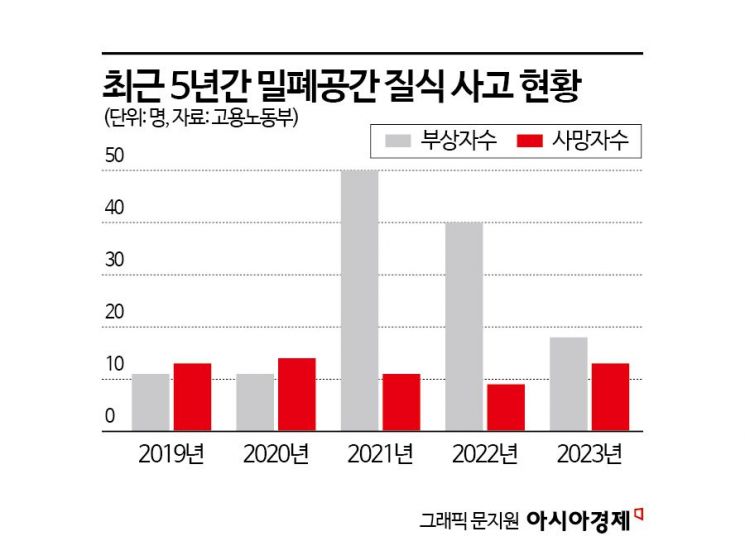
Especially during the summer when temperatures rise, the risk of such accidents increases. When organic matter decomposes, it consumes oxygen, and as the temperature rises in summer, the decomposition rate accelerates, causing oxygen to disappear more quickly. When refrigerant gases are used to lower the temperature, freon gas is generated, which also rapidly reduces oxygen concentration. In fact, about 30% of the 174 suffocation accidents in confined spaces over the past 10 years, totaling 52 cases, occurred during the summer.
Experts emphasize the need for special caution to prevent accidents by frequently ventilating the work site and using oxygen concentration meters. Professor Lee Gap-cheol of the Department of Occupational and Environmental Medicine at Chosun University said, "In very confined spaces, even a small amount of toxic gas can cause loss of consciousness, and in summer, the generation rate of toxic gases is even faster. It is important to measure oxygen and harmful gas concentrations before work to ensure safety and to ventilate frequently before and after work."
© The Asia Business Daily(www.asiae.co.kr). All rights reserved.
![Clutching a Stolen Dior Bag, Saying "I Hate Being Poor but Real"... The Grotesque Con of a "Human Knockoff" [Slate]](https://cwcontent.asiae.co.kr/asiaresize/183/2026021902243444107_1771435474.jpg)
















