"Medical Reform, Conflict Inevitable"
The government stated on the 27th that "conflicts are inevitable in reforms" regarding the ongoing medical and political conflicts due to the increase in medical school admissions, and added, "The government will do its utmost to promptly resolve the current conflict phase to protect patients' lives and health."
Jeon Byeong-wang, the 1st Controller of the Central Disaster and Safety Countermeasures Headquarters, said at a briefing held at the Government Complex Sejong on the morning of the same day, "Medical reform, including the increase in medical school admissions, will be a milestone for South Korea's medical system to take a step forward toward a new future."
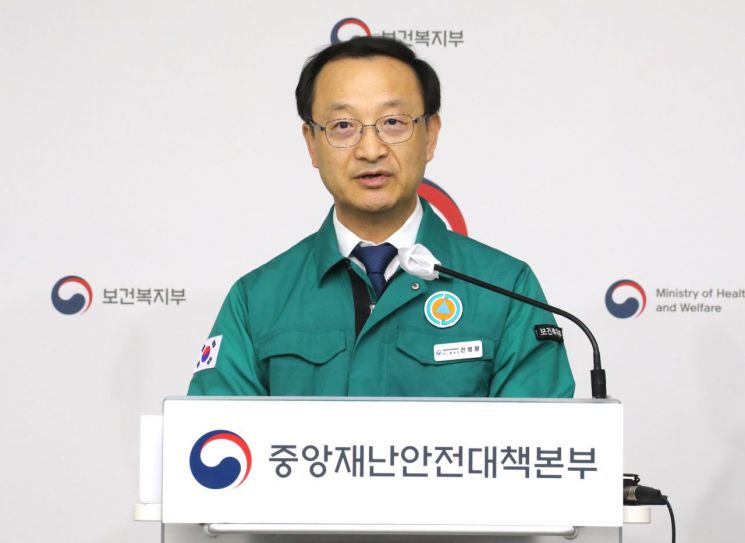
He also urged residents and medical students to "return promptly."
Controller Jeon said, "Although they have left their workplaces and schools due to collective actions, it is now time to respond wisely based on individual judgment," and added, "The voices of residents and medical students will be prioritized in future system improvements. We hope they will trust the government and return promptly to restore trust with patients."
Regarding medical school professors who withdrew their week-long collective strike plan, he said, "We consider this fortunate," but also expressed concern, stating, "They still insist on a full reconsideration of the increase in medical school admissions and have announced the suspension of various government health and medical policy advisory activities."
Controller Jeon said, "The government's medical reform is a process to innovate the medical system for all medical personnel engaged in essential medical care," and added, "We ask for cooperation to end the exhausting conflicts and debates, persuade residents and medical students to return as soon as possible with the government, and unite efforts so that South Korea's medical system can take a step toward a better future."
Based on the experience of the emergency medical system implemented over the past three months, the government plans to focus on discussing concrete alternatives in the expert committees under the Special Committee on Medical Reform to normalize the medical supply and utilization system. Starting with the 'Delivery System and Regional Medical Expert Committee' on the 28th, the 2nd expert committee meetings will be held sequentially. The Delivery System and Regional Medical Expert Committee will discuss support measures for the transition of tertiary general hospitals to specialist-centered hospitals, and on the 30th, the Medical Accident Safety Net Expert Committee will address innovation plans for the medical dispute mediation and arbitration system.
Controller Jeon said, "Although many medical professionals participate in the special and expert committees, the seats recommended by the Korean Medical Association, residents, and medical societies remain vacant," and urged, "We ask the medical community to promptly participate in the special committee and join discussions for the development of South Korea's health and medical care."
© The Asia Business Daily(www.asiae.co.kr). All rights reserved.
![Clutching a Stolen Dior Bag, Saying "I Hate Being Poor but Real"... The Grotesque Con of a "Human Knockoff" [Slate]](https://cwcontent.asiae.co.kr/asiaresize/183/2026021902243444107_1771435474.jpg)















