KAIST is set to establish the largest-scale 'Advanced Quantum Fab' in South Korea.
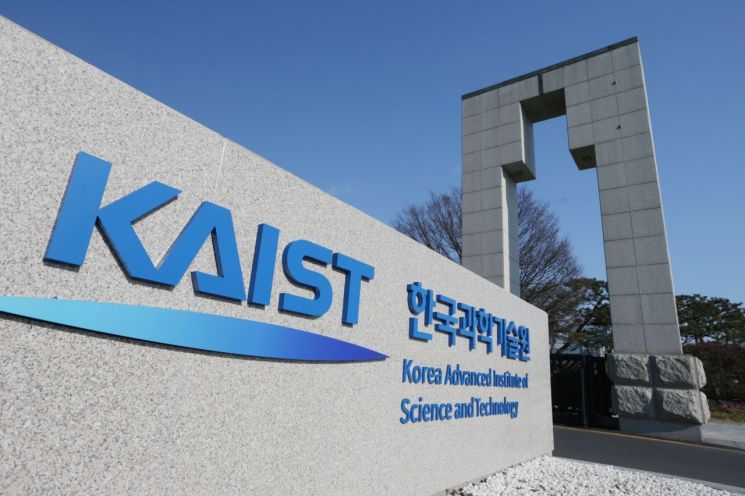
On the 27th, KAIST announced that it has been selected as the lead institution for the 'Open Quantum Process Infrastructure Construction' project, supported by the Ministry of Science and ICT.
This project will be implemented from this year until 2031, with a national budget of 23.4 billion KRW to build a quantum fab equipped with essential quantum process equipment.
In this project, KAIST will serve as the lead institution. Additionally, the Korea Nano Technology Institute and the Korea Research Institute of Standards and Science will participate as joint institutions, while SK Telecom Co., Ltd. and Daejeon Technopark will join as entrusted organizations to form a consortium.
As the lead institution, KAIST plans to build an open quantum fab with expertise, safety, and public accessibility by leveraging ▲the research capabilities of key faculty members in the field of quantum science and technology ▲experience operating the cleanroom at the Future Convergence Microdevice Center ▲experience in equipment reservation and user support at the Central Analysis Center ▲and strengthening the educational capabilities and domestic and international networks of the Graduate School of Quantum Science and Technology.
The first phase of operation will begin next year using the cleanroom and numerous equipment currently available at the Future Convergence Microdevice Center on the Daejeon main campus.
Subsequently, the new quantum fab will be constructed on a 1,500㎡ site between the Future Convergence Microdevice Center and the joint research institution, Korea Nano Technology Institute, with one basement floor and two above-ground floors. From the fifth year, when the quantum fab building and new equipment installation are completed, it will be fully opened and operated as the largest quantum fab in the country.
Within the consortium, KAIST and the Korea Nano Technology Institute will jointly operate the quantum fab to secure process expertise and business viability, while the Korea Research Institute of Standards and Science will take charge of jointly developing core process technologies for various platforms.
SK Telecom will promote the development of quantum photonic integrated circuit modules, and Daejeon Technopark will support small and medium-sized enterprises in utilizing the quantum fab and entrepreneurial activities.
Additionally, the Daejeon city government plans to invest 20 billion KRW of local funds in the construction of the quantum fab.
KAIST President Kwang Hyung Lee stated, “Quantum science and technology is a core strategic technology field that will determine future technological supremacy and has a significant ripple effect across society. We will strive to ensure that the industry-academia-research-government consortium works organically to establish the essential foundation needed to build the domestic quantum science and technology ecosystem.”
© The Asia Business Daily(www.asiae.co.kr). All rights reserved.
![Clutching a Stolen Dior Bag, Saying "I Hate Being Poor but Real"... The Grotesque Con of a "Human Knockoff" [Slate]](https://cwcontent.asiae.co.kr/asiaresize/183/2026021902243444107_1771435474.jpg)
















