Chocolate and Pepero Prices to Rise 12% Next Month
Cacao Origin Africa's Extreme Heat Causes Sharp Production Drop
Prices Double This Year
Coffee and Olive Prices Also Up Due to Climate Inflation
"Agriculture Destroyed by Hot Summer, This Is a Preview"
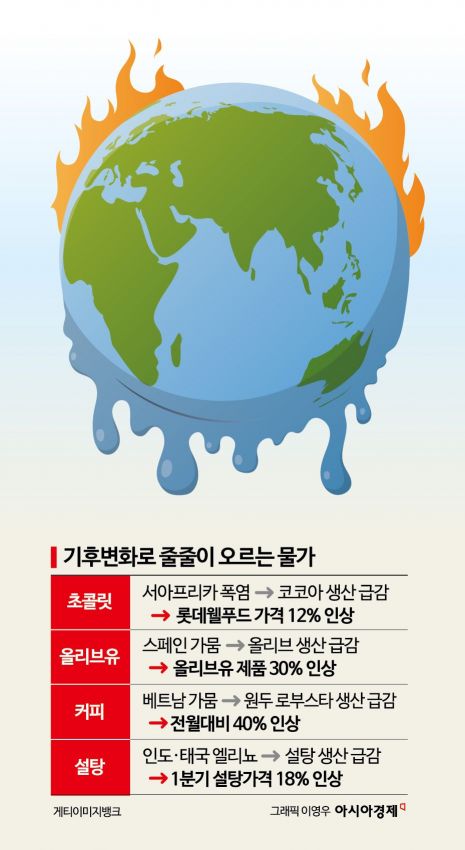
The pressure of rising prices due to climate change is showing no signs of easing. As various crops suffer poor yields due to global abnormal weather phenomena, the impact of 'climateflation'?the rise in domestic food prices?is growing across the economy. Experts point out that since abnormal weather is expected to become more frequent, urgent measures are needed to prevent crop damage.
According to the industry on the 27th, Lotte Wellfood announced that it will raise the prices of 17 of its products by an average of 12% starting next month on the 1st. The recommended retail price of Ghana chocolate will increase from 1,200 won to 1,400 won, and Pepero will rise from 1,700 won to 1,800 won. The price hike was originally planned for the 1st of this month but was postponed in response to the government's request to cooperate in stabilizing prices.
The price increase is due to abnormal weather. Cocoa, the main ingredient of chocolate, is produced 60% in West Africa's Ghana and C?te d'Ivoire, where severe heatwaves struck in February. Particularly, from February 11 to 15, the maximum temperature exceeded 40 degrees Celsius, with an average temperature reaching 36 degrees. According to the World Weather Attribution (WWA), a climate research organization, such a heatwave, which occurs once in a hundred years, is now happening once every ten years due to global warming.
Last summer, heavy rains poured down just before the harvest season. At that time, West Africa experienced rainfall more than twice the average of the past 30 years. This led to the outbreak of the devastating 'Black Pod Disease' for cocoa production. Black Pod Disease is known to wither and kill leaves and typically occurs more easily in hot and humid conditions.
As production sharply declined due to abnormal weather, cocoa prices soared. The International Cocoa Organization (ICCO) released a production outlook on February 29, announcing that global cocoa production last year and this year is expected to decrease by 10.9% from the previous year to 4,499,000 tons. If the forecast holds, the cocoa supply deficit will increase from 74,000 tons to 374,000 tons. As a result, cocoa prices, which had tripled last year, have more than doubled this year alone. Last month, the price of 'May delivery cocoa futures' surpassed $10,000 per ton, setting a record high.
"Direct Hit to Agriculture in Hot Summers, This Is Just a Preview"
The equation of climate change → reduced production at origin → domestic price increase is also appearing in other food items. For olive oil, the retail prices of CJ CheilJedang products at the three major large supermarkets rose by 33.8%. Baeksul cold-pressed olive oil 900ml increased from 19,800 won to 26,500 won, and the 500ml product rose from 12,100 won to 16,200 won. Sempio also raised olive oil prices by more than 30%.
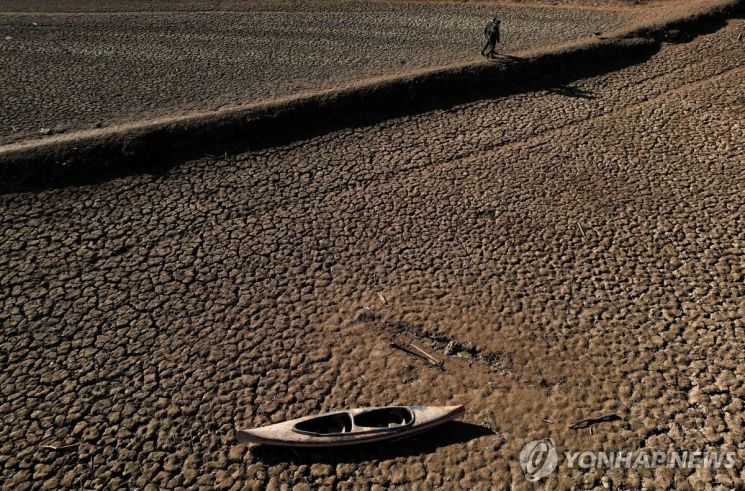
The main production area for olives is Spain. Since last year, the Mediterranean region, including Spain, has faced abnormal weather such as storms, floods, and droughts. In particular, some parts of Spain experienced the worst drought in history, leading to water shortages, a state of emergency, and bans on activities like car washing and watering gardens.
As a result, even olives, which tolerate high temperatures well, suffered production setbacks. Olive production in 2022?2023 was 660,000 tons, less than half of the average production of 1.3 to 1.5 million tons. With reduced supply, prices began to fluctuate. According to the International Monetary Fund (IMF), the international olive oil price in the first quarter was $10,088 per ton, 1.7 times higher than $5,926 in the first quarter of last year.
Globally popular coffee has not escaped climateflation either. For Vietnam's Robusta coffee, London futures prices hit a record high of $4,338 per ton last month, nearly double the previous year's peak of $2,608. Last month saw record-breaking heat in Vietnam, with the hottest month shifting from May to April, fueling market expectations of soaring coffee prices. Domestically, brands known for low-priced coffee such as The Liter and The Venti have raised beverage prices by 400 to 500 won, citing increased raw material costs.
Experts warn that as the climate crisis intensifies, the link between poor crop yields and price increases may occur more frequently. The World Economic Forum (WEF) stated in a report published last February, "Last summer, unusually hot and dry conditions in Europe, the United States, and Asia reduced the harvest of many crops," and analyzed that "extreme weather events ranging from heatwaves and droughts to storms and floods are becoming more common due to the climate crisis." It also warned, "The destructive impact of last summer on crops is only the beginning."
© The Asia Business Daily(www.asiae.co.kr). All rights reserved.
![Clutching a Stolen Dior Bag, Saying "I Hate Being Poor but Real"... The Grotesque Con of a "Human Knockoff" [Slate]](https://cwcontent.asiae.co.kr/asiaresize/183/2026021902243444107_1771435474.jpg)


















