CO2 Emissions, 495kg per 1 Ton of Cement
Crushing Waste Building Materials like Bricks at Recycling Centers
Government Support Also Plays a Role in Carbon Reduction Efforts
On the 23rd (local time), we visited the Mannersdorf plant of HOLCIM cement company near Vienna, Austria. Producing 1.3 million tons of cement annually, this plant is among the lowest greenhouse gas emitters worldwide. As of last year, the Mannersdorf plant's carbon dioxide emissions were 495 kg per ton of cement, lower than Austria’s average of 534 kg, a country known as the "Green Heart of Europe." The global average was 611 kg, and the EU average was 595 kg.
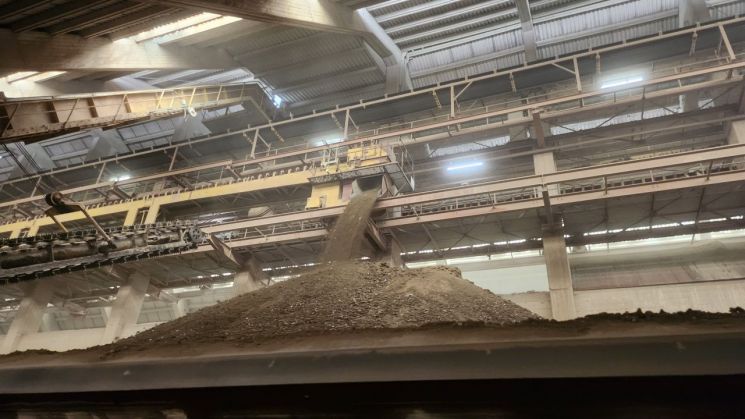 On the 23rd (local time), waste construction materials such as bricks were crushed and piled up at the recycling center within the Mannersdorf plant of HOLCIM Cement Company near Vienna, Austria.
Upon arrival at the Mannersdorf plant that day, the first thing that caught the eye was the grand, modern buildings. It was hard to believe the plant was originally constructed 130 years ago. Especially, the alternative fuel storage connected to the preheater tower and the recycling center appeared to be the most recently built facilities. Berthold Kren, CEO of HOLCIM, explained, “Our plant’s pride lies in fuel conversion of waste synthetic resins such as waste plastics and vinyl, replacing fossil fuels by up to 90%. This year, through the establishment of a circular resource recycling center, we plan to use large amounts of combustible waste as alternative fuel, and inorganic waste such as waste concrete and slag as alternative raw materials. We are also introducing solar power generation and aim to achieve a 25% eco-friendly energy acquisition rate by next year.”
At the alternative fuel storage, trucks carrying waste plastics and other materials were lined up. The storage space, totaling 4,500 cubic meters, was divided into three sections to accommodate the trucks. Each truck carried about 25 to 30 tons, with approximately 300 to 400 tons stored daily. The waste plastics and others were immediately sent underground and moved to the preheater tower via an inclined conveyor belt.
At the recycling center, waste construction materials such as bricks were being crushed and piled up. Here, alternative raw materials used for cement production are produced at a rate of 50 to 60 tons per hour. The crushed waste construction materials turned into fine powder and floated inside the recycling center. Bernhard Kock, HOLCIM’s quality and environment officer, said, “Waste construction materials, mostly composed of brick components, are used extensively instead of limestone. You can think of cement used 50 years ago coming back to become raw materials again.”
Looking at the carbon-neutral roadmap of the Mannersdorf plant, after executing this year’s construction of the circular resource recycling center and the first phase of a 2.2 MW solar power project, next year they plan to invest in the introduction of a 15 MW second phase solar power and wind power generation. After 2026, they plan to accelerate carbon neutrality by launching a new low-carbon cement product that reduces clinker content from the current 66% to 60%.
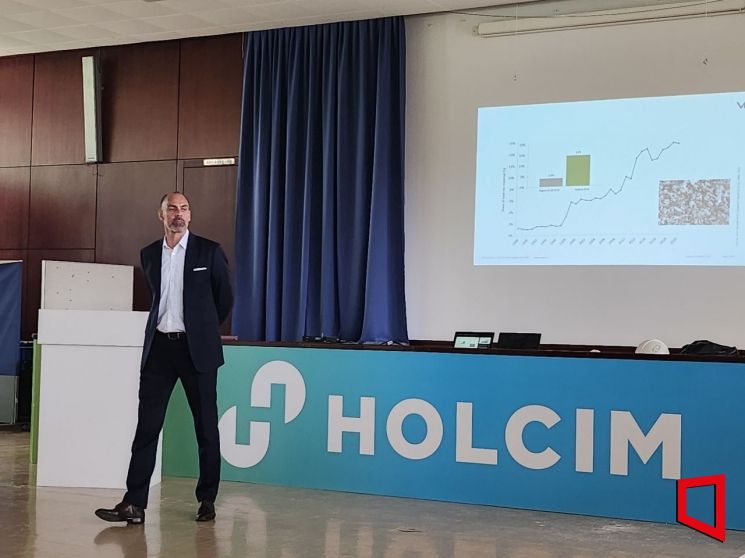 On the 23rd (local time), Berthold Kren, CEO, is explaining about the company at HOLCIM Cement's Mannersdorf plant.
Ultimately, they plan to introduce carbon capture and utilization (CCU) facilities, a preliminary stage of carbon capture, utilization, and storage (CCUS), to convert carbon dioxide captured at the cement plant into renewable plastics. They intend to invest 350 million euros (approximately 520 billion KRW) for this purpose.
The background for these carbon reduction efforts is also analyzed to include support from the Austrian government. Hubert Grech, an official from the Austrian Ministry of Environment, who briefed the press that day, said, “The cement industry has adopted circular resource recycling and expanded blended cement as greenhouse gas reduction measures, and the government fully supports this. Although not limited to the cement industry, 3 billion euros (4.45 trillion KRW) in research funds have been allocated for the entire decarbonization-related industry, and HOLCIM is known to be striving to secure orders.” HOLCIM has applied for 200 million euros (300 billion KRW) from the Austrian national fund under the name of CCU facility investment.
He added, “There are criticisms about environmental pollution when using waste plastics as fuel, but considering the circular economy, they must eventually be incinerated and used. Although some organic chemical substances are harmful, from a long-term perspective, incinerating and using them as fuel is the right approach.”
Peter Hoddinott, former president of the European Cement Association, who accompanied the visit to the Mannersdorf plant, said, “Europe plans to expand low-carbon cement by reducing clinker use and increase greenhouse gas reduction through circular resource recycling as carbon neutrality measures, ultimately introducing CCUS technology on a large scale. The Korean cement industry should prioritize rapidly increasing its currently somewhat stagnant circular resource recycling rate to the European level.”
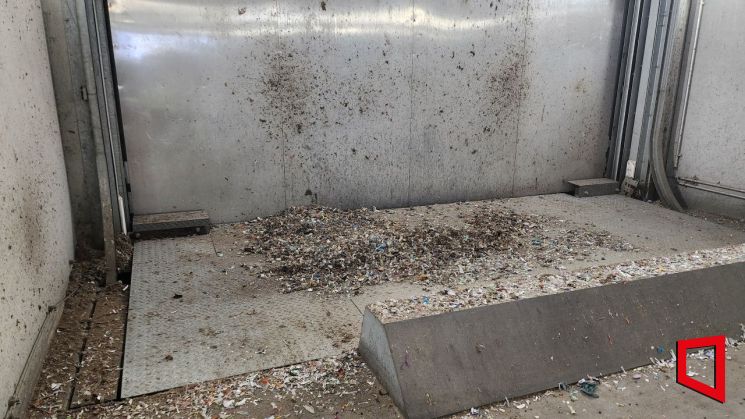 On the 23rd (local time), the inside view of the alternative fuel storage at the Mannersdorf plant of Austria's HOLCIM cement company.
© The Asia Business Daily(www.asiae.co.kr). All rights reserved.
![Clutching a Stolen Dior Bag, Saying "I Hate Being Poor but Real"... The Grotesque Con of a "Human Knockoff" [Slate]](https://cwcontent.asiae.co.kr/asiaresize/183/2026021902243444107_1771435474.jpg)


















