Exemption from Registration Obligation for Prepaid Service Providers with Outstanding Balance under 3 Billion KRW and Annual Total Issuance under 50 Billion KRW
Separate Management Amount for Prepaid Charging Funds and Specific Methods for Protecting Prepaid Charging Funds
Financial Authorities Announce Legislative Notice for Amendment of Electronic Financial Transactions Act Enforcement Decree
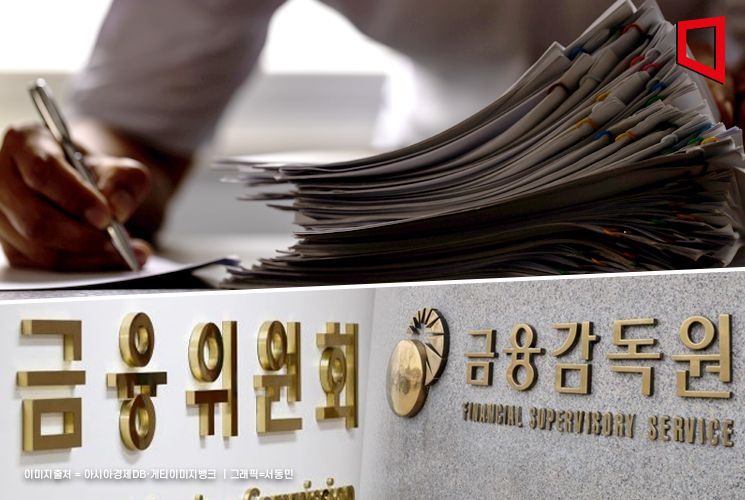
Going forward, only prepaid service providers whose outstanding issuance balance does not reach 3 billion KRW or whose total annual issuance amount is less than 50 billion KRW will be exempt from the registration obligation. Separately managed prepaid funds must be operated through safe methods such as purchasing government bonds or bank deposits.
On the 23rd, financial authorities announced that they will give prior notice of the amendment to the Enforcement Decree of the Electronic Financial Transactions Act, which centers on these contents. The amended enforcement decree sets the amount criteria for exemption from prepaid service registration, specifies the amount for separate management of prepaid funds, and details the methods for protecting prepaid funds including safe assets. It also establishes detailed directions for institutionalizing small-amount postpaid payment services approval requirements and specifies who can become merchants acting as agents for transactions involving prepaid electronic payment instruments.
The financial authorities first set the amount criteria requiring prepaid service registration at an outstanding issuance balance of 3 billion KRW and an annual total issuance amount of 50 billion KRW. While expanding the scope of prepaid service supervision, the regulation exempts small businesses from unnecessary supervision by stipulating that registration is not mandatory if the outstanding issuance balance and annual total issuance amount of prepaid electronic payment instruments are below certain amounts.
Specifically, the previous rule required that the goods or services purchasable must be in two or more industries for the instrument to be considered prepaid, but the amendment removes the industry criterion. The exemption from registration, previously applicable if the number of merchants was 10 or fewer, is now allowed if there is only one merchant. Additionally, the enforcement decree changes the regulation that only had an outstanding issuance balance criterion to include exemption if the total issuance amount is less than 50 billion KRW.
The amendment specifies separate management of the entire prepaid funds and safe asset operation methods. The revised law introduces an obligation to protect prepaid funds, requiring prepaid service providers to manage, through a prepaid fund management institution, at least 50% of the prepaid funds in trust, deposit, or payment guarantee insurance methods (separate management) as prescribed by the enforcement decree. In particular, separately managed prepaid funds must be operated by safe methods defined in the enforcement decree.
Considering user protection, the enforcement decree requires separate management of an amount equal to or exceeding 100% of the prepaid funds. In cases where economic benefits are provided to users through discount issuance or point rewards, those amounts are also included in the scope of separate management. Separately managed prepaid funds are to be operated through purchasing government bonds, local government bonds, or deposits in banks or post offices. Furthermore, to prevent foreign exchange risk, prepaid electronic payment instruments issued in foreign currencies must be operated with assets denominated in the same foreign currency.
Small-amount postpaid payment services will be subject to supervision at the level of credit card businesses. Until now, small-amount postpaid payment services were temporarily operated as innovative financial services to enable credit transactions for medium- and low-credit users or thin-filers, supporting inclusive finance and fintech companies' advanced alternative credit evaluations.
The amended law legalizes this as a concurrent business of prepaid service providers and stipulates that the business can only be conducted with approval from the Financial Services Commission. Accordingly, the enforcement decree limits those eligible for approval to joint-stock companies that meet financial soundness requirements such as a debt ratio of 180% or less, considering that small-amount postpaid payment services involve credit extension. However, recognizing that this is a concurrent business of electronic financial prepaid services and has an inclusive finance nature, user-specific limits are to be calculated through alternative credit evaluation models, and delinquency information related to other companies' small-amount postpaid payment services can be utilized.
Additionally, reflecting existing innovative financial service conditions, the scope of small-amount postpaid payment services is set. The maximum usage limit per user is set at 300,000 KRW or less, and the total limit provided by the business is set at 15% of the total amount paid using prepaid electronic payment instruments in the previous quarter. Furthermore, small-amount postpaid payment services cannot be used for repayment of monetary debts, purchase of savings or deposits, in line with the Specialized Credit Finance Business Act. The enforcement decree applies the same act to classify asset soundness and requires provisioning for bad debts and reserves related to small-amount postpaid payment service assets.
A basis is also established to provide transaction agency information to merchants acting as agents for prepaid electronic payment instrument transactions, allowing users to know the actual providers of goods and services. The amended law newly includes agents who act on behalf of general merchants using prepaid electronic payment instruments as merchants and obligates them to provide information on general merchants providing goods and services and transaction agency information to financial companies.
The enforcement decree specifies that only those registered as Payment Gateway operators can be merchants. Those operating payment agency services without registration cannot enter into merchant contracts, which is expected to reduce illegal activities in unregistered payment agency processes. Also, the obligation to provide transaction agency information to merchants enables users to know accurate payment information.
This amendment to the enforcement decree will be open for public comment until July 3 and will be implemented from September 15, the date the law takes effect, after regulatory review and approval by the Deputy Prime Minister's meeting and the Cabinet meeting.
© The Asia Business Daily(www.asiae.co.kr). All rights reserved.
![Clutching a Stolen Dior Bag, Saying "I Hate Being Poor but Real"... The Grotesque Con of a "Human Knockoff" [Slate]](https://cwcontent.asiae.co.kr/asiaresize/183/2026021902243444107_1771435474.jpg)















