Proposal by Yoo Seung-min, who led civil servant pension reform
"The 22nd National Assembly must consider fundamental reform plans"
"KDI's generation-specific separation plan and others should be considered"
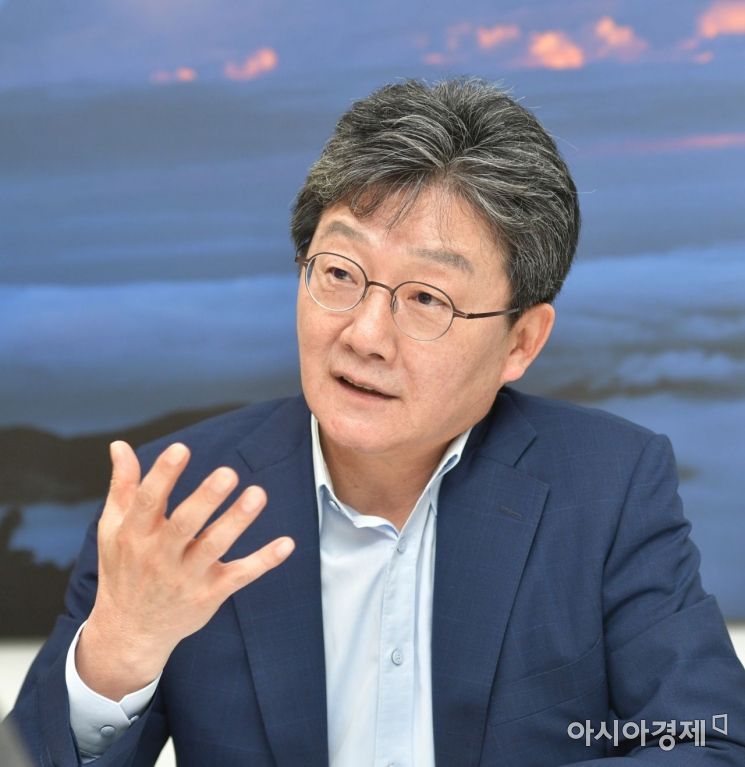
Former lawmaker Yoo Seung-min said regarding the pension reform, which faced a deadlock in the 21st National Assembly, that "a more fundamental solution should be considered in the 22nd National Assembly." Yoo emphasized that as a prerequisite for pension reform to be achieved in the 22nd National Assembly, the government must take a more proactive stance by presenting a 'government proposal' rather than just data or scenarios. On the 23rd, Yoo told Asia Economy about pension reform, "It would have been better if the government and the ruling and opposition parties had agreed and amended the law in the 21st National Assembly, but realistically, it seems difficult now."
Earlier, the National Assembly's Special Committee on Pension Reform set the direction for pension reform through a public opinion survey asking citizens. Based on this, the ruling and opposition parties reached a consensus to raise the ‘insurance premium rate,’ the amount to be paid, from the current 9% to 13%, and also to increase the ‘income replacement rate,’ the pension amount received during retirement. However, the ruling party, concerned about financial depletion, demanded a 3 percentage point increase to 43%, while the opposition party, advocating for retirement income security, insisted on a 5 percentage point increase to 45%, showing a difference in positions. While the two sides were negotiating over a 2 percentage point gap, Joo Ho-young, chairman of the Special Committee on Pension Reform from the People Power Party, declared the failure of pension reform, saying, "Ultimately, the 2 percentage point difference in the income replacement rate made legislation difficult," and since then, the special committee has not convened.
Moreover, President Yoon Suk-yeol stated at his 2nd anniversary press conference, "With the 21st National Assembly nearing its end, rather than rushing now, it should be handed over to the 22nd National Assembly for more thorough discussion," making the failure of pension reform a foregone conclusion. Discussions to achieve pension reform in the 21st National Assembly are emerging from the opposition party, civil society, and academia, but with less than a week left in the 21st term, the likelihood of success is low.
Yoo, who led the entire negotiation process as the floor leader of the then-ruling Saenuri Party (now People Power Party) during the 2015 civil servant pension reform, presented several proposals regarding pension reform to be discussed in the 22nd National Assembly. He said, "If pension reform is to be addressed in the 22nd National Assembly, discussions can start from raising the insurance premium rate to 13% and the income replacement rate to 43-45%," but he pointed out, "Raising the insurance premium and income replacement rate to this extent only delays the pension depletion point by a few years, so it cannot be called a fundamental reform."
In this regard, Yoo advocated for a more fundamental reform. However, the prerequisite is that the government must show a more advanced attitude by presenting a concrete proposal related to pension reform. He said, "Starting with the Yoon Suk-yeol administration, the government must present a government proposal," and criticized, "It was irresponsible to only provide data and submit 24 scenarios to the National Assembly so far." He added, "When the government submits a proposal, it should not be bound by the insurance premium rate of 13% and income replacement rate of 43-45% discussed in the 21st Assembly but should present a more fundamental reform plan." Regarding this, he added, "We should consider proposals similar to the generationally separated pension plan recently presented by the Korea Development Institute (KDI) or the 3115 reform plan proposed by Professor Kim Woo-chang of KAIST."
KDI’s recent generationally separated pension plan aims to dispel concerns about pension depletion by separately managing pensions for future generations, allowing subscribers to receive the sum of their paid insurance premiums and fund management returns, while existing generations receive pensions separately under the old system, with any shortfall due to fund depletion covered by government finances. The 3115 reform plan proposes raising the insurance premium by 3 percentage points to 12%, allocating government finances equivalent to 1% of GDP, and setting the fund management return rate at an average annual 6%, which is 1.5 percentage points higher than the basic assumption of 4.5%. According to this reform plan, pension finances would not be depleted and would be sustainably maintained. However, both plans fundamentally assume tax input into pensions. Yoo said, "Adjusting the insurance premium rate and income replacement rate alone is not a fundamental solution, so the core of these two plans is to inject taxes," and added, "Although debates are expected, they are worth considering."
Yoo suggested the timing of pension reform as next year, assuming the government submits a reform proposal. He said, "The government must submit a proposal so that the ruling and opposition parties can discuss it and create momentum for promotion in the early 22nd National Assembly," and added, "It should be expedited before the local and presidential elections approach so that it can be done around next year."
© The Asia Business Daily(www.asiae.co.kr). All rights reserved.
![Clutching a Stolen Dior Bag, Saying "I Hate Being Poor but Real"... The Grotesque Con of a "Human Knockoff" [Slate]](https://cwcontent.asiae.co.kr/asiaresize/183/2026021902243444107_1771435474.jpg)















