"Discussed at the Medical Reform Special Committee, Efforts to Institutionalize"
A pilot project to reduce continuous working hours for residents will be fully launched starting next week. The government plans to conduct a comprehensive mid-term evaluation of the pilot project participants' job satisfaction, the effectiveness of training education, and the impact on hospital operations during the second half of this year. Through discussions with the 'Medical Reform Special Committee,' the government aims to expedite the institutionalization of reduced continuous working hours for residents.
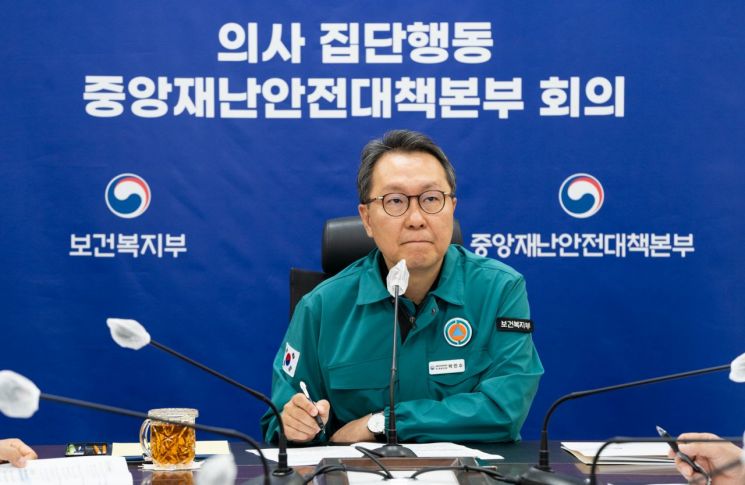
On the afternoon of the same day, Park Min-su, the 2nd Vice Minister of the Ministry of Health and Welfare, stated at the Central Disaster and Safety Countermeasures Headquarters briefing on the doctors' collective action, "We will complete the selection process for participating institutions within this week and officially start the pilot project from next week."
Vice Minister Park explained, "In preparation for the enforcement of the revised 'Act on the Improvement of Training Environment and Status of Residents' in February 2026, and to achieve changes that residents can feel as soon as possible, we are promoting the 'Pilot Project to Reduce Continuous Working Hours for Residents.' Through this one-year pilot project, each training hospital will shorten residents' continuous working hours from the current 36 hours to 24?30 hours, and support hospitals to autonomously adjust work patterns, schedules, and additional staffing according to their own circumstances."
He added, "This pilot project is not limited to specific departments; all departments wishing to participate in hospitals can join. After expert consultations with the Korean Association of Training Hospitals and related academic societies, six departments were designated as mandatory participants: internal medicine, surgery, obstetrics and gynecology, pediatrics?which are essential medical fields directly related to patients' lives?and neurosurgery and cardiovascular thoracic surgery, which had particularly high average working hours for residents according to the Korean Intern Resident Association survey."
According to the Ministry of Health and Welfare, from February 2 to 17, 44 out of 96 training hospitals (46%) that met the application criteria applied to participate in the pilot project. The government plans to ensure the prompt institutionalization of reduced continuous working hours for residents through coordination with the Medical Reform Special Committee. The committee will hold the Essential Medical Care and Fair Compensation Subcommittee on the 23rd and the Medical Workforce Subcommittee on the 24th.
At the Essential Medical Care and Fair Compensation Subcommittee, discussions will focus on compensation measures necessary for tertiary hospitals to reduce their dependence on resident labor and transition into 'specialist-centered' hospitals that provide care focused on severe cases. The subcommittee will also review priorities for essential medical fields that urgently require enhanced compensation and discuss concentrated fee increases for undervalued areas.
The Medical Workforce Subcommittee will discuss not only the reduction of residents' continuous working hours but also a phased reduction of weekly working hours from 80 to 60 hours. Plans will also be addressed to strengthen national support for resident training and to enhance programs such as network training, allowing residents to gain diverse experiences aligned with their career paths.
Vice Minister Park stated, "These reform measures will be developed by thoroughly collecting opinions from the medical field and tailoring approaches to the realities of each specialty."
© The Asia Business Daily(www.asiae.co.kr). All rights reserved.

















