Advanced Countries like the US, Canada, and Europe
Expectations Rise for Easing Sticky Inflation
Increased Possibility of Base Rate Cuts
Bond Prices Rally Across the Board
Wall Street Says "Buy Gradually"
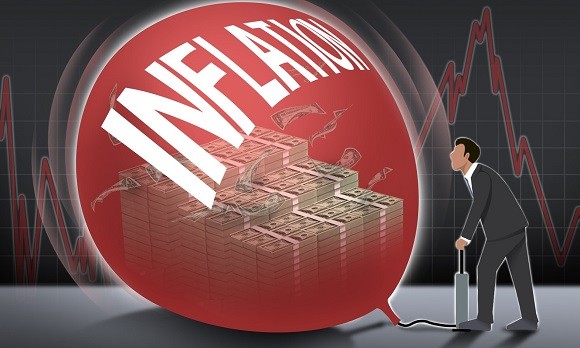
As expectations for interest rate cuts by major countries revive, global bond prices are on the rise. This is due to observations that the inflation slowdown trend could change the long-standing high interest rate environment since the COVID-19 pandemic. In such cases, many investors rush to purchase bonds with high annual yields before the benchmark interest rates drop, leading to an increase in bond prices.
Bloomberg reported on the 21st (local time) that bonds in advanced economies such as North America and Europe are experiencing a rally amid global signals of easing inflation.
In Canada, which released its inflation data on the same day, the Consumer Price Index (CPI) rose 2.7% year-on-year last month. This is a moderated level compared to March (2.9%) and the lowest since March 2021 (2.2%), strengthening arguments for a rate cut in June. The yield on the 2-year Canadian government bond fell 1.47% to 4.211% annually, the lowest level since the 3rd of this month.
With the UK’s April CPI announcement scheduled for the 22nd, the market expects the Bank of England (BOE) to possibly cut rates for the first time in June. On the same day, the 10-year UK government bond yield, focused on easing inflation, dropped 1.0% from the previous day to 4.169% annually. Similarly, the 10-year German government bond yield, which was also expected to see a rate cut around this time, fell 0.89% to 2.508% annually.
Officials from the U.S. Federal Reserve (Fed) have also weighed in on the possibility of a rate cut within the year, interpreting last month’s CPI as a sign of easing inflation. The U.S. CPI released on the 15th rose 3.4% year-on-year, showing a slowdown from the previous month’s 3.5% increase. Christopher Waller, a Fed governor known for his hawkish stance, said on CNBC that “if the data continues to weaken over the next 3 to 5 months, we might consider doing it by the end of this year.” Bloomberg interpreted his remarks as “less hawkish than expected, although Waller noted that several more months of better inflation data would be needed before starting rate cuts.”
Bloomberg reported that the market is moving up its expectations for the Fed’s benchmark rate cut to November. The yield on the U.S. 2-year Treasury bond, which is sensitive to monetary policy, fell 0.35% to 4.831% annually on the day. This yield had exceeded 5% on the 30th of last month.
Wall Street is encouraging the purchase of bonds from advanced countries where rate cuts are anticipated amid expectations of easing inflation. Buying bonds at high interest rates allows investors to receive corresponding interest payments while also benefiting from potential future bond price increases. Morgan Stanley advised on the 4th to gradually buy bonds when U.S. Treasury yields surged amid sticky inflation concerns. Individual investors who find it difficult to purchase bonds directly can invest indirectly through related exchange-traded funds (ETFs).
© The Asia Business Daily(www.asiae.co.kr). All rights reserved.
![Clutching a Stolen Dior Bag, Saying "I Hate Being Poor but Real"... The Grotesque Con of a "Human Knockoff" [Slate]](https://cwcontent.asiae.co.kr/asiaresize/183/2026021902243444107_1771435474.jpg)















