Singapore Airlines Plane Hits Turbulence, 1 Dead
Unstable Air Encountered by Aircraft
Causes of Various Aviation Incidents Identified
Climate Change Increasing Turbulence Risks
A Singapore Airlines passenger plane traveling from London, UK to Singapore was caught in turbulence. It is reported that one passenger died in the incident.
Turbulence refers to irregular airflows occurring in the sky. It is known to mainly occur near mountainous areas, close to the ground, inside clouds, or near jet streams. Sometimes turbulence forms in the air due to the takeoff of airplanes. Such turbulence can be strong enough to shake even large aircraft, and in severe cases, it can break airplane wings or cause passenger fatalities.
The crash that killed 260 people also encountered 'turbulence'
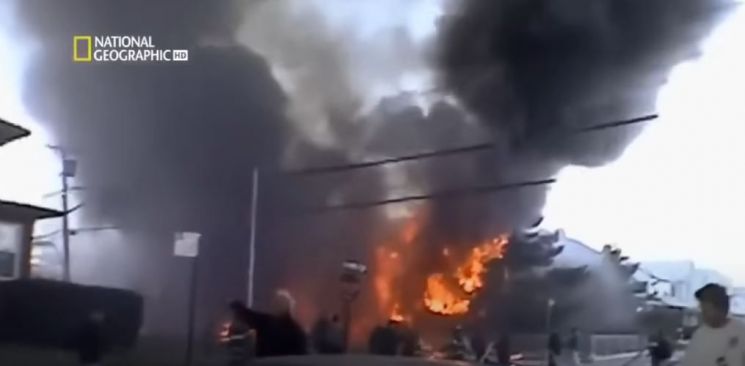 The scene at the site of American Airlines Flight 587 crash in 2001, which resulted in 260 fatalities [Image source=National Geographic YouTube capture]
Turbulence has long been cited as a direct or indirect cause of many aviation accidents. A representative case is the crash of American Airlines Flight 587 in November 2001. The Airbus aircraft, which took off from New York John F. Kennedy International Airport and was heading to Las Americas International Airport in the Dominican Republic, lost its vertical stabilizer and crashed, resulting in the tragic death of all 260 passengers on board.
At that time, the aircraft was caught in 'wake turbulence' (artificial turbulence caused by the flight of another aircraft) generated by the plane ahead. The first officer tried to stabilize the aircraft by operating the rudder in the opposite direction, but the enormous force caused the tail fin to break off.
An airplane cannot fly without its tail fin. The Airbus lost balance, spun uncontrollably, lost both engines, and crashed into a residential area in Queens, New York, shattering beyond recognition. All 260 people on board perished.
Most turbulence causes discomfort, but serious injuries are possible
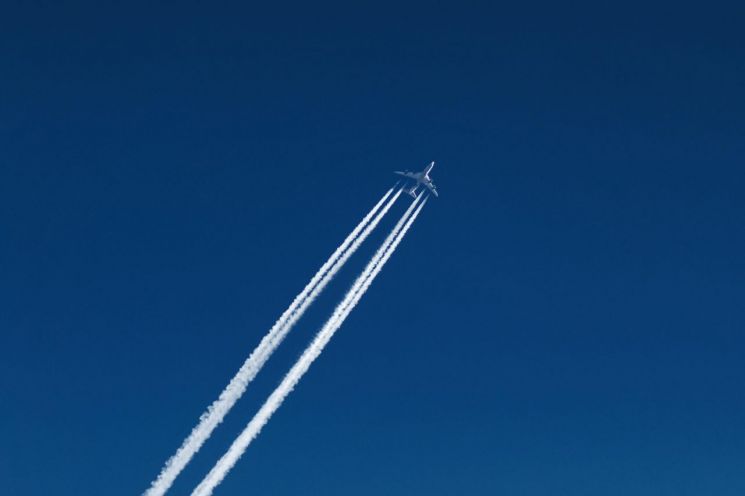
Fortunately, most turbulence is not highly dangerous. Usually, it causes slight discomfort to passengers or minor collisions with some body parts. However, if one does not act cautiously during turbulence, it can lead to serious injuries.
According to a 2021 report by the U.S. National Transportation Safety Board, the majority of passengers seriously injured by turbulence were moving at the time of the incident. This means they were not properly wearing seat belts. As a result, many were injured by stumbling and falling or hitting their heads on food carts. Overhead luggage falling is also a common cause of injury.
Turbulence to increase due to climate change: "Double by 2050"
Meanwhile, warnings have been issued that turbulence incidents may increase in the future. This is because the 'jet stream,' which is caused by temperature differences in the atmosphere, is becoming more unstable. Climate change is especially strengthening these jet streams.
Professor Paul Williams, a meteorologist at the University of Reading in the UK, said in an interview with the U.S. 'NPR' on the 21st (local time), "As the jet stream becomes more unstable, wind speeds increase, leading to more turbulence," adding, "Estimates suggest that by 2050, the turbulence experienced by pilots worldwide will more than double compared to today."
© The Asia Business Daily(www.asiae.co.kr). All rights reserved.
![Clutching a Stolen Dior Bag, Saying "I Hate Being Poor but Real"... The Grotesque Con of a "Human Knockoff" [Slate]](https://cwcontent.asiae.co.kr/asiaresize/183/2026021902243444107_1771435474.jpg)

















