Yeongdeungpo-gu Mayor Choi Ho-kwon Declares 'Garden City Filled with the Scent of Flowers' on the 23rd... "The Only District in Seoul Without Mountains, Transforming the Old Downtown Yeongdeungpo, Known for Dense Ironworks, into a 'Garden City, Cultural City, Healthy and Healing City' to Create a New 'Young City! Yeongdeungpo'"... Declared 'Garden City Yeongdeungpo' Starting with the Opening of Mullae-dong Flower Garden on May 8... Promoting Garden City Yeongdeungpo with Four Strategies: 'Street-side Greening,' 'Life-oriented Gardens,' 'Waterside Sensory Ecological Gardens,' and 'Expansion of Garden Leisure Culture'
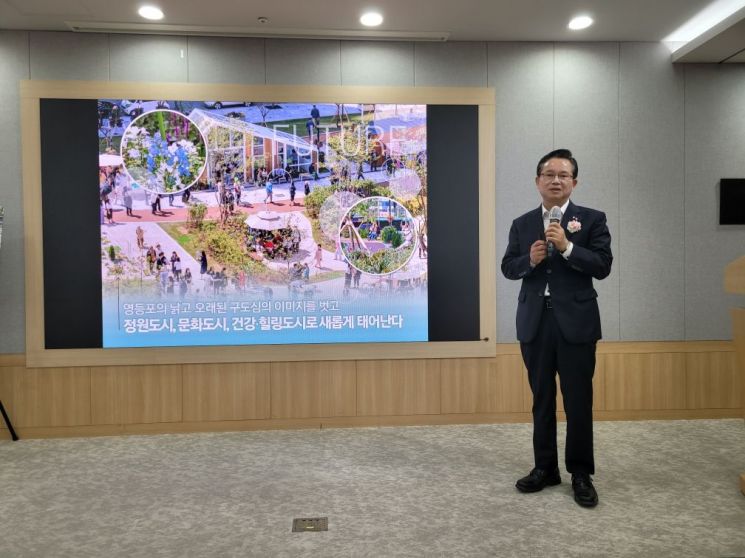 On the morning of the 22nd, Choi Ho-kwon, Mayor of Yeongdeungpo District, held a briefing at the city hall press room regarding the declaration of "Yeongdeungpo District, City of Flowers, Garden City."
Yeongdeungpo-gu in Seoul is shedding its old image as a former industrial area and transforming into a vibrant future city by becoming a ‘City of Flowers’ and a ‘Garden City.’
On the morning of the 23rd at 10 a.m., Choi Ho-kwon, the mayor of Yeongdeungpo-gu, held a briefing at the Seoul City Hall briefing room and declared, “We will plant and nurture flowers and trees in everyday places such as parks, streetsides, alleys, streams, and small unused lands to create oasis-like gardens throughout the neighborhoods where residents can enjoy leisure,” announcing ‘Flower City Yeongdeungpo, Garden City Yeongdeungpo.’
Yeongdeungpo had the image of an old and worn-out old downtown area with no mountains among Seoul’s autonomous districts and a dense concentration of metal workshops in Mullae-dong. With the promotion of ‘Garden City Yeongdeungpo,’ the city aims to drastically change its urban image and be reborn as a new ‘young city! Yeongdeungpo’ where residents can enjoy garden culture in their daily lives.
The district has focused on expanding park green spaces to provide residents with comfortable living and rest areas, resulting in an increase in park green space per capita from 9.5㎡ in 2022 to 10.2㎡ as of 2024.
However, this declaration of ‘Garden City Yeongdeungpo’ is expected to change the perception of the existing green space projects, which had focused on quantitative expansion. Mayor Choi Ho-kwon defined a garden as “a cultural and artistic work utilizing nature, a space of leisure and happiness, and a healing space for a healthy daily life.” As Yeongdeungpo-gu is the only cultural city designated by Seoul, it plans to create unique gardens by introducing artistic designs that incorporate works by local artists or blend with nature, allowing residents to encounter rest and art throughout their daily lives.
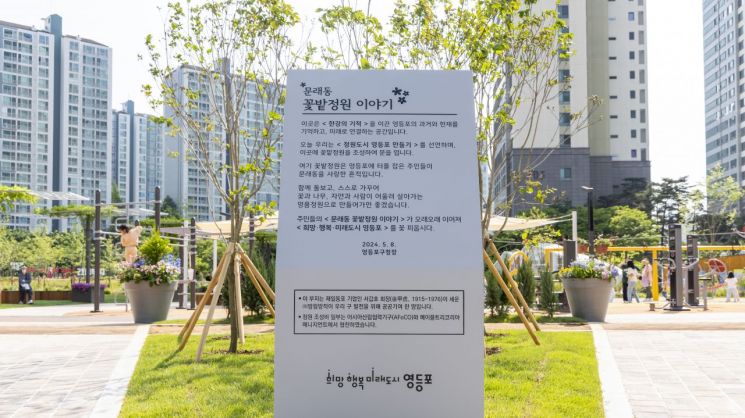
The first step toward Garden City Yeongdeungpo was the opening of the ‘Mullae-dong Flower Garden’ on May 8. This garden marks the beginning of Yeongdeungpo’s image transformation and serves as a symbolic space. Going forward, Yeongdeungpo aims to transform into a completely new young city that surpasses the past 100 years through the creation of a garden city, cultural city, and health & healing city. The district expressed its determination that Yeongdeungpo, which once led the Miracle on the Han River centered on manufacturing, will open a renaissance era of a premium city where jobs, housing, culture, and gardens harmonize, heralding a second Miracle on the Han River.
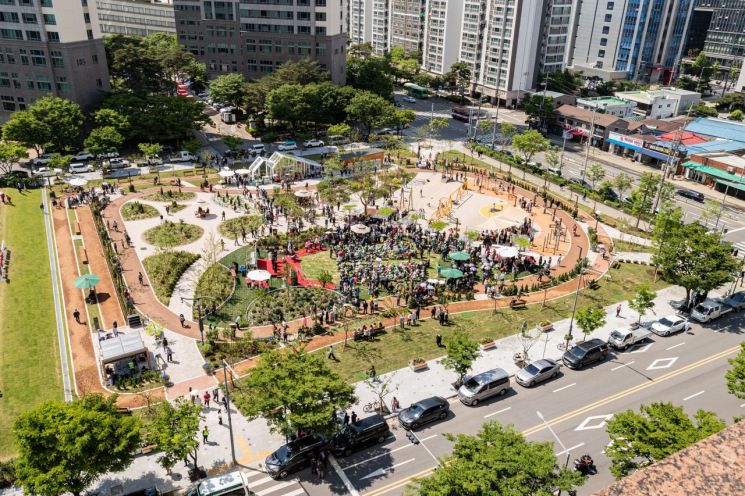
Returned as a Healing Space for Residents after 23 Years ? Mullae-dong Flower Garden
The public land in Mullae-dong where the Mullae-dong Flower Garden was created was originally donated by the late Seo Gap-ho (徐甲虎, 1915?1976), a Korean-Japanese businessman who founded Bangrim Spinning Mill in 2001 for the development of Yeongdeungpo. However, for 23 years, it was not properly utilized and was blocked off by the district office’s material warehouse and high fences. Residents had continuously demanded its demolition, and finally, with a 2.3 billion KRW budget support from Seoul City, the garden was created and reborn as a fully open healing space.
The spinning mill where mothers and sisters once worked hard has been reborn as a flower garden full of flowers and trees, returning to the residents’ embrace after 23 years.
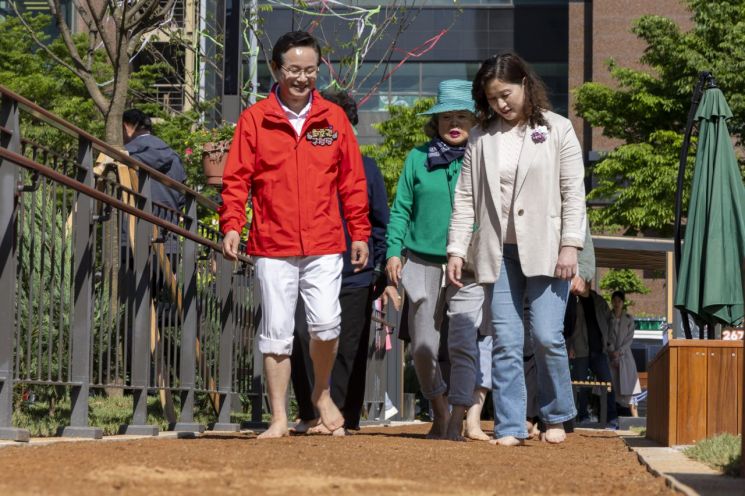
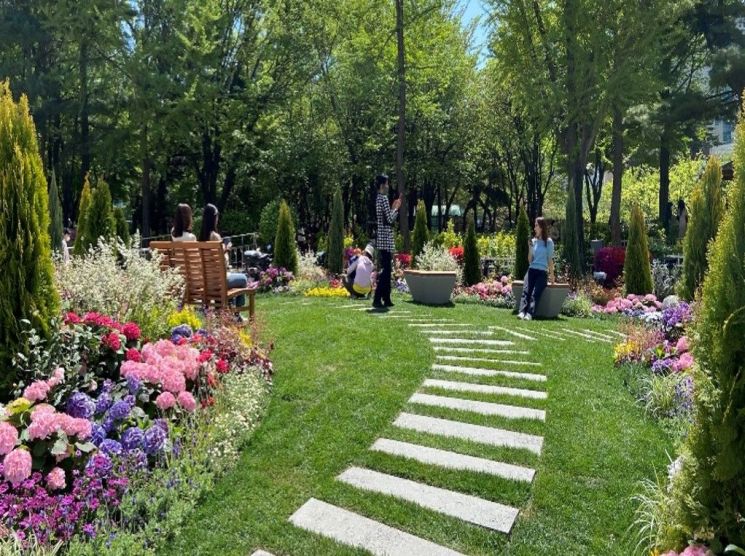
The Mullae-dong Flower Garden was designed as a resident-friendly garden that considers various age groups so that all residents can enjoy rest and leisure. In the flower garden, children to seniors can cultivate flowers and trees together, play in the sand, exercise outdoors, walk barefoot on the clay path, and enjoy leisure culture in daily life along the walking trails.
- A flower garden with a variety of plantings such as Miss Kim Lilac, Daisy, Hackberry, Thyme, Rosemary, Lavender, etc., pleasing to the eyes
- A four-season lawn yard with zoysia grass planting so green grass can be seen even in winter
- Barefoot clay paths (wet and dry) and circular walking trails for residents’ health
- A children’s playground designed as an adventurous and creative play space with a sand playground, net climbing frame, zipline, trampoline, etc.
- Various exercise equipment usable by seniors and all age groups
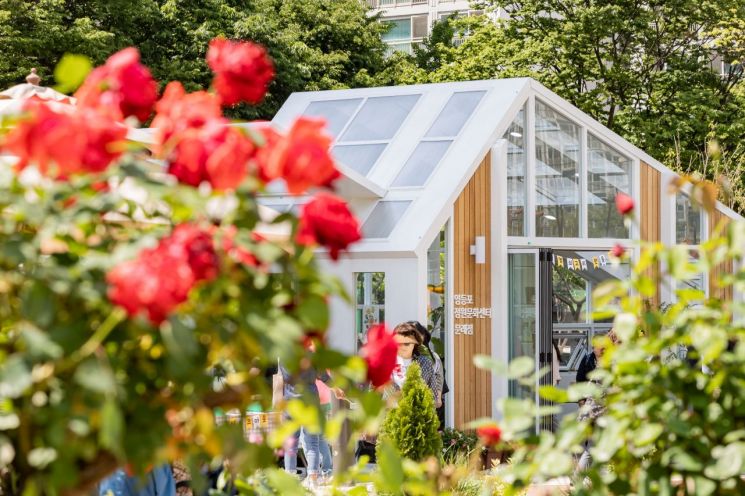
In particular, the Garden Culture Center located within the garden serves as a hospital for companion plants where residents can receive diagnosis and treatment from plant experts. It also offers educational programs on training village gardeners and caring for companion plants and gardens. Additionally, it operates a garden library that shares specialized books and garden maintenance tools, which is expected to be a great help to residents who raise companion plants.
One-third of the Mullae-dong public land is used for the flower garden, while the remaining two-thirds are planned for the construction site of the ‘Yeongdeungpo Mullae Arts Center’ and are currently used as urban vegetable gardens. The Yeongdeungpo Mullae Arts Center is scheduled to begin construction in 2027 and be completed by 2030, with administrative procedures underway. A district official expressed high expectations, saying that once the Mullae Arts Center is completed, it will harmonize perfectly with the flower garden and become a pride of Yeongdeungpo as Seoul’s only cultural city and an arts city.
Main Facilities of Yeongdeungpo Mullae Arts Center
- A large performance hall with 1,300 seats and a versatile small hall with 300 seats
- Exhibition rooms, creative workshops, and activity facilities for local artists
- A 50m 8-lane swimming pool, fitness facilities, parking lot, and other convenience facilities for residents
- Cultural education facilities for residents, youth education and experience facilities, seminar rooms, etc.
Four Major Strategies for Creating Garden City Yeongdeungpo
Yeongdeungpo promotes ‘Garden City Yeongdeungpo’ through four strategies.
‘Streetside Greening,’ ‘Life-Integrated Gardens,’ ‘Waterside Sensory Ecological Gardens,’ and ‘Expansion of Garden Leisure Culture’
First, to make walking a healing experience, streetside greening will create beautiful green spaces within the city.
- By 2025, the upper part of National Assembly Boulevard, 2,700m from Mokdonggyo Bridge to the intersection in front of the National Assembly, will be turned into a garden, establishing a green network from Anyangcheon Stream to the Han River.
Distinctive green spaces and rest areas will be created along the streets to transform them into healing paths where people want to walk. This project will especially enhance accessibility to major green hubs such as Anyangcheon, Yeouido Saetgang, and Yeouido Park.
- Within this year, 2,480m of streetside gardens will be created in seven sections including Sinpung-ro, Yeongjung-ro, and Yeouidaebang-ro. Each route will feature unique streetside gardens such as garden-type green belts and neighborhood streetside green spaces where people can experience small gardens and seasonal changes, building a differentiated urban image.
Second, life-integrated gardens filled with flowers and trees will be created in everyday places such as roadsides and alleys so residents can encounter gardens close to their homes.
- Starting with the Mullae-dong Flower Garden, the district will accelerate the creation of gardens that residents can feel. The Mullae Neighborhood Park, opened in 1986 and turning 40 next year, is planned for remodeling. It will be developed into a local attraction specialized in art, culture, rest, and experiential content in connection with the nearby Mullae Creative Village. From June this year, after resident briefings and opinion gathering, the basic design service will be completed by September, aiming for completion in 2026.
- At Yeouido Sister Neighborhood Park (Ankara Park), a ‘Water Garden’ will be created using underground water discharged from the abandoned Saetgang Station. This water-themed friendly water space will include water channels, mirror ponds, and water-friendly pergolas. The project is supported by a business agreement with the Ministry of Environment, Seoul City, and the Korea Water Resources Corporation, receiving 2 billion KRW in national funds, and is scheduled for completion in June.
- Alley gardens will begin with the ‘Mullae Creative Village Alley’ this year, expanding annually with gardens that highlight alleyway sentiments and photo zones tailored to local spatial characteristics.
- Various themed gardens such as school gardens, senior citizen silver gardens, and daycare kids’ gardens will be created nearby to allow residents natural access to nature in their daily lives.
- Eight specialized gardens full of sights and vitality will be created this year in small parks, children’s parks, and village yards (e.g., Moss Garden in Dangsan Park, Four Seasons Garden in Jungmaru Park).
- Additionally, five major roadside three-dimensional flower beds at locations such as the district office, in front of the National Assembly, and Yangnam Intersection, as well as flower pots hung on streetlight poles along six routes, will create distinctive flower paths throughout the four seasons.
- Furthermore, in connection with urban development such as redevelopment and reconstruction, a nature-friendly pedestrian path called ‘Yeongdeungpo Greenway’ will be established for residents to use as walking trails and communication spaces.
‘Yeongdeungpo Greenway’ is not just a pedestrian path with flowers and trees but an open streetscape connecting complexes and parks, creating a circular network throughout Yeongdeungpo and producing diverse urban landscapes.
- Along with this, the ‘Revival of Public Open Spaces Project’ will provide residents with attractive walking paths and rest areas. Both Yeongdeungpo Greenway and the public open space project are notable as ways to expand green spaces in Yeongdeungpo, which has no mountains, without additional district budget for land acquisition.
Third, ecological gardens with waterside sensibility will be created by utilizing local waterside resources.
- Ecological restoration and greening projects will be carried out on slopes and idle spaces along Anyangcheon and Dorimcheon streams to restore river ecosystems and improve ecological landscapes. Additionally, walking trails, pocket rest areas, and sports facilities will be added to create green spots for rest and healing where nature and residents coexist, restoring biodiversity.
- Last year, the district was selected for the Ministry of Environment’s ‘Ecosystem Conservation Charge Refund Project’ and received national funding to complete the creation of migratory bird habitats and ecological rest areas along Anyangcheon. In connection with the opening of World Cup Bridge, the artificial waterfall at Yanghwa will be reconstructed, and an ecological garden covering 13,000㎡ along Anyangcheon is planned to be completed within this year.
- Also, selected for the ‘Seoul City Waterside Vitality Hub Creation Contest,’ a waterside salon with an observation terrace, caf?, restrooms, and resting areas, as well as wetlands, will be created on approximately 22,000㎡ of land between Mokdonggyo Bridge and Yangpyeong Bridge, providing a space where nature and people coexist by 2025.
- Ecological gardens with waterside sensibility will be created in retention basins (Yangpyeong, Daerim, Dorim, etc.), and related village-level local festivals will be revitalized.
(Example: ‘Dorim-dong Rose Festival’ linked to the creation of Dorim Retention Basin Rose Garden)
- Barefoot clay paths (total 1.2km) and surrounding walking trails along the embankment of Anyangcheon will be planted with various flowers and plants by season, offering residents a healthy healing path they want to walk.
Fourth, the district will expand a high-quality ‘garden leisure culture’ together with residents.
- In May this year, the district opened ‘Garden Culture Centers’ at Yeongdeungpo Park and Mullae-dong Flower Garden. Reflecting the recent growing interest in companion plants and the increasing number of people raising and caring for plants at home, the centers offer various gardening programs themed on plants and gardens, including ▲village gardener training programs ▲garden photographer training programs ▲companion plant hospitals ▲lending of plant specialist books and garden maintenance tools.
- Especially, residents trained through village gardener education will play a central role in neighborhood greening, helping garden leisure culture to permeate daily life. Depending on resident demand and response, the Garden Culture Centers will be expanded by district zones in the future.
- To spread garden culture cultivated by residents themselves, the district operates ‘Share Gardens.’ Share Gardens allocate spaces such as commercial areas, building fronts, or idle public land to residents who have no space to cultivate gardens. A pilot project will be launched in the second half of the year based on resident applications. Additionally, the district supports garden creation projects in neighborhood idle spaces or apartments and actively operates garden maintenance volunteer programs.
- Furthermore, using personnel such as visiting nurses, companion plants will be distributed and companion plant healing programs conducted for socially vulnerable groups like elderly living alone, aiming to prevent stress and depression and provide emotional stability.
Mayor Choi Ho-kwon said, “If residents participate directly in garden creation and management, it will increase pride and responsibility toward the local community, and through this, garden culture will spread. This will be a model case of resident autonomy and true local autonomy.” He also expressed great expectations for Yeongdeungpo’s unique gardens created together with residents, fully demonstrating his qualities as a local autonomy leader.
Expanding the Base of Garden Culture through the ‘Yeongdeungpo Garden Festival’... Various Attractions, Experience Events, and Cultural Arts Programs
The district will hold the ‘Yeongdeungpo Garden Festival’ from May 24 to 26. Under the theme ‘Garden Picnic,’ the festival will take place over three days at Yeongdeungpo Park. As the first garden festival hosted by the district and the first festival since the declaration of ‘Garden City Yeongdeungpo,’ it holds special significance.
Yeongdeungpo Park is the largest park managed by the district, covering a vast area of 61,544㎡ (about 18,600 pyeong), and will be divided into eight theme zones. The representative garden, designed by experts, features plants such as hydrangea, allium, round arborvitae, and hot lip sage, boasting excellent scenic beauty. The resident garden, cultivated directly by residents with the help of garden experts, and the forest performance hall utilizing pine tree shade as a stage, are also noteworthy. If the sun is strong, visitors can enjoy spring leisure in uniquely designed shaded rest areas.
※ Eight theme zones: Representative Garden (Border Garden), Resident Garden, Forest Performance Hall, Shaded Rest Area, Popup Cultural Experience Zone, Food Truck Zone, Flower Road, Spring Road (Companion Plant Flea Market)
Choi Ho-kwon, mayor of Yeongdeungpo-gu, said, “We have successfully taken the first step toward Garden City Yeongdeungpo with the Mullae-dong Flower Garden. From the first weekend after opening, many residents from seniors to children have visited, making it a true healing and resting spot. Yeongdeungpo, which has no mountains, the image of metal workshops with flying iron dust, and an old and worn-out old downtown, will be completely reborn through the ‘Garden City, Cultural City, Health & Healing City’ initiatives. We will continue challenges and innovations to create ‘Flowering Yeongdeungpo, Young City! Yeongdeungpo,’ where jobs, housing, culture, and gardens harmonize.”
© The Asia Business Daily(www.asiae.co.kr). All rights reserved.
![Clutching a Stolen Dior Bag, Saying "I Hate Being Poor but Real"... The Grotesque Con of a "Human Knockoff" [Slate]](https://cwcontent.asiae.co.kr/asiaresize/183/2026021902243444107_1771435474.jpg)


















