Establishment of Population Policy Officer and Education & Youth Bureau... Strengthening Population, Education, and Youth Policies
Military Airport Headquarters and Transportation Bureau → Integrated Airport Transportation Bureau... Promotion of Integrated Airport Relocation
Maintaining 15 Offices, Bureaus, and Headquarters with 72 Divisions... Reducing Civil Servant Quota by 15 to Enhance Soundness
Gwangju Metropolitan City, declared as the ‘Year of Great Transformation in Gwangju 2030,’ is reorganizing its structure for the latter two years of the 8th elected administration to design and implement the future of Gwangju.
Gwangju Metropolitan City (Mayor Kang Gi-jung) announced on the 21st that it has publicly notified the proposed amendments to the ‘Ordinance on the Establishment of Administrative Organizations of Gwangju Metropolitan City and the Ordinance on the Number of Public Officials’ and plans to submit them to the 325th Gwangju Metropolitan Council’s 1st regular session.
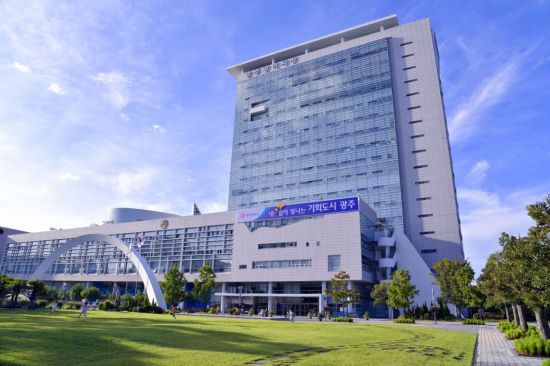
Under the core values of ‘Change and Innovation’ during the 8th elected administration, the city operated an execution-focused organization, resolving long-standing issues while achieving remarkable results such as becoming a standard city for artificial intelligence (AI), future vehicles, startups and demonstrations, and care.
Building on these achievements, to prepare for a ‘Seamless Future of Gwangju,’ the reorganization includes strengthening population, education, and youth policies; promoting the integrated relocation of civilian and military airports; implementing intensive fiscal innovation; and enhancing the execution power of ongoing projects.
◇ Strengthening Population, Education, and Youth Policies
First, to prepare for Gwangju’s future, population, education, and youth policies will be reinforced. A Population Policy Officer will be established under the Planning and Coordination Office, and an Education and Youth Bureau will be newly created under the Deputy Mayor for Culture and Economy.
The Population Policy Officer will formulate and coordinate highly effective policies and projects that lead to actual population inflow by implementing sustainable population policies linked with Gwangju’s finances from a balanced development perspective, including low birth rates, jobs, welfare, housing, and education.
The Education and Youth Bureau was established with the goal of nurturing talent based on industry, university innovation, and establishing a youth settlement system. A University Talent Policy Division will be created to oversee talent development and university innovation policies, the Youth Policy Division will serve as the command center (control tower) for youth policies, and the Education Support Policy Division will systematically support life-cycle education policies.
◇ Promoting Integrated Relocation of Civilian and Military Airports
To promote the integrated relocation of Gwangju’s civilian and military airports, the Military Airport Relocation Headquarters and the Transportation Bureau will be merged and reorganized into the Integrated Airport Transportation Bureau.
The Military Airport Relocation Task Force will operate to unify metropolitan transportation and airport functions that create a foundation for coexistence and mutual growth in the southwestern region, cooperating with related agencies such as Jeonnam Province and the Ministry of National Defense, and promptly supporting communication with residents in the relocation area.
◇ Intensive Fiscal Innovation
To overcome the fiscal crisis through intensive fiscal innovation, a Fiscal Innovation Team will be newly established under the Planning and Coordination Office. The team plans to strengthen personnel within the Budget Officer’s Office to thoroughly inspect budget waste factors, enhance investment reviews, and conduct ongoing expenditure restructuring and fiscal soundness reinforcement.
◇ Enhancing Execution Power of Ongoing Projects
With the full-scale era of 30 million urban users, the New Vitality Promotion Headquarters will be reorganized to focus on the construction of a complex shopping mall and the Y Project. The New Vitality General Manager will take over the Y Project related to waterfront spaces and promote it alongside the support office for the complex shopping mall construction.
To strengthen systematic urban planning management and spatial recovery functions, the Urban Space Bureau will be reinforced. The Urban Planning Division will enhance its role in reviewing the Shinsegae-Terminal complex development and reorganize as an organization leading the downtown convergence special zone pilot project. A new Spatial Innovation Division will be established to restore the city as a space connecting people, strategically planning and executing urban regeneration and aging city maintenance.
To build a more robust artificial intelligence (AI) industry ecosystem and support about 1,000 AI companies this year, the AI Semiconductor Division will strengthen its AI company support functions.
To expand the operation of the Municipal Arboretum and create a garden city, a new Arboretum and Garden Office will be established, and an Urban Park Management Office will be operated to manage developing urban parks as resting spaces for citizens.
With this reorganization, the number of offices, bureaus, and headquarters in the Gwangju city hall remains at 15 offices and 72 divisions, and the number of public officials will be reduced by 15 to 4,182, thereby strengthening the soundness of standard personnel expenses. However, essential areas preparing for Gwangju’s future and executing key ongoing projects will have personnel reinforced.
Mayor Kang Gi-jung of Gwangju said, “This reorganization is to plan and execute the great transformation of Gwangju 2030,” adding, “By establishing the Education and Youth Bureau, Integrated Airport Transportation Bureau, Population Policy Officer, and Fiscal Innovation Team, we will prepare for the future with Gwangju’s unique population, education, and youth policies, and accelerate the integrated relocation of civilian and military airports more efficiently.”
© The Asia Business Daily(www.asiae.co.kr). All rights reserved.
![Clutching a Stolen Dior Bag, Saying "I Hate Being Poor but Real"... The Grotesque Con of a "Human Knockoff" [Slate]](https://cwcontent.asiae.co.kr/asiaresize/183/2026021902243444107_1771435474.jpg)















