As concerns over high inflation persist, expectations for a pivot (policy shift) within and outside the U.S. Federal Reserve (Fed) are retreating. Just over a month ago, even Fed officials who considered three rate cuts within the year as 'reasonable' on the dot plot have now deemed it 'inappropriate.' U.S. economic experts have also shifted from expecting three cuts at the beginning of the year to two. It is widely anticipated that the upcoming Federal Open Market Committee (FOMC) meeting next month will inevitably reflect an upward revision of the dot plot to mirror the current situation.
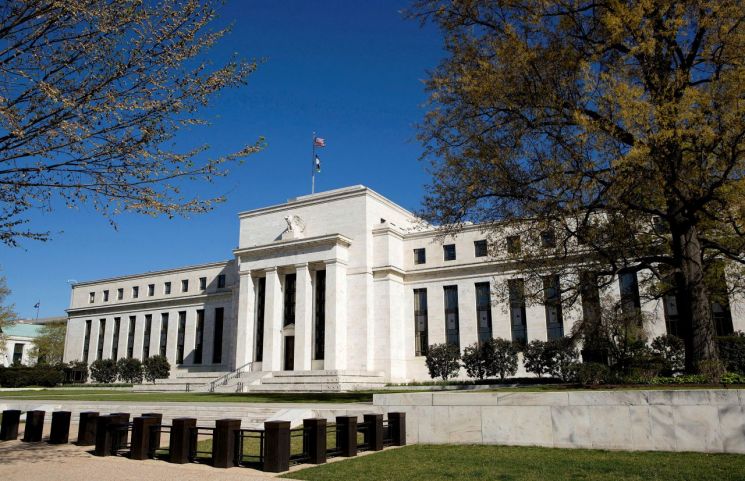
Fed's Mester, who once called three cuts reasonable, now says "It's inappropriate"
On the 20th (local time), Loretta Mester, President of the Cleveland Federal Reserve Bank, stated in an interview with Bloomberg TV, "Considering the inflation indicators in the first quarter, I now believe that three rate cuts in 2024 are no longer appropriate." This contrasts with her statement last month when she said, "I still think three rate cuts within the year are reasonable." Concerns over a rebound in inflation have led her to adopt a more hawkish stance (favoring monetary tightening).
She noted that "the current monetary policy is restrictive," but also pointed out that the easing trend in inflation during the first quarter has stalled. She added, "(The April Consumer Price Index (CPI), which came in below expectations, is good news, but it is too early to say how inflation will proceed," diagnosing that "inflation risks are tilted to the upside." As one of the Fed's most hawkish members, she did not rule out the possibility of further rate hikes due to a rebound in prices.
On the same day, Raphael Bostic, President of the Atlanta Fed, reaffirmed his previous stance that only one rate cut is likely within the year. He predicted, "It will take longer than expected to be confident in achieving the 2% inflation target."
Vice Chairs Philip Jefferson and Michael Barr also emphasized cautious rate decisions, warning that inflation could rebound. Vice Chair Jefferson called the April core CPI, which came in below expectations, encouraging but "not sufficient on its own." Vice Chair Barr described the first-quarter inflation figures as disappointing and said, "More time is needed for the policy to take effect." The core Personal Consumption Expenditures (PCE) index, the Fed's preferred inflation gauge, rose 4.1% from January to April this year, well above the inflation target.
Eyes on June Dot Plot... Expectations of Upward Revision in Rate Forecasts
Voices are growing louder on Wall Street and beyond that the dot plot will be revised upward at the upcoming June FOMC meeting. Previously, at the March FOMC, the Fed maintained the year-end rate forecast at 4.6% on the dot plot, contrary to market expectations. Despite concerns about the "last mile," the Fed continued to signal that three rate cuts within the year were possible. The Fed updates the dot plot, which reflects its rate outlook, every March, June, September, and December.
A survey of U.S. economic experts released that day supports this outlook. The National Association for Business Economics (NABE) surveyed 43 members, who predicted that the U.S. benchmark interest rate would be cut by 0.5 percentage points from the current 5.25-5.5% this year. Considering that the Fed typically adjusts rates by 0.25 percentage points at a time, this implies an expectation of two cuts within the year. Earlier this year, the majority opinion in the NABE survey was for three cuts. Ellen Zentner, Chief Economist at Morgan Stanley and NABE President, told local media, "Expectations for rate cuts have diminished and their timing has been delayed as inflation is projected to be higher than expected."
Market consensus also leans toward rate cuts being possible no earlier than September. According to the Chicago Mercantile Exchange (CME) FedWatch tool, the federal funds (FF) futures market currently prices in about a 60% chance that the Fed will cut rates by at least 0.25 percentage points at the September FOMC. The probability that rates will remain unchanged through June and July is close to 80%. The expected pivot timing has gradually shifted from March to May, then June, and now the second half of the year is considered the most likely.
Bank of America (BoA) said in an investor memo that "rate cuts are still far off," and even the current market forecast (0.5 percentage points cut within the year) is overly optimistic. The reasons cited include the high inflation in the first quarter and that a single optimistic figure like the April CPI is insufficient to confirm expectations for cuts. The economy, including service spending, remains robust, and the labor market has not sufficiently slowed. BoA also pointed out that the upcoming election is a variable for monetary policy.
Some argue that the possibility of rate hikes should not be ruled out. Michael Lansberg, Chief Investment Officer (CIO) at Lansberg Bennett Private Wealth Management, appeared on CNBC and said, "I don't see cuts," adding, "I think we are seeing inflation accelerate."
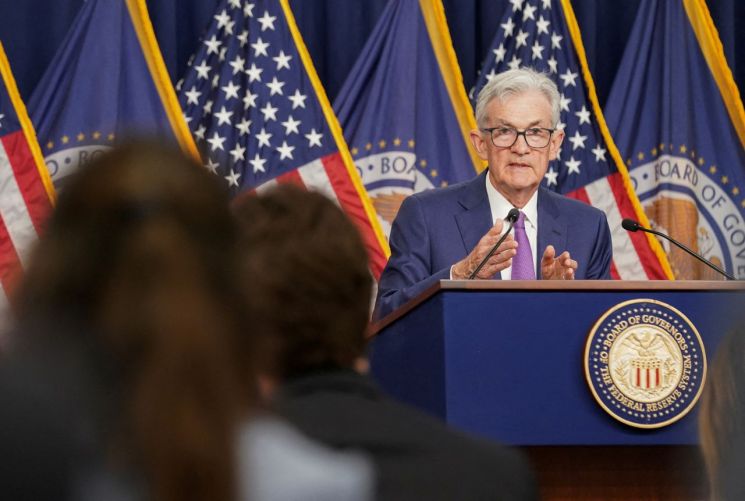
Meanwhile, investors are focusing on the May FOMC minutes to be released on the 22nd. After the May FOMC, Fed Chair Jerome Powell held a press conference where he signaled that the high-rate stance would be prolonged but dismissed the possibility of rate hikes, which was seen as more dovish (favoring monetary easing) than expected. The minutes are important as they will clarify whether Powell's remarks were personal opinions or accurately reflected the committee's discussions. Additionally, public remarks by Board member Christopher Waller and others are scheduled this week.
© The Asia Business Daily(www.asiae.co.kr). All rights reserved.
![Clutching a Stolen Dior Bag, Saying "I Hate Being Poor but Real"... The Grotesque Con of a "Human Knockoff" [Slate]](https://cwcontent.asiae.co.kr/asiaresize/183/2026021902243444107_1771435474.jpg)
















