2023 Grassland Management Survey Results
Total Grassland Area Nationwide 31,784 ha... Decreasing Annually Since 1990
It was revealed that grasslands equivalent to the size of 330 soccer fields (approximately 0.7 hectares each) disappeared last year. Various development projects such as housing and industrial complexes have been progressing, and grasslands used for grazing and forage crop cultivation have been decreasing annually since 1990.
The Ministry of Agriculture, Food and Rural Affairs announced the results of the "2023 Grassland Management Survey" containing this information on the 21st.
Grasslands refer to land used for the cultivation of perennial improved grasses, forage crop cultivation areas, ranch roads, access roads, livestock barns, and auxiliary facilities as defined by the Ministry of Agriculture, Food and Rural Affairs.
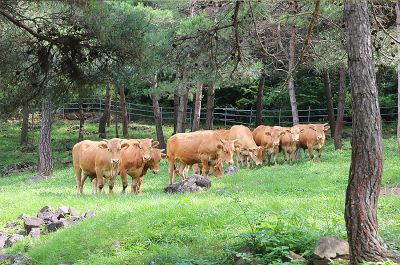
According to the survey, the total grassland area nationwide last year was 31,784 hectares (about 0.3% of the entire national land area), showing a decrease of 230 hectares (-0.7%) compared to the previous year. This means grasslands equivalent to the size of 330 soccer fields disappeared within one year. While 14 hectares were newly created for purposes such as forage crop cultivation, 244 hectares were excluded from grasslands due to grassland conversion and forest restoration. The grassland area has been decreasing annually since 1990 (89,903 hectares) due to conversions caused by various development projects.
Specifically, the reasons for the decrease in grasslands include a total of 170 hectares converted for various development projects such as housing and industrial complexes (121 hectares) and agricultural land (49 hectares). Additionally, 74 hectares were deregistered as grasslands due to forest restoration and loss of grassland function.
By region, Jeju-do holds the largest grassland area with 15,435 hectares (49% of the total). This is followed by Gangwon (4,944 hectares), Chungnam (2,307 hectares), and Jeonnam (1,900 hectares). In Chungnam, the decrease in grassland area was the largest compared to the previous year (-99 hectares) due to conversions for important industrial facilities.
Grasslands are mainly used for grazing (42.2%) or forage crop cultivation (22.1%), and some are also utilized for livestock barns and auxiliary facilities (3.4%). Furthermore, the area currently unused due to poor management accounts for about one-third of the total grassland area.
The Ministry of Agriculture, Food and Rural Affairs plans to conduct a full on-site survey of unused grasslands in the first half of this year to accurately identify their locations and assess future usability. The results will be disclosed on the "Grazing Ecological Livestock Homepage" to provide related information to interested farmers and improve grassland utilization rates.
Additionally, the ministry will continue to designate and activate grazing ecological livestock farms nationwide, currently numbering 60, by creating grasslands on unused or idle land to realize organic livestock farming and animal welfare. Through this, they aim to foster a nature-friendly livestock environment and develop safer livestock production hubs.
Kim Jeong-wook, Director of Livestock Policy at the Ministry of Agriculture, Food and Rural Affairs, stated, "Grasslands are not only carbon sinks that can reduce greenhouse gases but also valuable resources for implementing eco-friendly livestock farming. We will actively work to expand direct payment systems and enhance productivity to better maintain and utilize domestic grasslands."
© The Asia Business Daily(www.asiae.co.kr). All rights reserved.

















