Bloomberg Introduces 10 Notable Startups
From Space Stations to Orbital Debris Removal
Elon Musk's SpaceX and Jeff Bezos's Blue Origin have been engaged in fierce competition for over a decade. The rivalry between the world's two richest individuals has created synergy in expanding the private space industry, which requires enormous funding.
Until now, it seemed that these two companies dominated the private space industry, but recently, more space-related startups have boldly entered the field they helped grow. Bloomberg News introduced 10 notable space industry startups, ranging from companies building Mars landers to those cleaning up orbital debris.
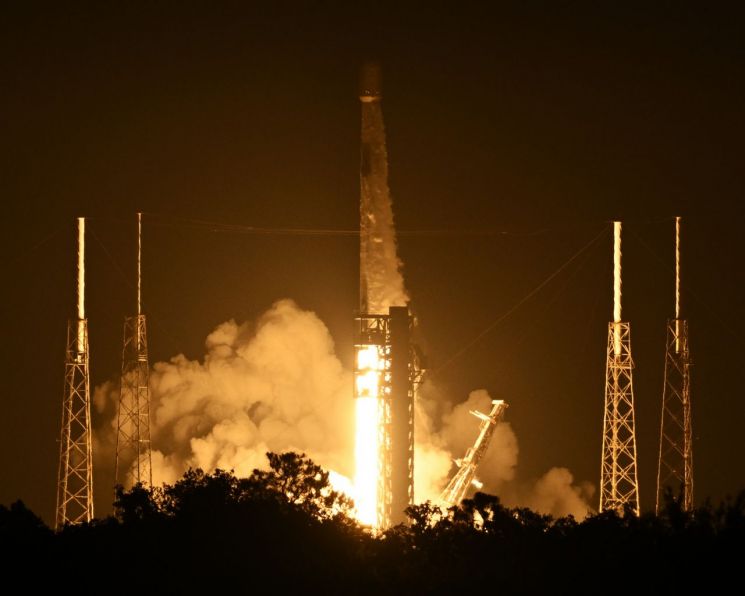
Among the startups, some build rockets like SpaceX and Blue Origin. One such company is Relativity Space, based in Long Beach, California. Founded in 2015, the company spent six years developing the rocket 'Terran 1' using 3D printing and launched it last year. While the launch successfully reached space, it failed to enter orbit. Building on this, they are developing 'Terran R' with a goal of a successful launch in 2026.
ABL Space Systems, founded in 2017 by Harry O'Hanley, a former SpaceX employee, develops batch launch vehicles and infrastructure to send commercial small satellites into orbit. Their rocket RS1 is designed to carry satellites to low Earth orbit. However, during its first flight in January last year, the engine shut down after 11 seconds, and the project has yet to succeed. They aim for a second launch this year.
Impulse Space, a startup founded in 2021 and based in Redondo Beach, California, focuses on developing a kind of 'space tug' that transports satellites and other objects already floating in space. The company was founded by Tom Mueller, an American aerospace engineer and SpaceX's first employee. Their first product, 'Mira,' was unveiled to some customers last year, and they have announced plans for a larger transport vehicle called Helios.
In addition to companies building rockets or launch vehicles, there are startups developing equipment related to space stations. The competition to build the world's first commercial space station is intense even among startups.
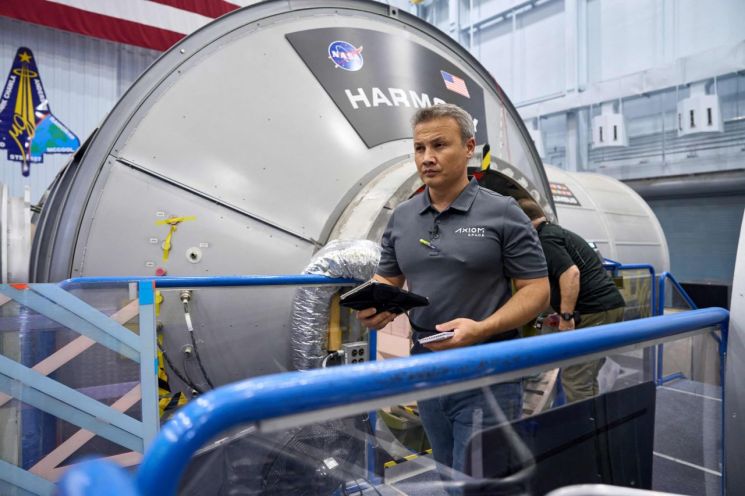 Last July, an employee of the startup Asiom Space was busy working at the Kennedy Space Center in the United States.
 [Image source=AFP Yonhap News]
AstroScale was founded in 2016 by Michael Suffredini, former program manager of NASA's International Space Station program. The company is building commercial modules for a free-flying commercial space station. To this end, they have dispatched three staff members to the International Space Station (ISS) and hope to construct part of their self-developed space station by 2026.
Sierra Space, established in 2021, is another startup accelerating the construction of commercial space stations. In October 2022, the company partnered with Blue Origin to promote the construction of Orbital Reef, the world's first commercial space station. Bast, a startup founded the same year, is also developing a space station. Their goal is to build a space station with artificial gravity and create the world's first commercial space station in low Earth orbit by 2025, followed by exponentially larger stations in orbit within the next decade.
Startups removing debris floating in space orbit have also emerged and are active. Astroscale, a startup founded in 2013 in Tokyo, Japan, retrieves defunct satellites and broken parts orbiting Earth. In simple terms, they act as 'space janitors.' In April, the company achieved success by sending a specialized spacecraft to approach debris and capture high-resolution images.
Additionally, Bloomberg introduced Slingshot Aerospace, a space software developer that tracks satellite positions and reduces collision risks; Luna Outpost, which develops technology to detect the presence of oxygen in the Martian atmosphere; and Astranis Space Technologies, which is developing ultra-high-speed satellite internet.
© The Asia Business Daily(www.asiae.co.kr). All rights reserved.


















