U.S. Enacts Forced Labor Prevention Act in 2021
Indefinite Ban on Importing Parts Produced by Forced Labor in China
Parts Used in Tens of Thousands for Car Production
Counterargument: Difficult to Identify China's Production Structure
Global automakers such as BMW have come under scrutiny after it was revealed that they exported cars made with parts from Chinese companies sanctioned for involvement in forced labor to the United States. It has been pointed out that this is due to the difficulty in tracing China's production structure, which accounts for a significant portion of the intricate automotive supply chain.
On the 20th (local time), The New York Times (NYT) reported, citing a report released by the U.S. Senate Finance Committee, that automakers including BMW, Jaguar Land Rover, and Volkswagen were confirmed to have received parts from Chinese companies linked to forced labor designated by the U.S. In 2021, the U.S. enacted the Uyghur Forced Labor Prevention Act, imposing indefinite import bans on products made with forced labor.
According to the report, Bones, a primary supplier based in California, has been supplying parts produced by Sichuan Jingweida Technology Group (JWD) in China to BMW, Jaguar Land Rover, and Volkswagen. Bones recognized in January that these parts violated sanctions and notified the automakers.
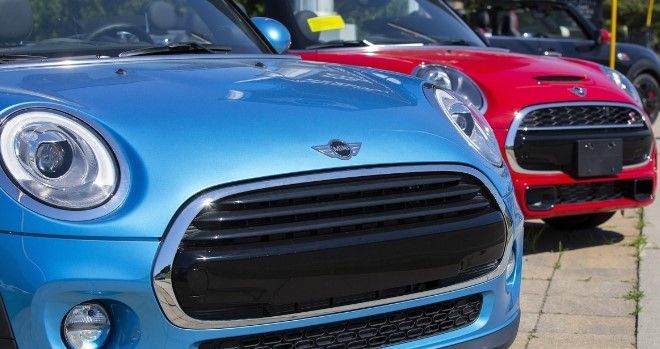
Despite the notification, BMW sold 8,000 Mini Cooper vehicles equipped with electrical parts supplied by JWD to the U.S. until April. BMW stated, "We are taking measures to halt the export of vehicles containing the relevant parts," and added, "We will provide replacement services to consumers and dealers who purchased the exported vehicles."
Jaguar Land Rover was also found to have continued exporting replacement parts containing sanctioned components after the notification. Jaguar Land Rover explained, "These parts were used in older vehicles that are no longer sold and were only used as replacements," and "Upon learning that the parts were on the forced labor list, we immediately stopped shipments and designated them for disposal."
Volkswagen reported to U.S. border authorities in February that thousands of Porsche, Bentley, and Audi models under its group contained sanctioned parts. Volkswagen is known to maintain a factory in the Xinjiang Uyghur region through a joint venture with a Chinese state-owned enterprise. However, Volkswagen stated that an external company audit last year confirmed that there was no forced labor at the factory.
Volvo also received the parts, but it is reported that vehicle production using these parts has not yet occurred.
Senate Finance Committee Chairman Ron Wyden, a Democrat, criticized, "Manufacturers are ignoring reality and claiming they have found no traces of forced labor in their supply chains," adding, "The automakers' internal administration is not functioning properly."
The NYT explained that some argue the difficulty for automakers is increasing as Chinese parts have deeply penetrated the global automotive supply chain, which involves tens of thousands of parts. Richard Mozicka, a customs attorney at Miller & Chevalier, said, "Automakers face enormous challenges in tracing their entire supply chains, partly because they heavily rely on the cooperation of suppliers."
© The Asia Business Daily(www.asiae.co.kr). All rights reserved.
![Clutching a Stolen Dior Bag, Saying "I Hate Being Poor but Real"... The Grotesque Con of a "Human Knockoff" [Slate]](https://cwcontent.asiae.co.kr/asiaresize/183/2026021902243444107_1771435474.jpg)











