Concerns Over Data Tampering and Eavesdropping by Submarine Cable Repair Company
Ship Disappeared in Hong Kong Reappears in Taiwan After One Month
The geopolitical tension between the United States and China over maritime dominance is intensifying. The Wall Street Journal (WSJ) reported on the 19th (local time) that the U.S. government privately warned its domestic telecommunications companies that Pacific undersea cables could be tampered with by Chinese repair firms.
According to sources, the U.S. government recently conveyed these concerns to major technology companies (Big Tech) such as Google and Meta. These Big Tech companies own their own undersea cables, and some rely on foreign specialized construction and repair firms, which could threaten the security of commercial and military data. Additionally, senior officials in the Joe Biden administration have recently received concerns about Chinese companies like SB Submarine Systems (SBSS). SBSS appears to be hiding ship locations from wireless satellite tracking services, and they have been unable to explain why.
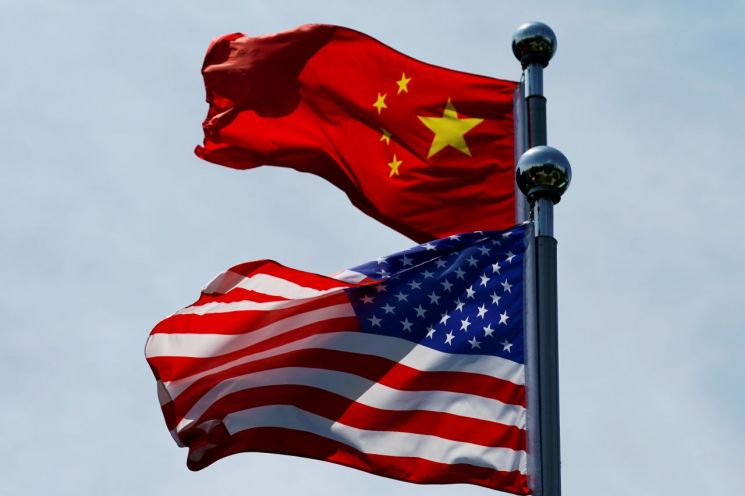
With increased Chinese activity in the Western Pacific, the U.S. government’s concerns about maritime security are growing. U.S. officials and congressional members have not disclosed whether the Biden administration’s concerns stem from maritime espionage on classified information or potential threats to internet infrastructure.
According to WSJ analysis, SBSS vessels such as 'Puhai,' 'Putai,' and 'Bold Maverick' disappeared from satellite ship tracking services for several days while operating near Asian coasts like Taiwan and Indonesia. For example, in early June 2020, the Puhai stopped near Hong Kong and its ship tracker was turned off. When the next signal was detected a month later, it was sailing east of Taiwan toward Japan.
WSJ cited officials and industry experts stating that such occurrences are unusual for commercial cable ships.
The reason the U.S. government reacts sensitively to SBSS vessel movements is that undersea cables can be tapped or tampered with. SBSS repairs undersea cables by bringing them to the surface, fixing broken optical fibers, and then returning them underwater. U.S. officials pointed out that underwater cables are vulnerable to tampering when brought to the surface for repairs. They also expressed security concerns that cable repair ships could be involved in underwater data eavesdropping, mapping the seabed for U.S. military communication reconnaissance, and leaking intellectual property related to cable equipment. There are also concerns that these ships could lay undersea cables for the Chinese military.
In response, Liu Fengyu, spokesperson for the Chinese Embassy in Washington, stated, "It is not wrong for Chinese companies to conduct normal business according to the law," and added, "We firmly oppose the U.S. generalizing national security concepts to attack and slander Chinese companies."
SBSS was established in 1995 as a joint venture between China and the United Kingdom. According to sources, China Telecom, a Chinese state-owned telecommunications company, holds a 51% stake in the business, and it is acquiring the remaining shares from Global Marine Systems, headquartered in the UK. The company’s website also indicates that a Chinese Communist Party official is employed there.
However, despite these concerns, it appears difficult for U.S. companies to immediately change undersea cable repair firms due to a lack of alternatives. Mike Constable, who runs the telecommunications consulting firm Infrastructure Analytics and formerly led Huawei Marine Networks in China, pointed out that there are only about 50 undersea cable repair ships worldwide, leaving no other options.
© The Asia Business Daily(www.asiae.co.kr). All rights reserved.
![Clutching a Stolen Dior Bag, Saying "I Hate Being Poor but Real"... The Grotesque Con of a "Human Knockoff" [Slate]](https://cwcontent.asiae.co.kr/asiaresize/183/2026021902243444107_1771435474.jpg)















