Contacted 1,500 Times to Manipulate Account and Demand Money
Father Reported Stalking but Ultimately Requested Leniency
A man in his 20s who, after falling into internet gambling, deceived his father and squandered a large sum of money under the pretext of investment, and despite a court-issued restraining order, contacted his father 1,500 times to borrow gambling funds, was sentenced to a suspended prison term in the first trial.
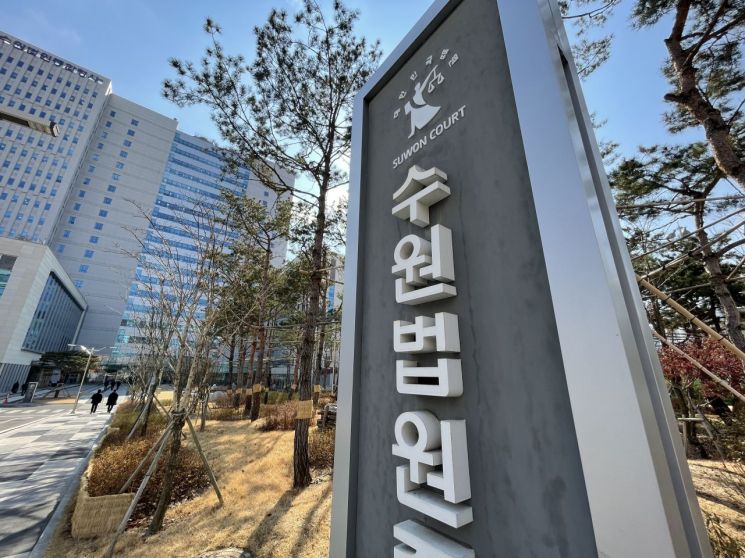
On the 18th, Yonhap News reported that the Suwon District Court Criminal Division 12 (Presiding Judge Ha Sang-je) sentenced A, a man in his 20s, to 8 months in prison with a 2-year suspension for habitual gambling and violation of the Stalking Punishment Act.
A began gambling in early 2020 when he was a high school student. Initially, he engaged in simple internet gambling such as odd-even guessing and ladder games, but when he needed gambling funds, he lied to his father, saying he needed investment money for stocks and cryptocurrency, and started borrowing money from him. To deceive his father, A even fabricated photos manipulating his account to make it appear as if he had earned money through stock investments.
Even after joining the military, A could not quit gambling and continued to ask his father for money. Suspicious, A’s father eventually realized that his son was deeply addicted to gambling and refused to give him money from then on. However, A’s persistent contacts did not stop. It was found that A contacted his father about 1,500 times demanding money. Investigations revealed that A’s father lent him about 1.7 billion won, and the amount A deposited into gambling site accounts from early 2020 to June last year was approximately 2.6 billion won (including amounts exchanged and re-deposited). Eventually, A’s father changed his address and blocked his phone number to avoid his son’s contacts.
When A could not reach his father, he demanded money by sending small transfers to his father’s account with messages. As a result, A was reported under the Stalking Punishment Act and received a provisional order and temporary restraining order from the court to "not contact his father."
The father directly reported his son to the police and brought him to court, but after the trial began, he submitted a letter of no prosecution to the court, requesting leniency. The court explained the sentencing by considering "the defendant’s remorse and the fact that the victim does not wish for punishment."
Meanwhile, even within family relationships, if unwanted contact continues against the victim’s wishes, it can be punished as stalking. Since the Stalking Punishment Act abolished the provision of offenses requiring the victim’s complaint, perpetrators can be punished even if the victim does not want prosecution.
© The Asia Business Daily(www.asiae.co.kr). All rights reserved.
![Clutching a Stolen Dior Bag, Saying "I Hate Being Poor but Real"... The Grotesque Con of a "Human Knockoff" [Slate]](https://cwcontent.asiae.co.kr/asiaresize/183/2026021902243444107_1771435474.jpg)















