Hyundai Motor Strengthens Overseas Government Relations Team
Recruits Jang Jaeryang, Former Head of Multilateral Trade Cooperation at Ministry of Industry
Enhances Response Capabilities Ahead of November U.S. Presidential Election
As trade tensions between the U.S. and China surrounding electric vehicles escalate, Hyundai Motor Group is steadily strengthening its overseas government relations organization. Following the elevation of the GPO (Global Policy Office) to a business division last year, the group has been continuously recruiting senior government officials and practitioners with expertise in trade.
According to Hyundai's quarterly report on the 17th, in April Hyundai hired Jang Jaeryang, Director of Multilateral Trade Cooperation at the Trade Negotiations Office of the Ministry of Trade, Industry and Energy, as an Executive Director of the Global Policy Strategy Office under the GPO. Until last year, Director Jang served as a senior specialist in international trade at the Ministry of Trade, Industry and Energy. A senior specialist is a civil servant who has developed expertise through long-term service in highly specialized fields.
Director Jang is one of Korea’s leading trade experts, having worked in the Investment Policy Division of the Trade and Investment Office, the Trade Legal Affairs Division, and the Trade Dispute Response Division at the Ministry of Trade, Industry and Energy. Until recently, he served as Director of the Multilateral Trade Cooperation Division under the New Trade Order Policy Office, playing a leading role in various trade disputes and negotiations. He is recognized for his expertise in overseeing multilateral trade negotiations related to global trade organizations such as the Asia-Pacific Economic Cooperation (APEC), the Organisation for Economic Co-operation and Development (OECD), and the Asia-Europe Meeting (ASEM). At Hyundai Motor Group, he is expected to handle practical responses to the rapidly changing U.S.-China trade policies.
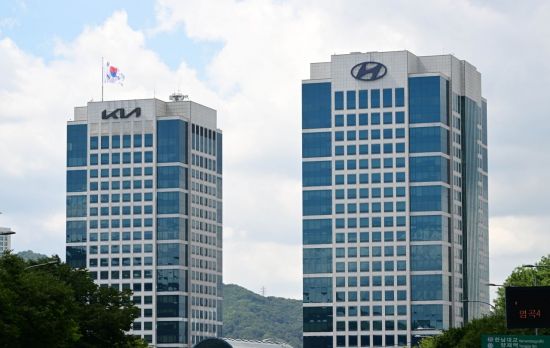
Since last year, Hyundai Motor Group has been steadily reinforcing its overseas government relations personnel. In August last year, the group formed the GPO organization by recruiting Vice President Kim Ilbeom, a former protocol secretary at the Presidential Office, and positioned Executive Director Kim Dongjo, a former foreign press spokesperson at the Blue House, and Senior Executive Director Woo Jeongyeop, who served as a diplomatic strategy planner at the Ministry of Foreign Affairs, in the Global Policy Strategy Office. Recently, with the addition of Director Jang, the practical team responsible for overseas government relations, mainly in the U.S., has been completed. Former U.S. Ambassador to Korea Sung Kim, who retired from the U.S. State Department in December last year, also supports Hyundai Motor Group as a diplomatic advisor.
The reason Hyundai is focusing on overseas government relations is the U.S.-China trade war centered on automobiles ahead of the U.S. presidential election in November. On the 14th (local time), the U.S. government dramatically raised tariffs on Chinese imports such as electric vehicles, batteries, semiconductors, and medical devices, and indicated its intention to check China in data sovereignty areas such as connected cars.
The problem is that if the U.S. strengthens automobile-related regulations and pursues protectionist policies, it could have negative long-term effects on Korean companies. In fact, recently, as the U.S. took measures to exclude Chinese graphite, a key mineral for batteries, from the electric vehicle supply chain, the Korean electric vehicle and battery industries faced practical difficulties. Fortunately, the U.S. granted a grace period for the implementation of detailed regulations considering practical aspects, but the issue is that similar cases may frequently occur in the future. Korean companies that have made large-scale investments in the U.S. are always exposed to supply chain risks amid the U.S.-China trade dispute.
Meanwhile, in preparation for this, Hyundai Motor Group is strengthening its policy response and lobbying efforts toward the U.S. According to OpenSecrets, a nonprofit organization that tracks U.S. lobbying funds, Hyundai Motor Group spent $3.19 million (about 4.2 billion KRW) on lobbying in the U.S. last year. This is the fifth-largest amount among global automobile manufacturers.
© The Asia Business Daily(www.asiae.co.kr). All rights reserved.
![Clutching a Stolen Dior Bag, Saying "I Hate Being Poor but Real"... The Grotesque Con of a "Human Knockoff" [Slate]](https://cwcontent.asiae.co.kr/asiaresize/183/2026021902243444107_1771435474.jpg)















