Filite Involved in 'Foreign Substance' Controversy to Face Administrative Sanctions
"Cause Attributed to Inadequate Cleaning and Disinfection Management"
Last month, a controversy over "diesel soju" arose after a self-employed person running a restaurant in Seoul posted online that the soju they received smelled like diesel. It has been confirmed that the cause was not a manufacturing defect but diesel adhering to the bottle during distribution and storage. However, the issue with the other alcoholic beverage (sparkling beer) Filite, which also faced foreign substance controversy, was found to be caused by negligence in machine management during the manufacturing process.

The Ministry of Food and Drug Safety (MFDS) announced on the 17th that regarding Chamisul Fresh soju, manufactured and sold by HiteJinro, "the investigation into the cause confirmed that the likelihood of diesel or other substances being mixed in during the manufacturing process is low." After collecting and testing the reported products, diesel components were not detected inside the product but only on the exterior surface.
However, since the materials of the soju bottle and cap differ, making perfect sealing difficult, there is a possibility that diesel vapor from outside entered in trace amounts through gaps in the cap during distribution and storage. In fact, tests on other products produced on the same date also showed quality inspection results that met standards and specifications.
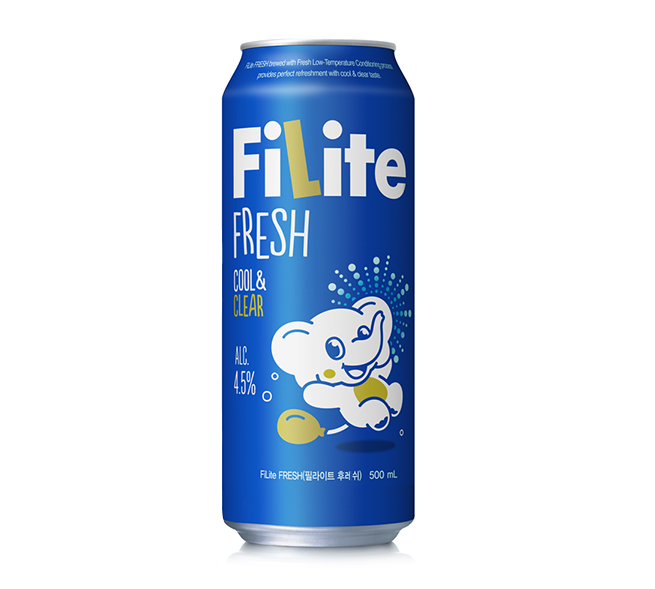
Regarding Filite Fresh, the other alcoholic beverage where foreign substances were found and caused controversy, administrative actions such as corrective orders and fines are expected due to negligence in cleaning and disinfection management. This followed complaints reporting the discovery of foreign substances resembling mucus in Filite Fresh.
In response, HiteJinro stated that it was a temporary issue in the production process caused by lactic acid bacteria, which combined polysaccharides and proteins, and that it is harmless to humans. As of the day before, a total of 1.18 million cans (420 tons) have been voluntarily recalled in relation to this issue.
MFDS’s on-site investigation also found that lactic acid bacteria entered the product and combined with carbohydrates and proteins during distribution, resulting in coagulated substances. However, MFDS pointed to insufficient cleaning and disinfection management by the manufacturer as the cause. While the filling machines that seal the alcohol in cans should be cleaned and disinfected using both cleaning agents and sterilizers, it was revealed that on March 13 and 25, and April 3 and 17, when the recalled products were produced, only cleaning agents were used without sterilizers. Insufficient cleaning and disinfection like this can lead to coagulation caused by lactic acid bacteria contamination.
MFDS emphasized, "As food manufacturing processes become more automated and piping facilities increase, the importance of cleaning and disinfection processes is growing significantly," and stressed the need for thorough management by food manufacturing and processing companies. They also stated, "Soju products should be stored carefully to avoid being kept together with volatile substances such as diesel or petroleum," and added, "We will strengthen inspections of storage conditions to ensure that alcoholic beverages are manufactured, distributed, and sold safely."
© The Asia Business Daily(www.asiae.co.kr). All rights reserved.
![Clutching a Stolen Dior Bag, Saying "I Hate Being Poor but Real"... The Grotesque Con of a "Human Knockoff" [Slate]](https://cwcontent.asiae.co.kr/asiaresize/183/2026021902243444107_1771435474.jpg)
















