MFDS Inspection... Ingredients Detected Only on Product Surface
Possible Ingress Due to Pressure Differences During Distribution and Storage
1.24 Million Cans of Reported Coagulated Beer Recalled
The Ministry of Food and Drug Safety (MFDS) announced on the 17th that the likelihood of diesel or other substances being mixed during the manufacturing process of HiteJinro's soju "Chamisul Fresh," which was reported to have a diesel smell, is low. HiteJinro apologized to consumers and stated that it will re-inspect the entire production process.
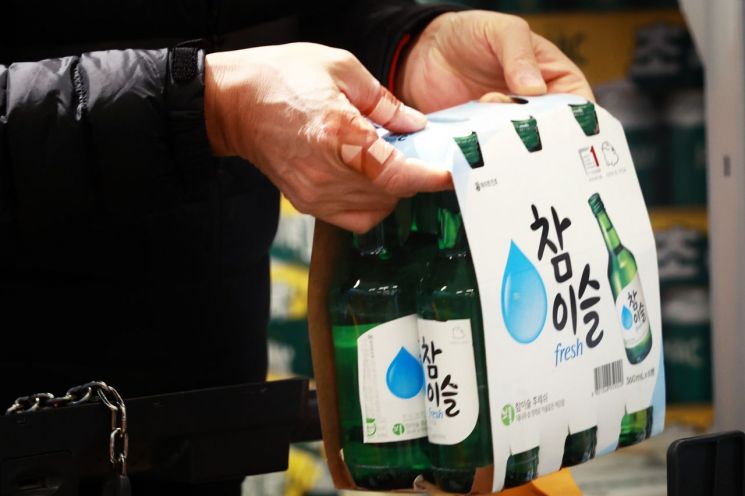
After collecting the reported product and testing its components, the MFDS found no diesel components in the soju contents, with diesel detected only on the exterior of the product. Regarding this, experts analyzed that due to the difference in materials between the soju bottle and its cap, complete sealing is difficult, and if pressure differences occur due to temperature changes during distribution and storage, there is a possibility that vaporized diesel components from outside could have entered in trace amounts through gaps in the cap, the MFDS reported. Additionally, other products produced on the same date as the reported Chamisul Fresh were collected and tested, all meeting standards and regulations.
The MFDS emphasized that with recent automation in food manufacturing processes and increased piping facilities, the importance of cleaning and disinfection processes has grown, urging food manufacturing and processing companies to maintain thorough management. HiteJinro stated, "Taking this incident as an opportunity, we are carefully reviewing every step of the entire process to produce more perfect products," and apologized for causing concern to consumers.
Meanwhile, regarding the beer product "Filite Fresh," which was reported to have coagulation, the MFDS revealed that investigations at HiteJinro's Gangwon factory showed insufficient cleaning and disinfection management of the filling machine used to seal the alcohol into containers (cans). Normally, both cleaning agents and sterilizers should be used when cleaning the filling machine, but on four days?March 13, March 25, April 3, and April 17?the sterilizer was depleted, and only cleaning agents were used to manage the filling machine.
As a result, the alcohol filling machine was contaminated with lactic acid bacteria (Pediococcus damnosus), and as the lactic acid bacteria transferred to the product, it combined with carbohydrates and proteins during distribution, leading to coagulation within the product. Pediococcus damnosus, a type of lactic acid bacteria, is a spherical facultative anaerobic bacterium often found in wine and beer. The MFDS explained that there is currently no evidence that Pediococcus damnosus is harmful to humans. Furthermore, products produced on the same date as those with coagulation were collected and tested for food poisoning bacteria and other standards, all of which passed.
HiteJinro plans to recall 1.24 million cans of Filite Fresh. As of the previous day, 1.18 million cans have been recalled, and there have been no additional reports to the MFDS regarding quality issues. The MFDS will take administrative action against HiteJinro's Gangwon factory for violations of the Food Sanitation Act due to negligence in cleaning and disinfection management.
© The Asia Business Daily(www.asiae.co.kr). All rights reserved.
![Clutching a Stolen Dior Bag, Saying "I Hate Being Poor but Real"... The Grotesque Con of a "Human Knockoff" [Slate]](https://cwcontent.asiae.co.kr/asiaresize/183/2026021902243444107_1771435474.jpg)















