The Completely Different Fates of CEOs with the Same Name <Part 1>
Ajinomoto, a Seasoning Company, Expands into Semiconductors
Stock Revalued Due to New Business Growth Potential
Seven & I Holdings Focuses Solely on Retail Operations Including Department Store Acquisitions
Investors Shun Due to M&A Failures
Ajinomoto, Japan's leading seasoning company that created the original 'Miwon,' frequently appears in Japanese media alongside Seven-Eleven Japan, owned by Seven & i Holdings Co., Ltd. This is because both are large corporations led by CEOs with the same name in the food and distribution industries. Masatoshi Ito, the former chairman of Ajinomoto who served from 2009 to 2015, shares the same name as the late founder of Seven & i Holdings, who passed away last year.
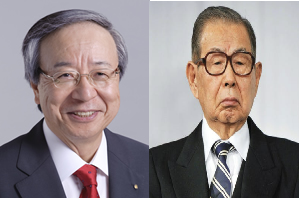 Former Chairman Masatoshi Ito of Ajinomoto (left) and the late Honorary Chairman Masatoshi Ito of Seven-Eleven and I Holdings.
Ajinomoto Expands New Businesses by Applying Corporate Know-How
Ajinomoto, the originator of 'Miwon,' is a representative stock in the Japanese securities market known as a "stock worth holding for a long time" due to its steady price increase. The closing price of Ajinomoto was 2,879.5 yen (25,095 KRW) in 2015 and has more than doubled over ten years to currently stand at 6,021.0 yen (52,475 KRW). Among Japanese analysts, there is even an assessment that "if one had purchased 1 million yen (8.75 million KRW) worth of Ajinomoto stock 20 years ago, they would have realized a profit of about 2.43 million yen (21.28 million KRW) today."
The prevailing analysis attributes the stock price rise to the effective linkage of core businesses with future growth areas. Since 1970, Ajinomoto has pursued the slogan "Eat deliciously and become healthy," exploring various ways to utilize amino acids, the source of umami flavor. This led to ventures into the bio business, including the development of the health supplement Amino Vital and collaborative development of cell culture media with Kyoto University.
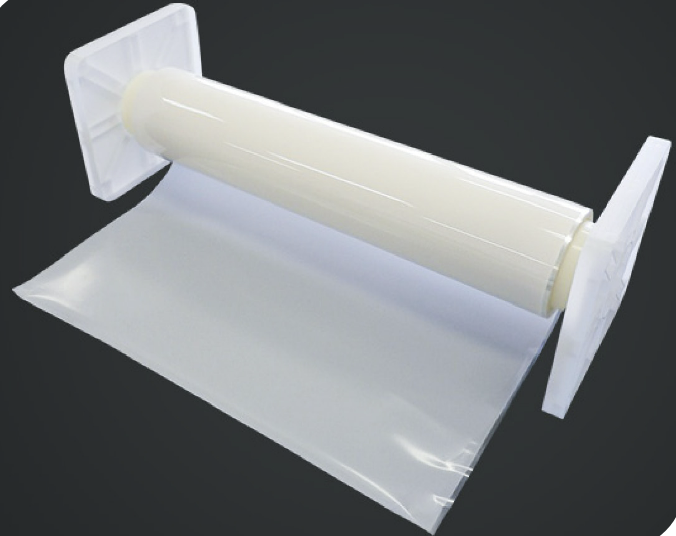
Ajinomoto even made a significant impact by entering the semiconductor market. Using its proprietary amino acid technology, it developed an insulating film that began to be used in CPUs (central processing units) for PCs and smartphones. Ajinomoto named this product 'ABF,' an acronym for Ajinomoto Build-up Film. According to the Nihon Keizai Shimbun (Nikkei), most PCs worldwide currently incorporate ABF as a component. Investors regard Ajinomoto’s ABF as a smarter 'cash cow' product than its seasonings.
Thanks to this, Ajinomoto’s stock hit a 10-year high in 2021. For the fiscal year ending March 2021 (April 2020 to March 2021), Ajinomoto posted an operating profit of 113.1 billion yen (98.58 billion KRW). Of this, 86.7 billion yen (75.57 billion KRW), or 77%, came from its core seasoning and food businesses, while ABF and healthcare businesses accounted for about 23%, or 26.2 billion yen (22.83 billion KRW). The company received praise for having both stable existing businesses and growth potential in new ventures, causing its expected price-to-earnings ratio (PER) to soar to more than 30 times the previous level.
Seven & i Holdings’ Stock Plummets Despite Record Profits
In contrast, Seven & i Holdings has seen a poor investor response despite posting record operating profits. For the consolidated fiscal year ending October 2023, Seven & i Holdings recorded an operating profit of 241.1 billion yen (2.1015 trillion KRW), a new all-time high. However, from the day after the announcement, its stock price, which had been hovering around 5,800 yen (50,000 KRW), dropped 5% to 5,451 yen (47,500 KRW).
Japanese media have focused on the cold stock market reaction and commented on Seven & i Holdings’ business approach. The company planned to pioneer new growth avenues for its core convenience store business by entering the North American market. It aggressively pursued this by acquiring Speedway, the third-largest convenience store chain in the U.S. However, gasoline prices at North American convenience stores surged, causing gasoline sales?the main revenue source?to falter. Furthermore, ongoing inflation in the U.S. led to a 3% year-on-year decline in merchandise sales volume. The Japanese economic newspaper Toyo Keizai reported, "The company explained it would overcome this by reducing selling, general, and administrative expenses, but the securities market sentiment does not seem to calm easily," adding, "Shareholders and analysts alike remain disappointed."
Previous new business ventures also failed to produce notable results. A prime example is the department store acquisitions. In 2006, Seven & i Holdings acquired Sogo and Seibu department stores, once symbols of the middle class. At the time, Japanese media expressed skepticism about the strategy, noting that department store sales had not risen since the 1990 bubble economy collapse. Ultimately, unable to reverse poor performance, Seven & i Holdings began selling off these department stores in 2022 through painful store closures.
In 2019, the company launched 'Seven Pay,' a digital payment service usable at Seven-Eleven stores. However, it quickly became embroiled in hacking and fraudulent use issues, leading to service suspension within days and eventual termination after three months. The business withdrawal resulted in a loss of 3 billion yen (261 million KRW), and the company faced criticism for falling significantly behind in digital strategy.
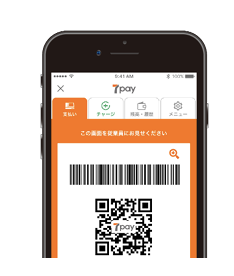 Example screen of Seven Pay in operation before service suspension. (Photo by Seven Eleven)
Currently, Seven & i Holdings is regarded as a "company that failed by focusing on immediate M&A." Its goal was to transform into a comprehensive lifestyle company starting with department stores, but most acquisitions ended up hindering progress. Nikkei criticized, "Mistakes such as the Seven Pay issue and the sale of Sogo and Seibu department stores stand out, which are unworthy of the top convenience store industry title. Among analysts, there are even comments that no growth scenario can be envisioned with Seven & i Holdings due to lack of leadership and vision."
Conversely, in the Japanese stock market, there is talk that boldly venturing into uncharted territory, as Ajinomoto has done, can yield better results. Nikkei Business praised, "Ajinomoto has won another gold medal not only with its core products like seasonings and frozen dumplings but also as a semiconductor materials supplier."
© The Asia Business Daily(www.asiae.co.kr). All rights reserved.
![Clutching a Stolen Dior Bag, Saying "I Hate Being Poor but Real"... The Grotesque Con of a "Human Knockoff" [Slate]](https://cwcontent.asiae.co.kr/asiaresize/183/2026021902243444107_1771435474.jpg)

















